Journal of Resources and Ecology >
Ice and Snow Traditional Cultural Elements Empowering the Sustainable Development of Ice and Snow Sports Tourism
|
LI Huang, E-mail: 253824976@qq.com |
Received date: 2025-01-13
Accepted date: 2025-12-10
Online published: 2026-04-13
Supported by
The Fundamental Research Funds for Provincial Universities in Liaoning Province(LJ132410166033)
The Basic Research Program Team Project of the Liaoning Provincial Department of Education(LJ112410157104)
The 2024 Youth Project of the Liaoning Social Science Planning Foundation(L24CFX007)
Traditional culture is a crucial pillar for the sustainable development of the tourism industry. This study aims to uncover the intrinsic value of traditional ice and snow cultural elements and examine their role in empowering the sustainable development of ice and snow sports tourism, thereby supporting the goal of building a leading ice and snow sports nation. By applying documentary research and logical analysis, this study systematically elucidates the connotative characteristics through which traditional ice and snow cultural elements contribute to sustainable tourism development, identifies key practical challenges constraining this sector, and proposes targeted and actionable development pathways. The findings indicate that traditional ice and snow cultural elements have evolved primarily through two historical stages—ancient and modern—characterized by continuity, regional specificity, and cultural richness. These elements empower ice and snow sports tourism by providing diverse cultural resources and a sustained historical narrative. However, current development faces several challenges, including superficial cultural exploration, homogenized development models, low participation in traditional cultural activities, and the distortion or alienation of cultural elements in some tourism projects. Accordingly, this study proposes four development pathways: (1) Constructing a deep cultural narrative system to transform tourist experiences from “landscape presentation” to “cultural immersion”; (2) Promoting the creative transformation of traditional techniques and activities to build a distinctive cultural IP product system; (3) Strengthening regional cultural identifiers by implementing a differentiated “one region, one product” strategy that integrates culture, sports, and tourism; and (4) systematically organizing and revitalizing the history of modern Sino-Western exchange in ice and snow culture to enhance cultural depth and international dialogue capabilities. Collectively, these measures aim to promote the substantive, high-quality, and sustainable development of ice and snow sports tourism.
LI Huang , ZHANG Wensu , LIU Zhu . Ice and Snow Traditional Cultural Elements Empowering the Sustainable Development of Ice and Snow Sports Tourism[J]. Journal of Resources and Ecology, 2026 , 17(2) : 388 -398 . DOI: 10.5814/j.issn.1674-764x.2026.02.005
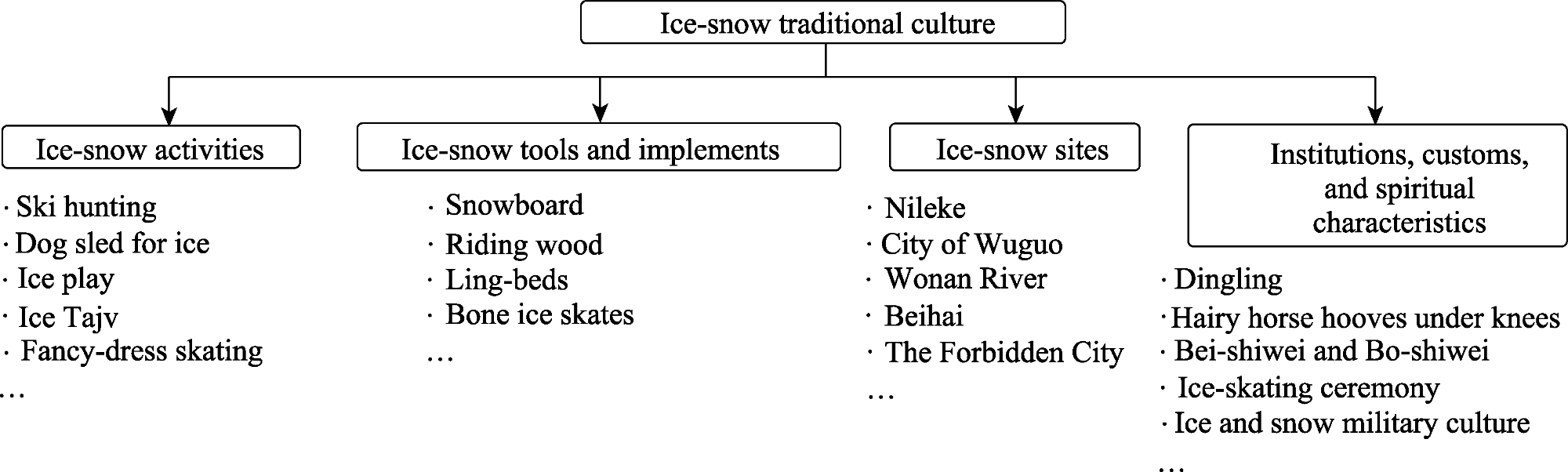
Figure 1 Elements of traditional Chinese ice and snow culture in historical documents |
Table 1 Stages and representations of traditional ice and snow culture |
| Stages | Dimension | Presentation/Content |
|---|---|---|
| Ancient | Production and survival | Ski hunting (e.g., Altai petroglyphs), ice sled transport, ice fishing, dog sledding; bone skates for transport and production (Look H, 2005) |
| Military and ritual | Ice fortifications, Ice-skating ceremony(Li H et al., 2025); used for military training and defense | |
| Daily life and folklore | Ice games (e.g., ice cuju), ice bed recreation, winter clothing and food; reflects seasonal adaptation and folk customs(Su K, Wang J, 2018) | |
| Cultural traits | Strongly functional and regional; evolved from survival needs, gradually gaining recreational and aesthetic dimensions | |
| Modern | Introduction and spread | Western ice sports (speed skating, figure skating, ice hockey) introduced via treaty ports, missionary schools, and military institutions |
| Campus and urban expansion | After the May Fourth Movement, ice sports entered northern schools and expanded into urban public spaces as popular winter leisure activities | |
| Sino-Western fusion | Traditional elements integrated with modern events; e.g., ice performances incorporating opera, temple fair motifs, creating localized expressions | |
| Functional shift | Shift from production and military use to specialized sports and recreation; increasing trends in competition, education, and commercialization | |
| Cultural traits | Increased standardization and spectatorship; enhanced public participation and international exchange; ice activities begin gaining economic and tourism value |
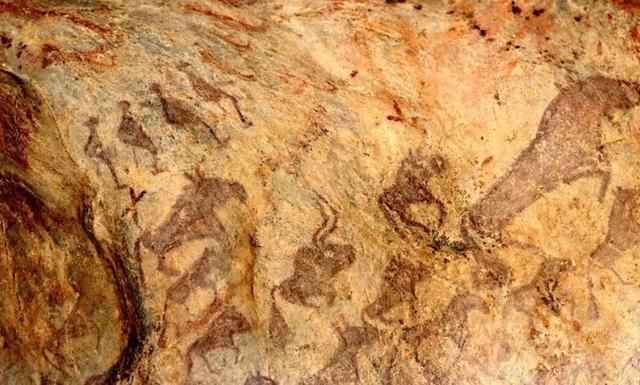
Figure 2 Dundebulak cave painted rock paintings |
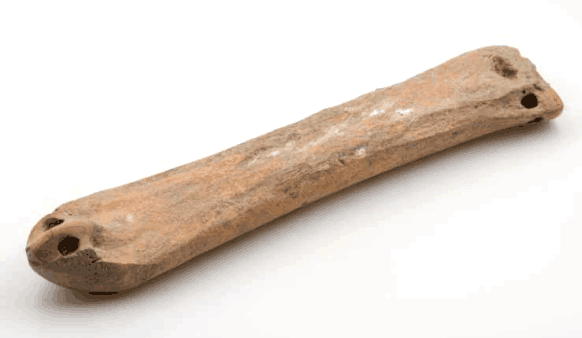
Figure 3 Bone ice skates unearthed from the Gaotai remains of the Nilekeji Rentai Gou Kou site in Xinjiang |
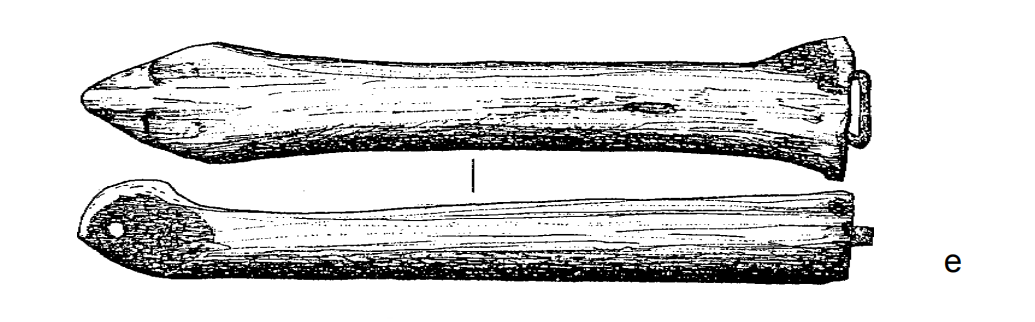
Figure 4 Bone ice skates from the Roman Iron Age(Hartford R, 2009) |
Table 2 Recommended traditional snow and ice sports and amusement programmes |
| Project | Historical sources | Forms of transformation | Applicable conditions |
|---|---|---|---|
| Ice bed/car | No later than the Northern Song Dynasty, it appeared on the Song-Liao border and developed rapidly in the northern region, especially in northern China, during the Yuan, Ming, Qing, and the Republic of China periods, with an increasing richness of forms and project connotations | Participatory activities | Any river or lake basin in the northern region that has winter freezes |
| Ice race | In the late Ming Dynasty, Nurhachu led the eight banners. of Manchu, Mongol, and Han were used to organize the activity | Participatory activities | Natural or artificial snow and ice environments are available |
| Dog sled | Appeared no later than the Jin Dynasty due to the many dogs pulling and dragging snowmobiles or ice trucks used for transport purposes. It was distributed in the northwest and northeast of China | Participatory activities | Any northern area with natural snow and ice |
| Ice Cuju | It appeared no later than the Jin Dynasty, and was first noted in the Beijing area as a stone kicking game for children in the north to prevent frostbite on their toes in winter. The game was later transformed into a form of kicking a ball between two teams | Participatory activities & Ornamental activity | Natural or artificial snow and ice environments are available |
| Strike the ice | Long history, more prevalent in the Northeast | Participatory activities & Ornamental activity | Natural or artificial snow and ice environments are available |
| Traditional ice techniques | The Ice-skating Ceremony and Palace Ice Frolic Exhibition of the Qing Dynasty was mainly popular in North China, and was a combination of northern acrobatics and ice skills | Ornamental activity | Natural or artificial snow and ice environments are available |
| Fancy-dress skating/skiing | At the beginning of the 20th century, it was imported from the West, and first appeared in the ports of commerce (mostly dry ice), and then appeared in the ice rinks in Beijing, Tianjin, and Dalian. It was gradually naturalized from the Western characteristics at the beginning, and basically disappeared in the 1950s | Participatory activities & Ornamental activity | Natural or artificial snow and ice environments are available |
| [1] |
|
| [2] |
|
| [3] |
|
| [4] |
|
| [5] |
|
| [6] |
|
| [7] |
|
| [8] |
|
| [9] |
|
| [10] |
|
| [11] |
|
| [12] |
|
| [13] |
|
| [14] |
|
| [15] |
|
| [16] |
|
| [17] |
|
| [18] |
|
| [19] |
|
| [20] |
|
| [21] |
|
| [22] |
|
| [23] |
|
| [24] |
|
| [25] |
|
| [26] |
|
| [27] |
|
/
| 〈 |
|
〉 |