Journal of Resources and Ecology >
Boundaries and Perception: A Historical Anthropological Study of the Environmental Memory Characteristics of Vernacular Settlement and Architectural Spaces in the Zhaozhou Basin
|
CHEN Hongyu, E-mail: 385603495@qq.com |
Received date: 2025-05-23
Accepted date: 2025-09-27
Online published: 2025-11-28
Supported by
The National Natural Science Foundation of China(52478058)
The 2025 Yunnan Provincial Philosophy and Social Science Planning Annual Project(QN202522)
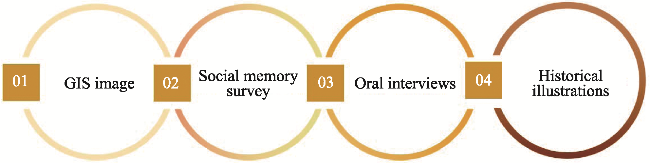
The geographical environment of the Zhaozhou Basin provides diverse possibilities for the formation and evolution of vernacular settlements and architectural spaces within multi-ethnic communities. Taking the vernacular settlements and architecture of the Zhaozhou Basin as a case study, this research adopts the anthropological concept of the “Bazi Society” as an analytical framework, and integrates the methodology of “social memory” to explore the social mechanisms that shape regional architectural space. By utilizing the “social memory” research approach, this study integrates GIS image analysis, social memory indicator surveys, oral interviews, and local historical materials from the Ming and Qing Dynasties, including local chronicles, historical maps, and illustrations, along with data from the Republican era, to conduct an in-depth investigation of typical settlements in the Zhaozhou Basin. This study proposes a “rule of in-depth memory depiction”, which is structured around three elements: the research objects (settlement spaces, public temples, and vernacular dwellings), the analytical dimensions (spatial patterns, cultural practices, and collective memory), and the narrative methods(oral testimony, schematic mapping, and quantitative indicators), thereby providing a clear framework for its application. It analyzes the feasibility of the research pathway for the “Bazi Society of basins”. The results can be summarized in three points. (1) Based on field investigation and GIS-historical triangulation, 151 valid questionnaires yielded five principal memory factors (communalities > 0.8; cumulative variance contribution rate 85.66%), thus verifying the operational feasibility and quantitative validity of the “Thick Description of Memory” framework. (2) Settlements in the Zhaozhou Basin exhibit a significant “landform-function-memory coupling pattern”, which reveals the continuous reconstruction of power structures and spatial forms within the processes of social memory. (3) Despite their functional transformations, public temples continue to serve as the spiritual cores of communities and as explicit carriers of collective memory, so they reflect the material continuity of productive and everyday life memories. Overall, this study demonstrates that “social memory functions as a key mediating mechanism” linking geographical environment, social practice, and vernacular architectural space, which provides new theoretical and methodological support for understanding the evolutionary logic of basin settlements and for guiding cultural heritage renewal.
CHEN Hongyu , YANG Yi , ZHAO Difei . Boundaries and Perception: A Historical Anthropological Study of the Environmental Memory Characteristics of Vernacular Settlement and Architectural Spaces in the Zhaozhou Basin[J]. Journal of Resources and Ecology, 2025 , 16(6) : 1707 -1720 . DOI: 10.5814/j.issn.1674-764x.2025.06.009
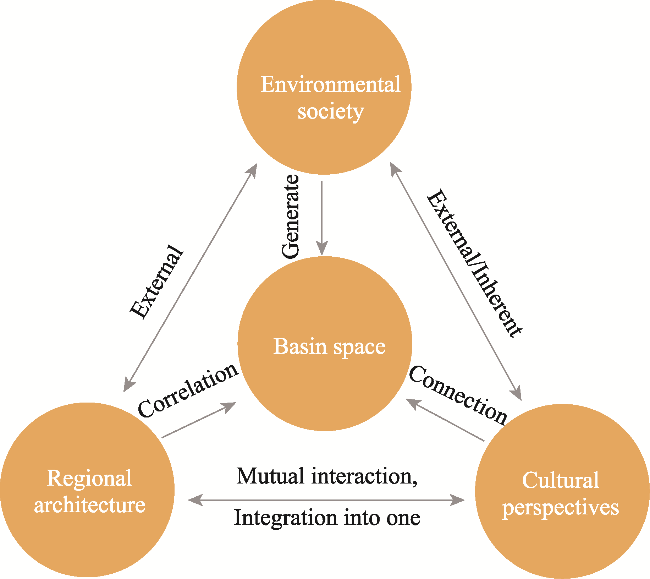
Figure 1 The three dimensions of basin research |
Figure 2 Research methods and process |
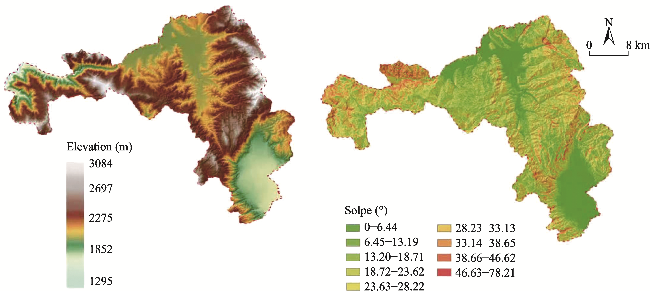
Figure 3 Elevation and slope of the Zhaozhou Basin |
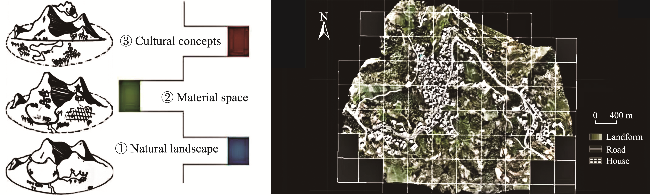
Figure 4 Three-layer cognitive structure of vernacular settlements and GIS-based spatial analysis of the basin |
Table 1 Characteristics of the six sample villages selected for investigation |
| Serial No. | Sample village | Historical characteristics | Terrain pattern | Building type | Settlement type |
|---|---|---|---|---|---|
| 1 | Zhihua Village | Zhaozhou Administrative Center in Yuan Dynasty | Local terrace | Local customs and dwellings, the main temple, mosque and caravan architecture are abundant in heritage | Ancient traffic roads run through or near, and there are many historical remains in the settlements |
| 2 | Beitangtian Village | Residence of Azhali Buddhist and Qingping official in past dynasties | Mid-mountain region | There are many temples, main temples and ancestral halls | |
| 3 | Gaocang Village | Guards stationed in Ming Dynasty | Mainly flat land | Local dwellings, main temples, etc. | The architectural heritage is seriously damaged |
| 4 | Houshan Village | Yi nationality cottage | Slow slopes at the foothills | Local dwellings, main temples, etc. | Geographical forms are changeable |
| 5 | Zhaozhou Town | Zhaozhou town ruins | Flat ground | Street shops, part of the courtyard | Within the boundary of Zhaozhou Town Wall, the old street is left behind |
| 6 | Hanyi Village | Guards stationed in Ming Dynasty | Mainly flat land | Local dwellings, main temples, etc. | The architectural heritage is seriously damaged |
Table 2 Investigation and analysis table of the memory index layer (Unit: %) |
| Memory index layer B | Analytic layer C | Have a deep memory | Moderate memory | General memory | Can’t remember | No impression |
|---|---|---|---|---|---|---|
| Settlement material space place B1 | Characteristics of landscape B1-1 | 0 | 31.78 | 10.78 | 38.78 | 18.66 |
| Settlement pattern B1-2 | 0 | 41.40 | 25.68 | 17.58 | 15.34 | |
| Marker B1-3 | 21.78 | 17.67 | 27.86 | 28.98 | 3.71 | |
| Settlement form and spatial pattern B2 | Settlement pattern B2-1 | 1.68 | 38.59 | 18.58 | 29.80 | 11.35 |
| Spatial pattern B2-2 | 0 | 28.78 | 38.58 | 15.23 | 17.41 | |
| Spatial distribution B2-3 | 4.58 | 18.48 | 32.29 | 17.89 | 26.77 | |
| Traces of ancient roads and caravan buildings B3 | Ancient tea-horse road B3-1 | 0 | 16.86 | 28.89 | 27.97 | 29.28 |
| Caravan space B3-2 | 12.78 | 30.89 | 17.87 | 6.78 | 31.68 | |
| Ancient road scenery B3-3 | 2.90 | 14.56 | 34.79 | 12.80 | 34.95 | |
| Single building space and construction B4 | Architectural pattern B4-1 | 6.78 | 38.89 | 12.87 | 10.28 | 31.18 |
| Spatial function B4-2 | 3.67 | 23.77 | 29.98 | 21.89 | 20.6 | |
| Visual memory B4-3 | 0 | 19.20 | 20.89 | 32.00 | 27.68 | |
| Ritual field and spiritual space B5 | Ritual belief B5-1 | 12.90 | 17.89 | 31.81 | 21.90 | 29.87 |
| Spiritual space B5-2 | 23.70 | 21.89 | 29.89 | 2.90 | 31.87 | |
| Field trait B5-3 | 0 | 20.99 | 29.89 | 8.98 | 41.98 |
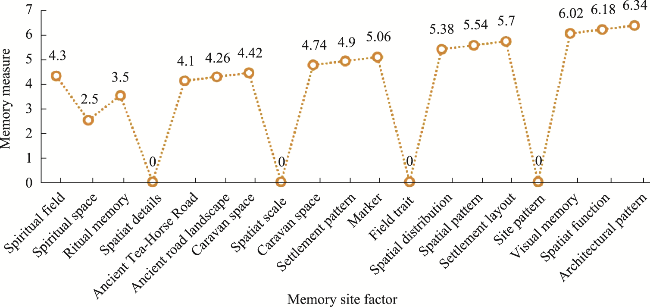
Figure 5 Statistical results of memory measures |
Figure 6 Bianzhi Temple and the temple space layout diagram drawn by the temple master |
Figure 7 Spatial analysis of a caravan residence—from land deed to layout plan |
| [1] |
|
| [2] |
|
| [3] |
|
| [4] |
|
| [5] |
|
| [6] |
|
| [7] |
|
| [8] |
|
| [9] |
|
| [10] |
|
| [11] |
|
| [12] |
|
| [13] |
|
| [14 |
|
| [15] |
|
| [16] |
|
| [17] |
|
| [18] |
|
| [19] |
|
| [20] |
|
| [21] |
|
| [22] |
|
| [23] |
|
| [24] |
|
| [25] |
|
| [26] |
|
| [27] |
|
| [28] |
|
| [29] |
|
| [30] |
|
| [31] |
|
/
| 〈 |
|
〉 |