Journal of Resources and Ecology >
The Evolution of the “Urban Optimal Map (UOM)”: An Exploratory Example of Data Mining and Dynamic Programming in London
Online published: 2025-11-28
In urban construction, the “Urban Optimal Map (UOM)” serves as a key tool for integrating social resources and natural elements, and it plays a significant role in promoting sustainable urban development. With the advent of the digital era, various data collection devices deployed in cities have accumulated massive amounts of data, forming multi-source, high-dimensional urban databases. While visualizing these data helps uncover patterns of urban operations, the overlay of large volumes of data also complicates the visualization, making it difficult to interpret. From an animal behavior perspective, this study integrates natural geographical data of London, distribution data of different animal species, urban social information data, and comparative data on animal habits. Through GIS analysis, data visualization, and weight overlay to generate adaptability maps, a digital model is constructed and an animal behavior simulation program is developed. On this basis, multi-criteria analysis (MCA) is employed to comprehensively evaluate the simulation results and optimize decision-making, and planning solutions that balance ecological and social needs are derived. The findings demonstrate that by mining and integrating multi-source data, along with future scenario simulations, the complex relationships among urban environment, society, and sustainable development can be effectively explored. This provides scientific and objective data support for promoting harmonious coexistence between urban development and nature, and can assist decision-makers in formulating more rational urban planning strategies. As urban data continues to be updated, the “UOM” will evolve into a dynamic map system. By incorporating machine learning methods to mine temporal dimension information, it can further achieve predictions of future urban development trends, and offer scientific support for urban resource allocation and planning strategies.
LIU Deng , XIE Hui , LIANG Jie . The Evolution of the “Urban Optimal Map (UOM)”: An Exploratory Example of Data Mining and Dynamic Programming in London[J]. Journal of Resources and Ecology, 2025 , 16(6) : 1668 -1679 . DOI: 10.5814/j.issn.1674-764x.2025.06.006
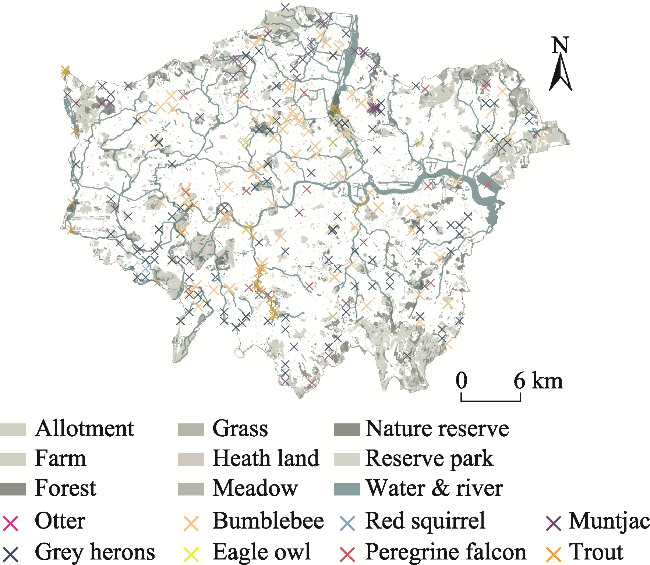
Figure 1 Land use type and species distributions in London in 2018 |
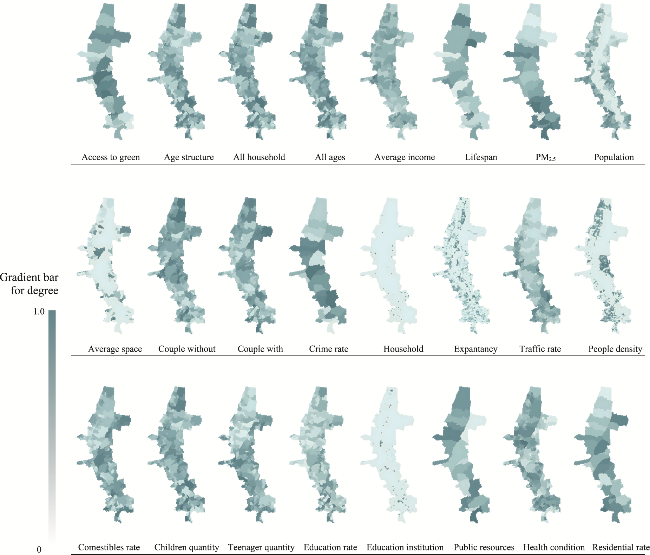
Figure 2 Visualization of multiple data sources in the Lea Valley region of London |
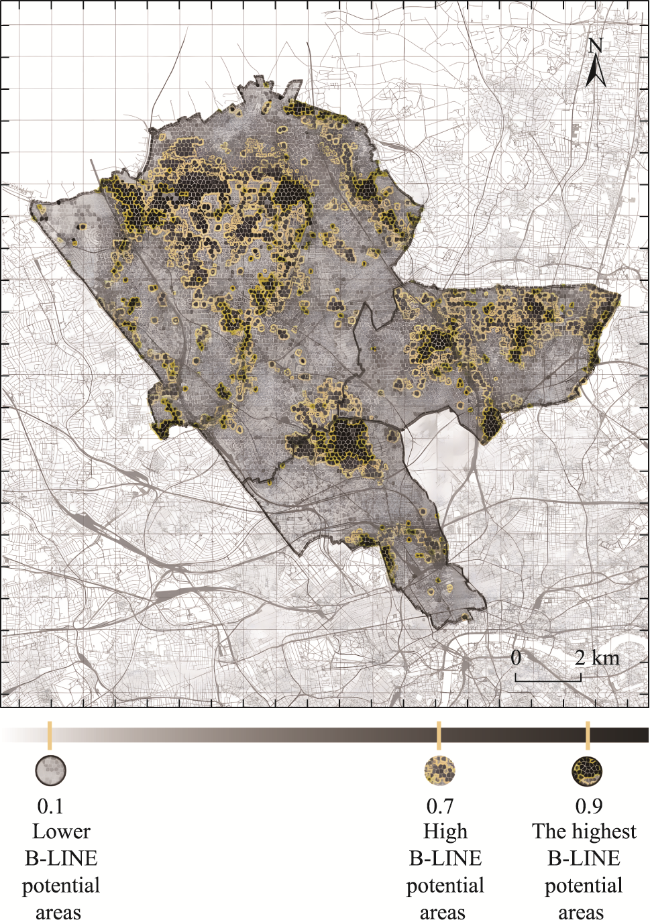
Figure 3 The potential B-LINE with suitability values |
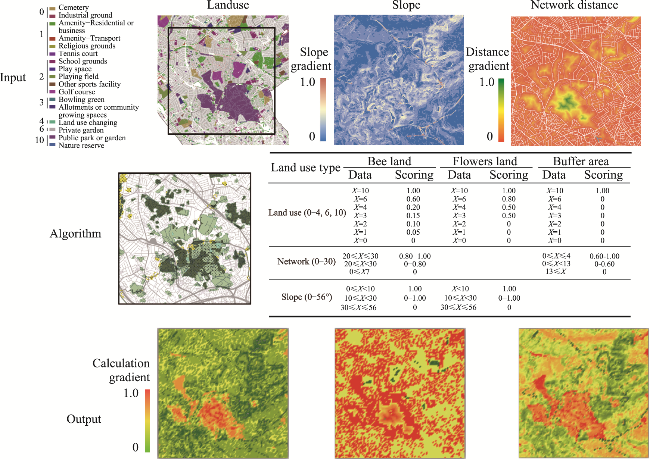
Figure 4 Process for the integration of data and weights in the ecological suitability map |
Table 1 Bumble Bee (Hymenoptera: Apidae) foraging distance and colony density associated with a late-season mass flowering crop |
| Field site | No. foragers | Total distance travelled (km) | Average foraging distance (km) | Foraging area (km2) | Nest density estimate (colonies km-2) | ||
|---|---|---|---|---|---|---|---|
| DNA analysis | Chao | Poisson | |||||
| 2007 | |||||||
| A | 312 | 409.76 | 1.31 | 5.42 | 30.08 | 34.51 | 76.21 |
| B | 33 | 46.07 | 1.40 | 6.12 | 5.06 | 39.40 | 8.33 |
| C | 22 | 54.00 | 2.45 | 18.93 | 1.06 | 5.34 | 1.80 |
| D | 66 | 242.97 | 3.68 | 42.58 | 1.27 | 2.99 | 22.16 |
| Average | 2.21 | ||||||
| 2008 | |||||||
| E | 63 | 223.32 | 3.54 | 39.48 | 1.37 | 4.22 | 2.38 |
| F | 71 | 242.33 | 3.41 | 36.60 | 1.56 | 3.76 | 2.81 |
| G | 19 | 87.52 | 4.61 | 66.67 | 0.28 | ||
| H | 15 | 86.67 | 5.87 | 104.89 | 0.14 | ||
| I | 58 | 239.56 | 4.13 | 53.60 | 0.90 | 3.38 | 1.59 |
| J | 70 | 509.26 | 7.28 | 166.30 | 0.33 | 1.39 | 0.60 |
| Average | 4.79 | 0.76 | 3.19 | 1.85 | |||
Note: The letters A-J in the table represent the different field sites where research was conducted in 2007 and 2008. Data source: Rao and Strange, 2012. |
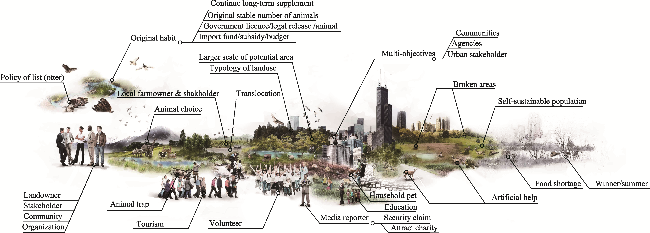
Figure 5 Schematic diagram of the relationships between social and ecological factors in the urban environment |
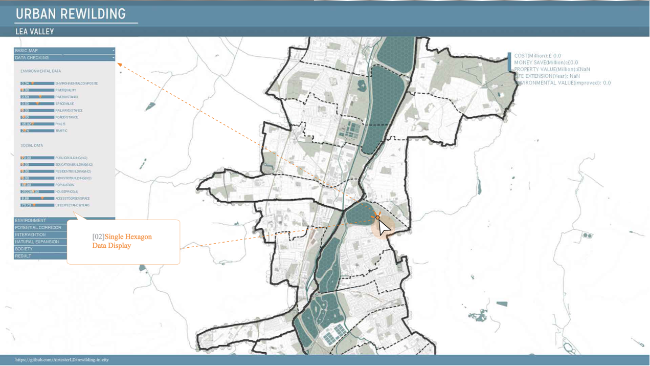
Figure 6 Display of the basic operational interface of the interactive map (single point data display) |
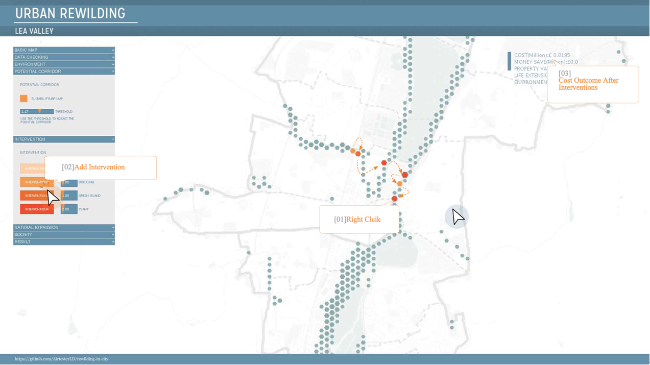
Figure 7 Display of the basic operational interface of the interactive map (with added intervention measures) |
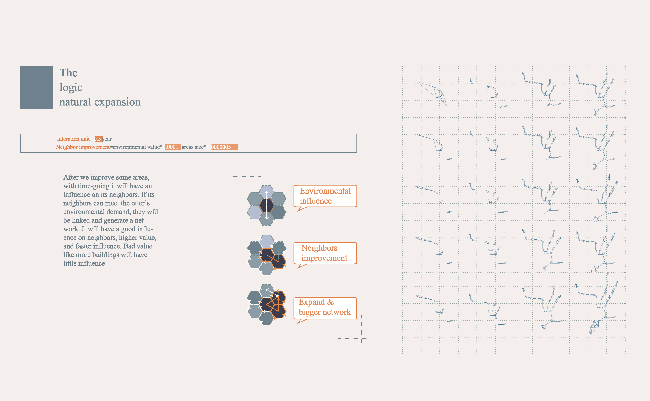
Figure 8 Schematic diagram of the basic diffusion mechanism of the interactive map |
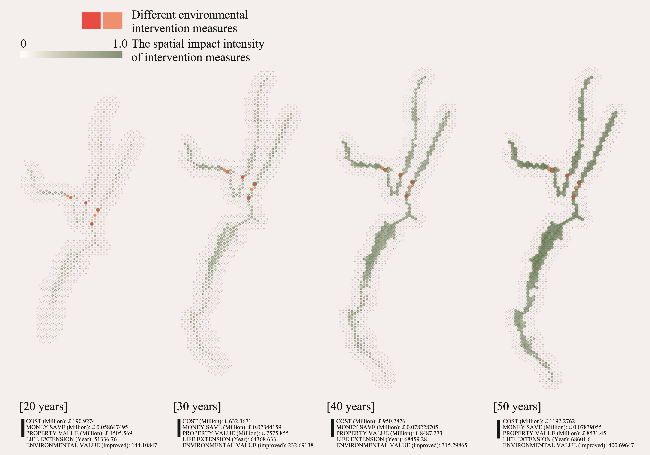
Figure 9 Prediction results of the interactive map under different strategies |
| [1] |
|
| [2] |
|
| [3] |
|
| [4] |
|
| [5] |
|
| [6] |
|
| [7] |
|
| [8] |
|
| [9] |
|
| [10] |
Wikipedia. 2018a. Decision-making. https://en.wikipedia.org/wiki/Decision-making.Viewed on 2022-08-16.
|
| [11] |
Wikipedia. 2018b. Machine learning. https://en.wikipedia.org/wiki/Machine_learning. Viewed on 2022-08-16.
|
| [12] |
|
| [13] |
|
| [14] |
|
/
| 〈 |
|
〉 |