Rural Revitalization and Ecotourism

Advances and Future Prospects in Ecological Risks of Tourism Destinations

  • FU Wei , 1 ,
  • ZHOU Bin , 2, * ,
  • YU Hu 3
Expand
  • 1. School of International Tourism, Anhui International Studies University, Hefei 231201, China
  • 2. Department of Tourism, Ningbo University, Ningbo, Zhejiang 315211, China
  • 3. Institute of Geographic Sciences and Natural Resources, Chinese Academy of Sciences, Beijing 100101, China
* ZHOU Bin, E-mail:

FU Wei, E-mail:

Received date: 2023-09-01

  Accepted date: 2024-01-06

  Online published: 2024-12-09

Supported by

The National Social Science Foundation of China(19BJY205)

Abstract

Scientifically mitigating the ecological risks in tourist destinations is an important foundation for the healthy and sustainable development of tourist destinations. In this study, we summarize the progress of ecological risk research in tourist destinations at home and abroad and the internal logic of ecological risk research in tourist destinations. Current research adhered to an internal framework encompassing the following stages: formation and analysis of ecological risks in tourism destinations, exposure characterization, effect exploration, risk assessment, and risk management. Specific research results were summarized in four aspects: the analysis of ecological risk sources, assessment of acceptors and endpoints, ecological risk assessment, perceptions of ecological risk, predictions and management of ecological risks within tourism destinations. Future research should prioritize fostering a harmonious relationship between humanity and natural environment, which necessitates strengthening the foundation of a multidisciplinary theory. Future research should focus on the formation mechanisms of ecological risks in tourist destinations, the mechanisms of interaction among ecological risk sources, receptors, and endpoints, ecological risk assessments of tourist destinations based on multiple risk sources, ecological risk assessments of typical tourism destinations and their key exposures, enhancing the ecological risk assessment index system for tourist destinations by incorporating data from various sources, conducting simulation studies to develop ecological risk warning systems for tourist destinations, exploring the spatiotemporal scale coupling relationships of ecological risks in tourist destinations, examining the perceptions and attitudes of different stakeholders towards ecological risks in tourist destinations, evaluating the cost-benefit of ecological risk adaptation, and performing prevention measures in tourist destinations.

Cite this article

FU Wei , ZHOU Bin , YU Hu . Advances and Future Prospects in Ecological Risks of Tourism Destinations[J]. Journal of Resources and Ecology, 2024 , 15(6) : 1679 -1691 . DOI: 10.5814/j.issn.1674-764x.2024.06.023

1 Introduction

Ecological risk refers to the potential impact of external elements that threaten ecosystems (Bian et al., 2016). A tourism destination represents a unique area characterized by intricate interactions in the man-land relationship (Peng et al., 2017). It is a complex, open regional entity shaped by the generation, distribution, concentration, and diffusion of tourism (Zhang et al., 2005). The rapid economic growth of tourism destinations has subjected their ecosystems to the dual pressures of environmental pollution and ecological degradation, thus escalating ecological risks. Investigating the ecological risks of tourism destinations is important in addressing the dilemma between the economic expansion of these destinations and the inadequacies in safeguarding their ecological environments, thereby facilitating sustainable development (Wen, 2004).
Currently, ecological risks of tourism destinations, stemming from regional ecological risk studies, is a prominent area of interest in tourism ecology. Scholars have approached this subject from various perspectives, including those related to man-land relationships, complex ecosystems, and landscape ecology. Their investigations have involved diverse topics, such as risk assessment of tourism destinations (El Sherbiny et al., 2006), spatial-temporal pattern evolution (Yan, 2017), ecological risk prediction (Liu, 2022), and sensitive area identification (Ólafsdóttir and Runnström, 2009). They utilized concept discrimination (Bian et al., 2016), measurement evaluation (El Sherbiny et al., 2006), vulnerability (Alvarez et al., 2022), and other entry points. As interdisciplinary theories and methods continue to advance, including those from tourism, ecology, geography, environmental science, and resource science, research on ecological risks of tourism destinations has implications for fields such as environmental risk, ecological security, and ecological health. However, an ecological risk is often studied as a link between ecological security and ecological health owing to its inherent logic and close correlation. In addition, the types of tourism destinations and the composition of their ecosystems are complex, and ecological risks, including uniqueness, integrity, and systematicity, remain unexplored (Xu et al., 2012). Consequently, there is an urgent need to consolidate research findings on the ecological risks in tourism destinations. Based on the results of existing studies at home and abroad, this study summarizes and analyzes the inherent logic and preliminary conclusions of ecological risk research in tourist destinations, and puts forth suggestions for future studies on ecological risks in tourist destinations in terms of research directions and methods. This endeavor has contributed valuable theoretical and academic insights to enhance the research landscape of ecological risks in Chinese tourism destinations.

2 Concept discrimination and research review

2.1 Concept discrimination

The three domains of tourism ecological risk, ecological health, and ecological security serve as indicators for assessing the status of tourism destination ecosystems. Although these three domains share a common focus on tourism destination ecosystems, they have distinct connotations and evaluation criteria. The concept of tourism ecological risk is rooted in the ecological risk theory, which denotes the likelihood of external factors (risk sources) posing a threat to the ecosystem of a tourist destination (risk receptor) (Bian et al., 2016). Tourism ecological health refers to the stability, dynamism, and sustainability of a tourist destination's ecosystem, allowing it to maintain its organizational structure, produce tourism-related products and services, and fulfill the sustainable development requirements of the destination. Moreover, it can demonstrate the capability to automatically recover over time after disruptions caused by human tourism activities (Zhou et al., 2015). In essence, tourism ecological security signifies the secure and balanced state of the ecological environment or human-land relationship within a tourist destination without threats or risks. Ecosystems can continuously meet the development requirements of the tourism industry without undergoing degradation, collapse, or quality reduction (Zhang et al., 2008). Tourism ecological security includes three dimensions: tourism security, ecological security, and the orderly interplay between the two (Lu et al., 2023). In terms of evaluation targets, ecological risk assesses the adverse impacts of the environment on ecosystems. Ecological health evaluates the status and interconnection of various ecosystem elements. Ecological security requires a comprehensive assessment that considers both the ecological health and ecological risks. The foundation for evaluating ecological security is derived from the safety requirements for human survival and development, representing an artificially defined ecosystem state (Bian et al., 2016). These three domains exhibit dialectical unity of opposites and high compatibility. Causally, research on tourism ecological security is derived from ecological risk considerations during tourism development, with ecological health serving as one of the developmental objectives within the framework of tourism ecological security. These three facets collectively address pivotal issues for sustainable development and the construction of an ecological civilization within tourism destinations (Han et al., 2022).

2.2 Research review

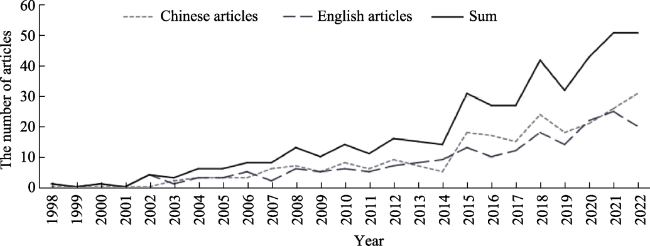
The analysis was conducted on the 434 related literature of ecological risks within tourism destinations in 1998‒2022, retrieved from CNKI and the Web of Science Core Collection. Based on the number of literature and important literature, the research trajectory can be broadly categorized into three distinct phases: the academic germination stage (1998-2003), academic exploration stage (2004-2014), and period of rapid development (2015 to present) (Fig. 1).
Fig. 1 Evolution of research publications at domestic and international levels from 1998 to 2022

2.2.1 Academic germination stage (1998-2003)

Environmental degradation resulting from industrial growth has led to changes in research in the global ecological environment domain. Since the 1970s, international gatherings and agreements, such as the “United Nations Declaration of the Human Environment” and the “World Charter for Nature”, have assumed pivotal roles in advancing worldwide environmental preservation. The Charter for Sustainable Tourism Development in 1995 indicates that tourism expansion cannot disrupt the delicate equilibrium between nature, culture, and the human living environment. Against this backdrop, the exploration of ecological risks within tourist destinations has begun.
During this stage, the research output on ecological risks within domestic and international tourism destinations remained relatively limited, with an average annual publication rate of 1.5. The predominant focus of research during this period included qualitative analyses of ecological risk impacts and categorization of ecological risks associated with tourism resource utilization. For example, certain scholars have conducted analyses of the ecological risks introduced by marine tourism development in Mauritius, which is situated in the West Indian Ocean. Their findings indicated that tourism-related resource pressure and environmental impacts in the region were increasing, posing a risk of ecological collapse to the local ecosystem (Daby, 2003). In China, researchers have introduced the concept of ecological risk into the realm of ecotourism management. They have proposed procedures and methodologies for conducting ecological risk analyses within the context of ecotourism management (Shang and Zhao, 2003). Moreover, some scholars have observed that tourism development within China's nature reserves contributes to ecological risks, including the invasion of non-native organisms, environmental pollution, and a reduction in biodiversity (Wen and Wei, 2003). During this stage, research output was limited in scope, the research scale was modest, and qualitative analysis was the predominant research approach. However, these findings have laid the groundwork for the systematic advancement of future research in this field.

2.2.2 Academic exploration stage (2004-2014)

Considering contemporary concerns such as ecotourism and sustainable development, the paradigm of environmental management in tourist destinations has evolved from post-incident coordination to proactive prevention. Scholars have explored ecological risks within the context of tourism development by constructing a dual-layer analytical model for the ecological risk assessment of tourist destinations. This represents a notable advancement in both theoretical and applied research concerning ecological risk assessment within the domains of tourist destinations and tourism development (Chen et al., 2007). During this stage, 121 academic contributions on ecological risks within tourism destinations were published, with an average annual growth rate of 8.8%. This phase exhibited several key characteristics. First, the research domain has experienced deepening exploration, extending to the ecological risk assessment of tourism destinations, elucidation of ecological risk formation mechanisms and principles (Zhong and Li, 2014), early warning mechanisms, and regulatory frameworks for ecological risk (Zhang and Wang, 2013), as well as the development of ecological risk management systems (Li and Sui, 2010). For example, researchers have established an ecological risk management system tailored to scenic spots (Wang, 2006). Second, the research scope during this phase expanded from micro- to meso- and macro-scales. Scholars have conducted studies on the ecological risks caused by soil erosion, ecological disasters, and tourism development, examining these issues within the context of scenic spots (Wang, 2007), cities (Zhao and Liu, 2010), provinces (Zhang and Wang, 2013), and river basins (Sherif et al., 2005). This reflects a trend towards broadening the scale of ecological risk research in tourism destinations and increasing the types of risk sources. Third, research methodologies have transitioned from qualitative analysis to quantitative techniques and models. Initially, the research focused primarily on qualitative and descriptive investigations. For example, several scholars have conducted descriptive analyses of ecological risks resulting from tourism development within the Kanas Nature Reserve, Xinjiang (You and Wang, 2005). As evaluation research matured, researchers began applying methods such as the potential ecological risk index (RI) (Lin et al., 2012), fuzzy comprehensive evaluation method (AFP) (Niu, 2013), grey Markov chain (Wang, 2006), and econometric models and techniques such as spatial analysis through Geographic Information Systems (GIS) in their examinations of ecological risk within tourism destinations (Tian, 2010).

2.2.3 Rapid development stage (2015 to present)

Since 2015, international environmental governance has demonstrated prominent attributes of systematization, adherence to the rule of law, and transformative breakthroughs. Notably, China has established a comprehensive ecological civilization framework and enacted a new Environmental Protection Law, emphasizing rigorous measures for the prevention and control of environmental risks to attain an overall enhancement of environmental quality. During this period, 304 research papers were published, an average annual growth rate of 7.4%. The research endeavors in this stage exhibit the following notable characteristics.
(1) During this phase, research within the field of ecological risks in tourism destinations has exhibited a maturation process characterized by a logical sequence of “evaluation-early-warning-prevention and control” (Liu et al., 2015; Ye et al., 2020). Studies have predominantly focused on ecological risk assessments of tourism destinations, including assessments of natural ecological environmental risks, with a few extending to the realm of social and cultural ecosystems (Loehr et al., 2022). Simultaneously, scholars have conducted investigations into risk early warning and risk prevention and control based on ecological risk assessments specific to tourism destinations. They investigated the establishment of ecological risk management and monitoring mechanisms, hierarchical early warning systems (Zhong, 2018), and the creation of a comprehensive ecological risk prevention and control framework for tourism, comprising management mechanisms, patrol and control mechanisms, and adjustment and control mechanisms (Cui and Shang, 2018).
(2) Research directions in the field of tourism ecological risk exhibit notable disparities between the domestic and international contexts. Scholars from China and other countries share a common interest in the pollution risks posed by heavy metals (Brtnický et al., 2020), organic compounds (Molnar et al., 2021), soil (Memoli et al., 2019), and water bodies (Zhang et al., 2015a) in tourism destinations. Domestic literature places greater emphasis on the analysis of ecological risk sources in tourism destinations (Zhang, 2020), the spatial and temporal distribution of ecological risks (Ziy, 2019), and ecological risk assessment techniques (Zhao, 2015). Research case sites have predominantly focused on tourist attractions (Shi et al., 2021a), national parks (Qiao et al., 2023), and urban tourist sites (Li et al., 2017b). In contrast, international studies prioritize investigations into the vulnerability of tourism destinations (Alvarez et al., 2022), assessment of resilience in tourism destinations (Azcárate, 2019), and examination of disturbance risks affecting tourism ecosystem services (Stritih et al., 2021). Moreover, international research has emphasized diverse ecosystem types within tourism destinations, such as rivers (Biedenweg et al., 2012), lakes (Molnar et al., 2021), coastal areas (Dvarskas, 2017), and forests (Stritih et al., 2021).
(3) The trend toward the diversification of research methods is prominently evident. At this stage, a wide array of methods has been extensively employed in the assessment of ecological risk and the examination of ecological risk perceptions within tourism destinations. These methods include the Fuzzy Comprehensive Evaluation method (FCE) (Yang et al., 2019), spatial analysis techniques such as RS and GIS (Pawłat-Zawrzykraj and Podawca, 2020), and interview methodologies (Skrimizea and Parra, 2019). Furthermore, as the realm of tourism research steadily embraces the incorporation of big data technology, the availability of data on human tourism activities and behaviors coupled with data on tourism’s geographical environment (Jiang et al., 2023) presents an opportunity to facilitate the monitoring and assessment of ecological risks within tourism destinations (Hu et al., 2017). For instance, the application of big data derived from tourist activities enables the analysis of the spatial distribution of tourism pressure within destinations, identification of ecologically vulnerable areas within these destinations (Chun et al., 2020), and realization of spatiotemporal risk evolution (Liu et al., 2021) and prediction (Wu et al., 2022) through the amalgamation of remote sensing big data and econometric models.

3 Risk sources, receptors and endpoints

3.1 Risk sources

The diverse nature of tourism destinations and their distinct development patterns contribute to the various types of risk sources. Generally, ecological risk sources in tourism destinations can be categorized into three principal aspects: tourism activities, natural elements, and human intervention. Specifically, ecological risk sources associated with tourism activities include tourism development projects (such as tourist highways and scenic spot parking facilities), tourism service enterprises, tourism practitioners, and the tourists themselves (Zhong and Li, 2014). Natural factors contributing to ecological risks include climatic conditions (Su, 2006), geological disasters (Huang et al., 2020), biological factors (Wang et al., 2021), and soil erosion (Wen, 2004). Human interventions manifest as chemical and heavy metal pollution (Lin et al., 2012) as well as the discharge of industrial and domestic wastewater, solid waste generation (Chen et al., 2007), and land occupation (Ziy, 2019). For example, research findings reveal that ecological risk sources within the Huangshan scenic spot include tourism-related interference, flooding, biological risk factors, and the potential for forest fires (Tian, 2010).

3.2 Risk receptors and endpoints

The ecological risk receptor within a tourism destination refers to the impact of risk sources on the ecological environment of tourism destinations (Zhong and Li, 2014). This typically includes components such as soil (Chen et al., 2017), biota (Rodríguez-Prieto et al., 2014), and atmosphere (Zhong and Li, 2014). The degree to which risk receptors within tourism destinations respond to risk sources constitutes an ecological endpoint (Zhong, 2018). The rationality of the evaluation endpoints is a scientific process of hypothesis verification, with the minimum acceptable change representing a scientific description for evaluating endpoint indices (He et al., 2020). Scholars have also explored ecological endpoints, including environmental impact (Accastello et al., 2019), biological effects (Parretti et al., 2020), landscape ecological patterns (Wu et al., 2016), and ecosystem services (Yang et al., 2018).

4 Ecological risk assessment for tourism destinations

4.1 Contents of ecological risk assessments of tourism destinations

Most studies on ecological risk assessment within tourism destinations adhere to the framework of “risk identification - exposure and hazard analysis - risk characterization” (Tian, 2010). In the risk-identification stage, assessors define objectives, select environmental elements for evaluation, and establish an analysis plan. During the analysis, the evaluators assessed stressor exposure and explored the relationship between stress levels and ecological effects. During the risk characterization stage, evaluators measure risks by integrating exposure and stress responses, delineate risks through evidence-based discussions, and determine ecological adversity (Yu et al., 2022). The content of ecological risk assessment for tourist destinations includes the assessment of heavy metal soil pollution within tourism destinations (Wang et al., 2017a), biological impact assessments (Mustika et al., 2017), evaluations of ecological disaster risks, and ecological risk assessments of landscapes (Sun et al., 2012; Li et al., 2021b; Ju et al., 2023). Furthermore, comprehensive ecological risk assessments have been conducted for various tourism destination ecosystems such as wetlands (Wang et al., 2018), cities (Shi et al., 2021b), oceans (Liao et al., 2015), and forests (Niu, 2013). These assessments not only concentrate on quantifying the degree of damage to specific risk receptors, but also emphasize the quantitative assessment of overall ecological risk within tourism destinations, highlighting the comprehensive aggregation of multiple risks.

4.2 Index systems for ecological risk assessments of tourism destinations

To assess and characterize the status, composition, and changes within the ecosystem of an evaluated tourism destination, it is imperative to construct an ecological risk assessment index system (Xu, 2018). Existing research has established indicator systems based on diverse scenarios, including landscape patterns, ecosystem pressures, environmental vulnerabilities, resilience, and ecosystem service functions (Table 1). These indicators include not only pressure-related indicators, such as pollutant emissions, species invasions, and unsustainable resource development within tourism destination ecosystems (Bian et al., 2016), but also indicators that reflect the conditions of tourism destination ecosystems, such as soil erosion, air quality, and environmental carrying capacity (Zhang and Wang, 2013). These indicators offer insights into the resilience of tourism destination ecosystems against environmental and societal pressures, as well as their resilience to recovery from various factors such as environmental changes, natural disasters, and human tourism development. They holistically account for the interplay between nature, the economy, and society. However, the ecological risk assessment indicators for different tourism destinations vary significantly owing to differences in disciplinary backgrounds, research perspectives, objectives, tasks, and the distinct types of tourism ecosystems they address.
Table 1 Index systems for ecological risk assessments of tourism destinations
Applicable scenario Evaluation standards Main indices Literature resources
Ecological risk assessment of tourist destinations based on landscape pattern Landscape structure, landscape loss degree Landscape area, patch number, landscape fragmentation
degree, and landscape separation degree
Jiang et al., 2019
Ecological risk assessment of tourist destinations based on ecosystem pressure Environmental risk, biological risk, landscape risk Water pollution, soil pollution, biodiversity, and habitat
fragmentation
Yang et al., 2019
Global climate change and
anthropogenic effects
Flood, drought, sedimentation, aquatic nutrients, and tourist density Yeler et al., 2022
Tourism factors and non-tourism factors Tourists, tour operators, and natural climate Chen et al., 2007
Land, atmosphere, biology, water Soil erosion, reduction of air quality, and reduction of
biological species
Zhang and Wang, 2013
Heavy metal content in soil Comparison of heavy metal contents in soil with background values at different elevations Zheng et al., 2018
Natural factors and human factors Intensity of soil erosion, slope, distance to road, and residential distance Li et al., 2021a
Ecological risk assessment of tourist destinations based on ecological vulnerability and resilience Resource value and stress the number of tourists, the number of residents, and solid waste generation Petrosillo et al., 2006
Ecological sensitivity, ecological
resilience, and social pressure
Altitude, precipitation erosivity, drought index, population density, road network density, and tourist facility reception level Kan et al., 2018
Ecological risk assessment of tourist destinations based on ecosystem service functions Landscape pattern and ecosystem
services value
Land use activity level, dominant change index, ecological service value of forest land, and ecological service value of grassland Yang et al., 2018
Provisioning service, regulating service, support service, and culture service
Food production, climate regulation, biological diversity,
aesthetic landscape, landscape interference degree, and
landscape fragmentation
Qiao et al., 2023

4.3 Methods and models for ecological risk assessment of tourism destinations

The ecological risk assessment methods and models employed in the context of tourism destinations have predominantly been adapted or borrowed from adjacent disciplines. These approaches often draw upon established ecological risk assessment frameworks and methods from Europe and the United States (Su, 2006). They were subsequently customized to align with the specific characteristics of ecological risk sources and ecosystems within tourism destinations in case studies. Furthermore, there is an identifiable trend toward the diversification and integration of these methods and models (Table 2).
Table 2 Measurement methods and models for ecological risk assessments of tourism destinations
Method category Method and model name Effect Representative literature
Mathematical
statistics methods
Two-layer analysis model Analysis on ecological risk sources of tourism destinations Chen et al., 2007
Entropy method Determining weights of ecological risk factors in tourism destinations Bian et al., 2016
Fuzzy mathematical method Assessing ecological risk levels of tourism destinations Li et al., 2021b
Markov chain Predicting future changes of land use quantity in tourism destinations Wu et al., 2022
Risk assessment code (RAC) Calculating the ecological risk indices of tourism destinations Su, 2006
Potential ecological risk index (RI) Calculating the risk degree of heavy metal pollution in soil of tourism destinations Zhang et al., 2015b
Analytic hierarchy process (AHP), Delphi method Calculating the weights of ecological risk factors of tourism destinations Su, 2006
Yang et al., 2019
Geospatial analysis method Nuclear density analysis Determining the ecological spatial distribution and form in tourism destinations Wu et al., 2022
Geographic detector Identifying the spatial differentiation of ecological risks in tourism destinations and their driving factors Li et al., 2021a
Computer simulation technology BP artificial neural network model Evaluating ecological risks of tourism destinations Wu et al., 2020
Monte Carlo model Simulating and analyzing uncertainties of ecological risks in tourism destinations Wu et al., 2020
(1) Mathematical statistical methods and models. Most existing ecological risk assessments within these destinations are grounded in field survey data and incorporate a variety of statistical techniques. During the evaluation process, the calculation of the weight of each risk factor is typically the initial step (Tian, 2010). The entropy method is often employed to mitigate the influence of subjective factors and address the information overlap among indicators (Bian et al., 2016). However, the uncertainty of the entropy method tends to increase when applied to diverse risk sources encountered in tourism destinations, leading to the prevalent use of factor weight methods (Chen et al., 2007). The risk assessment code (RAC) (Yang et al., 2018) is frequently combined with other methodologies, such as Delphi and RAC, to grade the ecological risks arising from wetland tourism development (Zhong and Li, 2014). In addressing the uncertainty of ecological risk within tourism destinations and handling multi-objective challenges with varying dimensions and conflicts, the fuzzy mathematics comprehensive evaluation method has found wide application (Xu, 2018).
(2) Integration of the geospatial analysis and statistical methods. Supported by technologies such as remote sensing (RS) (Jiang et al., 2019), geographic information systems (GIS) (Wang et al., 2017b), and digital elevation models (DEM) (Wang, 2007), significant progress has been made. This includes the assessment of ecological risks within tourism destinations along with their spatial-temporal differentiation characteristics and evolutionary trends. High-precision image data coupled with the incorporation of geographical detectors (Li et al., 2021a) and Markov chains (Hu et al., 2017; Wu et al., 2022) have contributed to these advancements.
(3) Integration of computer simulation technology with statistical methods. Notably, the FLUS prediction model has emerged as a valuable tool for addressing intricate and uncertain transformations in land use within tourism destinations (Liu, 2022). This model can be effectively combined with nuclear density analysis and Markov chain methodologies to forecast future ecological risks within tourism destinations (Wu et al., 2022). Consequently, this synergy enables the practical application of assessment outcomes.

5 Perception of ecological risks in tourist destinations

The perception of ecological risk within tourism destinations serves as a reflection of public preferences and values concerning ecological risk and its management (Zhang et al., 2010). Research within this domain includes various stakeholders, such as residents (Yang et al., 2010), tourists (Lepp and Gibson, 2008), operators (Espiner and Becken, 2013), and other relevant parties. Perspectives considered include span water environment risks (Velasco et al., 2018), climate change risks (Espiner and Becken, 2013), and natural disaster risks (Marín-Monroy et al., 2020). For example, operators and residents of coastal lagoons and tourist towns often exhibit heightened perception levels concerning significant environmental risks, natural disaster risks, and their associated impacts (Espiner and Becken, 2013; Velasco et al., 2018). Factors influencing risk perception primarily encompass the characteristics inherent to the risk itself, modes of risk communication, and individual characteristics of the perceivers (Yang et al., 2010). For example, there are variations in tourists’ perceptions of natural disaster risks at scenic spots (Lv et al., 2017) and the impact of residents’ objective adaptive capacities, trust in social discourse, adaptive motivations (Luo et al., 2017), attitudes toward ecological resources and hazards (Burger et al., 1999), and the exchange of risk-related information between the government and the public (Yang et al., 2010) on residents’ risk perception. Scholarly investigations have demonstrated the significant influence of residents’ risk perception within tourism destination ecosystems on their intentions and behaviors related to ecological protection (Jiang, 2022), whereas tourists' risk perception of tourism destinations affects their choice of destinations (Lepp and Gibson, 2008). Currently, research methods in this field predominantly include interviews and questionnaires, which have a substantial influence on the psychometric paradigm (Yang et al., 2010). In comparison, foreign research in this area commenced earlier than Chinese research, with a broader scope and boundaries and more in-depth and active research. Foreign research explores differences in the perception of environmental characteristics and ecological risks among stakeholders in tourism destinations from the perspective of human-environmental system interaction (Burger et al., 1999) and the overlap and interaction between society, community, and social-ecological resilience (Espiner and Becken, 2013). In contrast, Chinese research on the perception of ecological risks within tourist destinations began later, offering a narrower research scope. Primarily, it investigates stakeholders' perception levels, influencing factors, and corresponding ecological behaviors concerning ecological risks within tourism destinations.

6 Ecological risk prediction and management of tourism destinations

Given the dynamic nature of ecosystems within tourism destinations, it is vital to predict the ecological risks. Currently, ecological risk prediction for such destinations involves the development of mathematical models to predict ecological risks under diverse management scenarios utilizing remote sensing and GIS technology. Previous studies have predominantly focused on landscape patterns and land use, predicting natural disaster pre-risk in tourism destinations through simulation and dynamic simulation (Ye et al., 2020), assessing tourist reception pressure (Wu et al., 2022), evaluating overloading risks related to recreational carrying capacity (Xiao et al., 2022), soil erosion risks (Wang, 2007), and ecological risk predictions associated with land use (Sheng, 2015). For example, scholars have conducted studies and predictions concerning the future ecological risk of land use in Yan’an City and Anhui Shengjin Lake National Nature Reserve (Sheng, 2015; Liu, 2022). These studies frequently employed the Markov chain combined with the FLUS prediction model (Liu, 2022) or occasionally introduced the grey GM(1, 1) model (Wen, 2004) to conduct their research. However, the current body of research on ecological risk prediction for tourism destinations remains relatively limited in terms of quantity and methodological complexity.
Ecological risk management with tourism destinations plays a vital role in mitigating disturbances to the ecological environment and enhancing the functionality of ecosystem services. Current research in this field includes risk management objectives, early warning mechanisms, management strategies, monitoring protocols, risk communication strategies, and associated policies regarding the ecological aspects of tourism destinations. The overall objective of ecological risk management within tourism destinations is to achieve maximum risk-control benefits while minimizing costs. However, the absence of well-defined risk management objectives can be a “consistent defect” of existing studies (Chen et al., 2018)., Therefore, it is imperative to strengthen the research on risk management boundaries and thresholds. Additionally, tourism destinations should develop spatial early warning models for ecological threats such as ecological winds (Li et al., 2017a). Using early warning indices, destinations can assess potential warning scenarios and subsequently issue early warning signals, thereby enabling the implementation of scientifically informed ecological risk management strategies (Wang et al., 2013).
Regarding ecological risk management strategies for tourism destinations, domestic scholars primarily emphasize the development of targeted risk mitigation measures based on empirical case studies and risk assessments of specific tourism destinations. These measures include destination ecological zoning management (Zhu et al., 2023), delineation of ecological red lines (Li and Tian, 2014), identification of ecologically sensitive areas (Shi et al., 2015), implementation of ecological restoration initiatives (Chen et al., 2021) and research on pertinent institutional frameworks and policies (Wang et al., 2021). In contrast, foreign researchers have conducted more granular research, with a focus on conducting cost-effectiveness evaluations of ecological risk prevention measures in tourist destinations, such as the assessment of tourism development and construction plans (El Sherbiny et al., 2006), and monitoring high-risk tourism projects and contributing factors (Sherif et al., 2005). Both domestic and international studies have explored ecological risk monitoring in tourism destinations (Mu et al., 2022) and the domain of risk communication (Şenlier and Öztürk, 2011). Furthermore, it is imperative to enhance comprehensive risk communication among risk assessment researchers, tourism destination managers, and other stakeholders.

7 Conclusions and future outlook

7.1 Conclusions

Based on a comprehensive review of the relevant literature, the following conclusions are drawn in this article:
(1) The fundamental origin of ecological risk challenges in tourism destinations can be traced to the imbalance between the socioeconomic development of destinations and their environmental carrying capacity. This issue essentially stems from the conflict in the “man-land relationship” within the destination, catalyzed by tourism. Tourism development is the primary catalyst for the transformation of this relationship within a destination. However, the rapid growth of the tourism industry facilitates the temporal evolution of the man-land relationship and the methods, directions, and patterns of spatial reconfiguration, transitioning from harmony to conflict due to the complexity and fragility of tourism ecosystems. As scholars deepen their theoretical understanding of ecological risks in tourism destinations, their research has evolved from examining single ecosystem types, such as wetlands, forests, lakes, and oceans, to exploring complex ecosystem destinations, such as mountains, villages, and urban areas. The spatial scope has also expanded from micro-level analyses of individual attractions and medium-level assessments of urban tourism destinations to macro-level evaluations covering provinces or entire watersheds. Given the high reliance on resources and environmental factors for tourism-driven economic growth, the diverse range of destination ecosystems, the incomplete nature of ecological risk management mechanisms, and advancements in disciplinary methodologies and technical tools, the ecological risk landscape in tourism destinations has become increasingly intricate. Consequently, the conflict within the man-land relationship in tourist destinations has become more pronounced, rendering the study of ecological risk in tourism destinations a prominent focus for scholars.
(2) Existing studies primarily draw upon sustainable development theory, ecological civilization theory, and the theory of man-land relationships. They predominantly focus on achieving sustainable development goals for tourism destinations by balancing the protection of ecological environments and utilization of recreational resources. These studies address critical issues, such as the identification of sources, receptors, and endpoints in tourism ecological risk analysis, as well as the assessment, perception, early warning, and management of ecological risks within tourism destinations. They follow an internal logical sequence characterized by the stages of “formation and analysis of ecological risks of tourism destinations - exposure characterization-effect exploration-risk assessment-risk management”. Moreover, these studies rely on research, remote sensing, or statistical data to conduct static or cross-sectional examinations of ecological risks in specific tourism destinations. However, they exhibit a certain one-sidedness, and their case study conclusions lack comparability due to the absence of long-term and dynamic longitudinal studies. Additionally, these studies typically address specific temporal or spatial conditions and tend to overlook the spatial and temporal evolution trends of ecological risks in tourism destinations.
(3) The study of ecological risk in tourism destinations has formed a diverse academic landscape characterized by multidisciplinary research. This pattern draws primarily from natural sciences, such as ecology, resource science, environmental science, and geography, with supplementary contributions from social sciences, such as sociology, management, tourism, and economics. Research methods have evolved from simple qualitative and statistical analyses to quantitative approaches, exemplified by quantitative models including fuzzy mathematical methods, risk index methods, analytic hierarchy processes, Bayesian methods, and kernel density analyses. Several studies have integrated GIS and RS spatial analysis techniques. Overall, the research methodology employed in assessing ecological risks within tourism destinations has evolved from individualization towards greater levels of generalization and integration. This enhances their ability to explore further scientific inquiry. However, several challenges remain to be addressed. 1) Further integration of deep-level technology for extracting ecological risk information from tourism destinations, high-performance computer simulation, big data analysis, and advanced quantitative mapping techniques are needed. This includes improving the intelligence, visualization, and accuracy of quantitative models. 2) Overcoming obstacles in integrating econometric models and computer simulation technology to enable dynamic simulations of multi-scale, multi-factor and multi-dimensional ecological risk assessments for tourism destinations. 3) Enhancing the application of observation, analysis, and experimental technologies from environmental science, chemistry, ecology, and geography in the study of ecological risks in tourism destinations. 4) Addressing difficulties in obtaining data sources related to tourism development and ecological environments, especially in simultaneously collecting interviews, questionnaires, remote sensing data, network big data, and statistical data.
(4) Research on the ecological risk in tourism destinations relies predominantly on case studies of specific destination types. These studies have yielded scientifically robust and effective results, providing a strong foundation for elucidating key research areas in tourism destination ecological security. They aid in identifying critical scientific issues, mastering research methods and technologies, and advancing theoretical innovation. However, the generalizability of these results is limited due to variations in tourism ecosystem types, modes of tourism resource development, life cycle stages, stakeholder participation models, and resource and environmental management systems, as well as disparities in disciplinary backgrounds, research objectives, and practical orientations. Future research should be guided by the “two mountains theory” and the concept of harmonious coexistence between humans and nature within tourism destinations. It should be rooted in the national conditions of China and tourism destination practices, while considering the diversification of destination types, stages of tourism development, levels of ecological civilization development, and regional background variations. Establishing a framework for ecological risk research in tourism destinations with distinct Chinese characteristics is imperative.

7.2 Future outlook

Considering the scientific challenges within the field of tourism destination ecological risk research and the imperative requirements for effective management and decision-making in the pursuit of an ecological civilization within these destinations, future research efforts should focus on the following key areas. It is essential to delve deeper into these domains and actively cultivate pathways that foster mutual benefits between tourism economic development and ecological risk mitigation.

7.2.1 Consolidating the theoretical basis of ecological risks of tourism destinations

The study of ecological risk within tourism destinations is an interdisciplinary field that includes the natural, humanities, and social sciences. A robust theoretical foundation forms the basis for conducting high-quality research in this expansive domain. Future research endeavors should promote the incorporation of multidisciplinary theories, particularly emphasizing the integration of natural science theories such as man-land relationships, landscape ecology, environmental carrying capacity, and regional differentiation with theories from the humanities and social sciences, including management, economics, sociology, and tourism. Notably, theories such as resource-based theory, stakeholder theory, tourism destination life cycle theory, resource dependence theory, and transaction cost theory, among others, should be effectively employed to underpin and diversify the research content within the ecological risk assessment of tourism destinations.

7.2.2 Enriching the research content of ecological risks of tourism destination

Currently, the imperative to scientifically mitigate ecological risks in tourism destinations and advance the realization of “harmony between humans and nature” is a pivotal concern. This is especially relevant in the contemporary era, where ecological civilization construction has become a national strategy. The underlying conflict in the man-land relationship has several dimensions: the imbalance between tourist recreational activities, local community livelihoods, and stringent ecological and environmental conservation; and the contradiction between tourism project development, limited land resources, and rigorous oversight of ecological protection red lines. As a result, future development and ecological risk management models for tourism in China differ from those in other countries. Currently, ecological risk research in Chinese tourism predominantly focuses on identifying the sources, receptors, and endpoints of ecological risk in tourist destinations. This includes research on ecological risk assessment, perception, prediction, and management within these destinations. Future ecological risk assessment in Chinese tourism should include the following aspects: 1) Mechanisms behind the formation of tourism ecological risk; 2) The interaction mechanism among ecological risk sources, receptors, and endpoints; 3) Comprehensive ecological risk assessments for tourism destinations considering multiple risk sources, both temporally and spatially; 4) In-depth ecological risk assessments of specific tourism destinations and crucial exposures; 5) Improvement of the ecological risk assessment index system for tourism destinations utilizing multiple data sources; 6) Simulation-based research on early warning systems for ecological risks in tourism destinations; 7) Studies the relationship between ecological risks in tourism destinations across temporal and spatial scales; 8) Examination of stakeholder cognition and attitudes towards ecological risks in tourism destinations; and 9) Cost-benefit evaluations of adaptation and prevention measures for ecological risks in tourism destinations.

7.2.3 Strengthening the multi-source fusion in case studies

Currently, research on tourism ecological risk relies predominantly on a singular data source pathway, including monitoring, statistical, questionnaire, and remote sensing data. This monolithic approach lacks multi-source data integration. Future trends can include dynamic investigations, such as experimental, qualitative, and quantitative research methods, along with diversification in mathematical techniques and econometric models. Additionally, it includes the integration of intelligent big data analysis and networking of small data sampling. Given the complexity and systemization of ecological risk research in tourism destinations, such studies require access to a spectrum of data sources such as statistical data from the tourism industry, ecosystem monitoring data, landscape quality data, and ecological environmental data, as well as data from interviews or questionnaires involving tourists, local communities, and government authorities. Future endeavors in data acquisition should transcend the confines of a single data source, expanding from traditional manual statistical data to questionnaire, interview, remote sensing, and network-based big data. The objective is to facilitate the fusion of data from multiple sources representing diverse scales, characteristics, and topics.

7.2.4 Improving the methodological system of ecological risks of tourism destinations

The ecological risk of tourism destination exhibits characteristics of multi-dimensionality, multi-spatial scales, and multi-system interactions. Based on the perspective of a harmonious man-land relationship, comprehensive, dynamic, long-term, and systematic assessment, prediction, and early warning research are essential. 1) Qualitative research methodologies, such as SWOT analysis, pros and cons evaluation, impact and possibility matrix, content analysis, grounded theory, and related techniques should be further explored and integrated with quantitative methods and computer technology. 2) Tailoring quantitative methods, exemplified by econometric models, to local circumstances is essential. Approaches such as method sets, support vector machines, set-pair analysis, and system dynamics should be adapted as needed. Particularly in the context of ecological risk assessment for tourism destinations, it is imperative to establish a tourism destination-specific ecological risk index system that aligns with local conditions and the objectives of ecological civilization development. 3) Advancements in long-term tracking and monitoring technologies for critical factors in tourism ecological environments should be pursued to elucidate indicator change patterns and ecological environmental response mechanisms. 4) Enhanced computer technology and mathematical models should drive the improvement of simulation and assessment methods for tourism destination ecological risk scenarios, fostering greater integration of GIS and RS technologies. 5) The inclusion of dynamic simulation technology, artificial intelligence simulation technology, integrated simulation technology, and human-computer interaction decision support technology is vital for advancing tourism destination ecological risk assessment. 6) A fusion of machine learning algorithms with early warning models should be explored to obtain a more comprehensive understanding of ecological risk early warning methodologies and technologies specific to tourism destinations.
[1]
Accastello C, Blanc S, Brun F. 2019. A framework for the integration of nature-based solutions into environmental risk management strategies. Sustainability, 11(2): 489. DOI: 10.3390/su11020489.

[2]
Alvarez S, Bahja F, Fyall A. 2022. A framework to identify destination vulnerability to hazards. Tourism Management, 90: 104469. DOI: 10.1016/j.tourman.2021.104469.

[3]
Azcárate M C. 2019. Fueling ecological neglect in a manufactured tourist city: Planning, disaster mapping, and environmental art in Cancun, Mexico. Journal of Sustainable Tourism, 27(4): 503-521.

[4]
Bian D H, Cao Y H, He C G, et al. 2016. Conceptual distinction of ecological health, ecological risk and ecological security. Environmental Protection Science, 42(5): 71-75. (in Chinese)

[5]
Biedenweg K, Akyuz K, Skeele R. 2012. Balancing riparian management and river recreation: Methods and applications for exploring floater behavior and their interaction with large wood. Environmental Management, 50(2): 283-295.

[6]
Brtnický M, Pecina V, Vašinová Galiová M, et al. 2020. The impact of tourism on extremely visited volcanic island: Link between environmental pollution and transportation modes. Chemosphere, 249: 126118. DOI: 10.1016/j.chemosphere.2020.126118.

[7]
Burger J, Sanchez J, Whitfield Gibbons J, et al. 1999. Attitudes and perceptions about ecological resources and hazards of prople living around the Savannah river site. Environmental Monitoring and Assessment, 57(2): 195-211.

[8]
Chen J, Su Z, Yang L L. 2007. The construction and application of double-layer analysis model of ERA in tourism area: A case study in Lijiang River scenic spots. Journal of Guilin Institute of Tourism, 18(4): 554-558. (in Chinese)

[9]
Chen W H, Pan N, Xu D Y. 2017. Lateral variation analysis and evaluation of heavy metalsin roadsides of Wuyuan Scenic, China. Earth and Environment, 45(2): 179-184. (in Chinese)

[10]
Chen W P, Kang P, Wang M E, et al. 2018. Review on urban ecological risk management. Acta Ecologica Sinica, 38(14): 5224-5233. (in Chinese)

[11]
Chen X C, Li F, Li X Q, et al. 2021. Integrating ecological assessments to target priority restoration areas: A case study in the Pearl River Delta urban agglomeration, China. Remote Sensing, 13(12): 2424. DOI: 10.3390/rs13122424.

[12]
Chun J, Kim C K, Kim G S, et al. 2020. Social big data informs spatially explicit management options for National Parks with high tourism pressures. Tourism Management, 81: 104136. DOI: 10.1016/j.tourman.2020.104136.

[13]
Cui J F, Shang Q F. 2018. Study on risk assessment and counter measures to ecotourism development in Longnan. Journal of Ankang University, 30(3): 103-111. (in Chinese)

[14]
Daby D. 2003. Effects of seagrass bed removal for tourism purposes in a Mauritian Bay. Environmental Pollution, 125(3): 313-324.

PMID

[15]
Dvarskas A. 2017. Dynamically linking economic models to ecological condition for coastal zone management: Application to sustainable tourism planning. Journal of Environmental Management, 188: 163-172.

DOI PMID

[16]
El Sherbiny A H, Sherif A H, Hassan A N. 2006. Model for environmental risk assessment of tourism project construction on the Egyptian Red Sea coast. Journal of Environmental Engineering, 132(10): 1272-1281.

[17]
Espiner S, Becken S. 2013. Tourist towns on the edge: Conceptualising vulnerability and resilience in a protected area tourism system. Journal of Sustainable Tourism, 22(4): 646-665.

[18]
Han Y, Tang C C, Zeng R. 2022. Review of tourism ecological security from the perspective of Ecological Civilization Construction. Journal of Resources and Ecology, 13(4): 734-745. (in Chinese)

[19]
He S Y, Wang G P, Jiao W J, et al. 2020. An integrated disaster risks management for the National Park management objectives: A conceptual model. Acta Ecologica Sinica, 2020, 40(20): 7238-7247. (in Chinese)

[20]
Hu J L, Zhou Z X, Teng M J, et al. 2017. Ecological risk assessment of typical karst basins based on land use change: A case study of Lijiang River Basin, Southern China. Chinese Journal of Applied Ecology, 28(6): 2003-2012. (in Chinese)

[21]
Huang S M, Hu Q W, Li H D, et al. 2020. Ecological risk assessment of Mount Emei based on RS and GIS. Research of Environmental Sciences, 33(12): 2745-2751. (in Chinese)

[22]
Jiang K, Chen J, Dai W Y, et al. 2019. Analysis on landscape pattern and ecological risk of Guling Summer Resort in Fuzhou City. Journal of Fujian Normal University (Natural Science Edition), 35(1): 102-109. (in Chinese)

[23]
Jiang Y L. 2022. Research on the influence of residents’ecological risk perception on thier intention and action to protect ecology in rural tourism development. Diss., Chongqing, China: Chongqing Technology and Business University. (in Chinese)

[24]
Jiang Y Y, Gao J, Guo J M, et al. 2023. Big geodata in tourism research: innovative application, disciplinary influence and research prospect. Journal of Geo-information Science, 26(2): 242-258. (in Chinese)

[25]
Ju L F, Liu Y, Yang J, et al. 2023. Construction of nature reserves’ ecological security pattern based on landscape ecological risk assessment: A case study of Garze Tibetan Autonomous Prefecture, China. Sustainability, 15(11): 8707. DOI: 10.3390/su15118707.

[26]
Kan A K, Li G Q, Yang X, et al. 2018. Ecological vulnerability analysis of Tibetan towns with tourism-based economy: A case study of the Bayi District. Journal of Mountain Science, 15(5): 1101-1114.

[27]
Lepp A, Gibson H. 2008. Sensation seeking and tourism: Tourist role, perception of risk and destination choice. Tourism Management, 29(4): 740-750.

[28]
Li B W, Tian L. 2014. Study on ecological risk and its prevention and control of tourism real estate in China’s ecological core areas. Ideological Front, 40(3): 140-143. (in Chinese)

[29]
Li L, Feng R D, Xi J C. 2021a. Ecological risk assessment and protection zone identification for linear cultural heritage: A case study of the Ming Great Wall. International Journal of Environmental Research and Public Health, 18(21): 11605. DOI: 10.3390/ijerph182111605v.

[30]
Li S J, Sui Y Z. 2010. Ecological risk management countermeasures of island tourism development. Resource Development & Market, 26(8): 762-764. (in Chinese)

[31]
Li X Y, Dai Q W, Dang Z, et al. 2021b. Ecological risk assessment of travertine landscape in the Xuebaoding Watershed. Carsologica Sinica, 40(1): 140-146. (in Chinese)

[32]
Li Y F, Lin J Y, Sun X. 2017a. An early warning method on ecological risk and its application to improve landscape ecological security pattern regulation. Geographical Research, 36(3): 485-494. (in Chinese)

[33]
Li Y M, Wang Y J, Wang Y Q. 2017b. Ecological risk assessment in Beijing based on GIS. Science of Soil and Water Conservation in China, 15(2): 100-106. (in Chinese)

[34]
Liao G X, Liu M Q, Liu C A, et al. 2015. A preliminary study on comprehensive assessment method of ecological risk in marine protected areas: A case study of Binzhou Beikedi Island and Wetland National Nature Reserve. Marine Development and Management, 32(10): 59-65. (in Chinese)

[35]
Lin Y S, Fang F M, Wei X F, et al. 2012. Distribution characteristics and potential ecological risk assessment of heavy metals in soils in Huangshan scenic. Journal of Soil and Water Conservation, 26(2): 256-260. (in Chinese)

[36]
Liu F Y, Lan A J, Xiong K N, et al. 2015. Evaluation of land ecological risk in Guizhou Huangguoshu scenic area. Ecological Science, 34(1): 74-80. (in Chinese)

[37]
Liu S, Bai M, Yao M. 2021. Integrating ecosystem function and structure to assess landscape ecological risk in traditional village clustering areas. Sustainability, 13(9): 4860. DOI: 10.3390/su13094860.

[38]
Liu X J. 2022. Evolution of land use pattern and ecological risk assessment and forecast in Yan’an City. Diss., Xi’an, China: Chang’an University. (in Chinese)

[39]
Loehr J, Becken S, Nalau J, et al. 2022. Exploring the multiple benefits of ecosystem-based adaptation in tourism for climate risks and destination well-being. Journal of Hospitality & Tourism Research, 46(3): 518-543.

[40]
Lu L, Zeng J, Yu T H. 2023. A review of studies on tourism ecological security. Ecological Science, 42(2): 238-247. (in Chinese)

[41]
Luo L, Zhao X Y, Wang Y R, et al. 2017. Farmers’ perception of climate change based on a structural equation model: A case study in the Gannan Plateau. Acta Ecologica Sinica, 37(10): 3274-3285. (in Chinese)

[42]
Lv J Q, Wang X F, Guo J. 2017. Evaluation of tourist rainstorm hazard risk perception in Jinsixia scenic area based on AHP. Henan Science, 35(10): 1708-1715. (in Chinese)

[43]
Marín-Monroy E A, Hernández-Trejo V, Romero-Vadillo E, et al. 2020. Vulnerability and risk factors due to tropical cyclones in coastal cities of Baja california sur, Mexico. Climate, 8(12): 144. DOI: 10.3390/cli8120144.

[44]
Memoli V, Esposito F, Panico S C, et al. 2019. Evaluation of tourism impact on soil metal accumulation through single and integrated indices. Science of the Total Environment, 682: 685-691.

[45]
Molnar E, Maasz G, Pirger Z. 2021. Environmental risk assessment of pharmaceuticals at a seasonal holiday destination in the largest freshwater shallow lake in Central Europe. Environmental Science and Pollution Research, 28(42): 59233-59243.

[46]
Mu X Q, Guo X Y, Ming Q Z, et al. 2022. Dynamic evolution characteristics and driving factors of tourism ecological security in the Yellow River Basin. Acta Geographica Sinica, 77(3): 714-735. (in Chinese)

DOI

[47]
Mustika P L K, Welters R, Ryan G E, et al. 2017. A rapid assessment of wildlife tourism risk posed to cetaceans in Asia. Journal of Sustainable Tourism, 25(8): 1138-1158.

[48]
Niu F. 2013. Risk assessment of forest eco-tourism based on AFP method: A case study of Huangyadong National Forest Park. Forestry Economics, 9: 117-120. (in Chinese)

[49]
Ólafsdóttir R, Runnström M C. 2009. A GIS approach to evaluating ecological sensitivity for tourism development in fragile environments: A case study from SE Iceland. Scandinavian Journal of Hospitality and Tourism, 9(1): 22-38.

[50]
Parretti P, Canning-Clode J, Ferrario J, et al. 2020. Free rides to diving sites: The risk of marine non-indigenous species dispersal. Ocean & Coastal Management, 190: 105158. DOI: 10.1016/j.ocecoaman.2020.105158.

[51]
Pawłat-Zawrzykraj A, Podawca K. 2020. Diversification of municipalities located in the impact area of National Parks in terms of environmental requirements of sustainable tourism. Sustainability, 12(12): 4896. DOI: 10.3390/su12124896.

[52]
Peng H S, Zhang J H, Han Y, et al. 2017. Measurement and empirical analysis of eco-efficiency in tourism destinations based on a Slack-based Measure-Data Envelopment Analysis model. Acta Ecologica Sinica, 37(2): 628-638. (in Chinese)

[53]
Petrosillo I, Zurlini G, Grato E, et al. 2006. Indicating fragility of socio- ecological tourism-based systems. Ecological Indicators, 6(1): 104-113.

[54]
Qiao B, Cao X Y, Sun W J, et al. 2023. Ecological zoning identification and optimization strategies based on ecosystem service value and landscape ecological risk: Taking Qinghai area of Qilian Mountain National Park as an example. Acta Ecologica Sinica, 43(3): 986-1004. (in Chinese)

[55]
Rodríguez-Prieto I, Bennett V J, Zollner P A, et al. 2014. Simulating the responses of forest bird species to multi-use recreational trails. Landscape and Urban Planning, 127: 164-172.

[56]
Şenlier P D N, Öztürk R A G. 2011. Investigation of fragility to estimate tourism pressure. Journal of Coastal Research, 61: 217-220.

[57]
Shang T C, Zhao L M. 2003. A study on ecological risk analysis and ecotourism system management. Journal of South China Agricultural University (Social Sciences Edition), 2(2): 72-76. (in Chinese)

[58]
Sheng S W. 2015. Research on ecological risk assessment in land use model of Shengjin Lake in Anhui Province. Diss., Hefei, China: Anhui Agricultural University. (in Chinese)

[59]
Sherif A H, El Sherbiny A H, Hassan A N. 2005. Estimating the environmental risk of construction activities on the ecological receptors along the Egyptian Red Sea Coast. Sustainable Development and Planning, 1: 251-260.

[60]
Shi H, Shi T G, Liu Q, et al. 2021a. Ecological vulnerability of tourism scenic spots: Based on remote sensing ecological index. Polish Journal of Environmental Studies, 30(4): 3231-3248.

[61]
Shi L Y, Du B B, Chen D K. 2021b. Assessment of urban ecological risks based on valuation of ecosystem services. Environmental Science & Technology, 44(2): 203-210. (in Chinese)

[62]
Shi Y, Zhang W, Ren J M, et al. 2015. Ecological suitability assessment and eco-mapping for tourism development in an eco-sensitive region. Acta Ecologica Sinica, 35(23): 7887-7898. (in Chinese)

[63]
Skrimizea E, Parra C. 2019. Social-ecological dynamics and water stress in tourist islands: The case of Rhodes, Greece. Journal of Sustainable Tourism, 27(9): 1438-1456.

DOI

[64]
Stritih A, Bebi P, Rossi C, et al. 2021. Addressing disturbance risk to mountain forest ecosystem services. Journal of Environmental Management, 296: 113188. DOI: 10.1016/j.jenvman.2021.113188.

[65]
Su Z. 2006. Analysis and assessment on ecological risks in scenic spot: A case study of Lijiang River. Diss., Nanning, China: Guangxi University. (in Chinese)

[66]
Sun Y G, Zhao D Z, Zhang F S, et al. 2012. Spatiotemporal dynamic fuzzy evaluation of wetland environmental pollution risk in Dayang estuary of Liaoning Province, Northeast China based on remote sensing. Chinese Journal of Applied Ecology, 23(11): 3180-3186. (in Chinese)

[67]
Tian Y. 2010. Ecological risk analysis and evaluation of Huangshan scenic area. Diss., Wuhu, China: Anhui Normal University. (in Chinese)

[68]
Velasco A M, Pérez-Ruzafa A, Martínez-Paz J M, et al. 2018. Ecosystem services and main environmental risks in a coastal lagoon (Mar Menor, Murcia, SE Spain): The public perception. Journal for Nature Conservation, 43: 180-189.

[69]
Wang B, Feng C W, Liu X Q, et al. 2013. Heavy metal pollution and the assessment of its ecological risk early warning in Dayanghan Metropolitan Wetland Park. Chinese Journal of Soil Science, 44(2): 484-489. (in Chinese)

[70]
Wang G P, He S Y, Ding L B, et al. 2021. Disaster risk management system establishment of China National Parks based on the management objectives. World Forestry Research, 34(1): 76-83. (in Chinese)

[71]
Wang H, Song C C, Song Y Y. 2018. Scale-dependence of ecological risk assessment and scheme formulation for regional ecological risk assessment of wetlands in Sanjiang Plain. Wetland Science, 16(2): 106-113. (in Chinese)

[72]
Wang H C. 2006. Ecosystem services, ecological security and ecological risk assessment—A case of Wuyishan Secenery District. Diss., Fuzhou, China: Fujian Agriculture and Forestry University. (in Chinese)

[73]
Wang S, Deng J, Deng F L, et al. 2017a. Impact of agricultural tourism activity on the soil environment in karst regions. Carsologica Sinica, 36(3): 377-386. (in Chinese)

[74]
Wang T, Zhang C, Yu X T, et al. 2017b. Effect of land use change on landscape ecological security in Erhai Basin. Chinese Journal of Ecology, 36(7): 2003-2009. (in Chinese)

[75]
Wang W W. 2007. Managing soil erosion potential by integrating digital elevation models with the Southern China’s revised universal soil loss equation. Journal of Mountain Science, 4(3): 237-247.

[76]
Wen J. 2004. Research on regional ecological risk assessment of Qiandao Lake. Diss., Changsha, China: Central South Forestry College. (in Chinese)

[77]
Wen J, Wei M C. 2003. Ecological risks and countermeasures during nature reserve tourism development in our country. Central South Forest Inventory and Planning, 22(4): 41-44. (in Chinese)

[78]
Wu J S, Luo Y H, Wang X Y, et al. 2020. Uncertainty analysis and risk management of ecological risk of urban landslide disaster: A case of Shenzhen City. Acta Ecologica Sinica, 40(11): 3612-3621. (in Chinese)

[79]
Wu L Y, He D J, You W B, et al. 2016. Disaster ecological risk assessment in Dongshan Island: Spatio-temporal evolution. Acta Ecologica Sinica, 36(16): 5027-5037. (in Chinese)

[80]
Wu Z H, Yu Q P, Wang Y B, et al. 2022. Scenario simulation and prediction of land use patterns in Guilin City considering impact of scenic spot expansion. Bulletin of Soil and Water Conservation, 42(5): 131-139. (in Chinese)

[81]
Xiao L L, Zhu D F, Yu H. 2022. Simulation on recreation carrying capacity of Sanjiangyuan National Park. Acta Ecologica Sinica, 42(14): 5642-5652. (in Chinese)

[82]
Xu C. 2018. Risk assessment of Xinjin Baihetan National Wetland Park ecosystem. Diss., Chengdu, China: Sichuan Agricultural University. (in Chinese)

[83]
Xu Y, Gao J F, Zhao J H, et al. 2012. The research progress and prospect of watershed ecological risk assessment. Acta Ecologica Sinica, 32(1): 284-292. (in Chinese)

[84]
Yan H H. 2017. Study on the evolution and evaluation of ecological environment in the marine ranching tourism area of Wuzhizhou Island, Sanya. Diss., Haikou, China: Hainan University. (in Chinese)

[85]
Yang A L, Zhong X, Zhang Y Y, et al. 2019. Study of ecological risk assessment of tourism development based on AHP-fuzzy comprehensive evaluation—Taking Hexi Corridor area in Gansu Province as an example. Resource Development & Market, 35(6): 861-866. (in Chinese)

[86]
Yang J, Bi J, Huang L, et al. 2010. Public perception of cyanobacterial bloom ecological risk of Taihu Lake in China: A case study in Wuxi. Resources and Environment in the Yangtze Basin, 19(12): 1456-1461. (in Chinese)

[87]
Yang X, Wang J, Sun X Q, et al. 2018. Tourism industry-driven changes in land use and ecological risk assessment at Jiuzhaigou UNESCO World Heritage Site. Journal of Spatial Science, 63(2): 341-358.

[88]
Ye X L, Wen J H, Zhu Z F, et al. 2020. Natural disaster risk assessment in tourist areas based on multi scenario analysis. Earth Science Informatics, 15(1): 659-670.

[89]
Yeler O, Aydin G B, Camur-Elipek B, et al. 2022. Application of hypothetical ecological risk analysis to sustainable usage of possible winter recreation areas in Seyhan Basin (Türkiye). Aquatic Sciences and Engineering, 37(4): 229-234.

[90]
You H T, Wang H W. 2005. Ecological risks and countermeasures in Kanas Nature Reserve for tourism development. Journal of Xinjiang Normal University (Natural Science Edition), 24(3): 217-219. (in Chinese)

[91]
Yu X, Yu R L, Sun S F, et al. 2022. Progress and enlightenment of ecological risk assessment research based on CiteSpace. Acta Ecologica Sinica, 42(24): 10338-10351. (in Chinese)

[92]
Zhang C L. 2020. Study on ecological risk assessment of forest ecotourism project—Taking Baomeiling in Hainan as an example. Diss., Haikou, China: Hainan University. (in Chinese)

[93]
Zhang C P, Jia H L, Wang P, et al. 2015a. Ecological risk evaluation of heavy metal pollution in top sediments of Ocean Park in Techeng Island. Environmental Science and Technology, 38(6): 217-220. (in Chinese)

[94]
Zhang G H, Wang J. 2013. Ecological risk assessment and early warning mechanism for tourism development in Hainan Province. Tropical Geography, 33(1): 88-95. (in Chinese)

[95]
Zhang H Y, Ge Y, Li F Y, et al. 2010. A review of the psychometric paradigm in environmental risk perception. Journal of Natural Disasters, 19(1): 78-83. (in Chinese)

[96]
Zhang J H, Zhang J, Li N, et al. 2005. An analysis on spatial field effect of domestic tourist flows in China. Geographical Research, 24(2): 293-303. (in Chinese)

[97]
Zhang J H, Zhang J, Wang Q. 2008. Measuring the ecological security of tourist destination: Methodology and a case study of Jiuzhaigou. Geographical Research, 27(2): 449-458. (in Chinese)

[98]
Zhang Y J, Deng M, Shao Z, et al. 2015b. Spatial distribution and ecological risk assessment of heavy metal in typical ecotourism area soil. Environmental Impact Assessment, 37(5): 75-79. (in Chinese)

[99]
Zhao J. 2015. Research on the technology of ecological risk assessment in tourism resource’s exploitation and planning. Diss., Changchun, China: Jilin Agricultural University. (in Chinese)

[100]
Zhao L M, Liu H Y. 2010. Assessment of tourism system’s ecological disaster risk based on fuzzy matter-element model. Journal of Arid Land Resources and Environment, 24(10): 185-190. (in Chinese)

[101]
Zheng H X, Wang Y, Chen F, et al. 2018. Pollution characteristics and potential ecological risk assessment soil heavy metal in the south top of Wutai Mountain, Shanxi, China. Journal of Guangxi Normal University (Natural Science Edition), 36(4): 99-107. (in Chinese)

[102]
Zhong L S, Li P. 2014. Ecological risk assessment of tourism development in Awancang Wetland, Gansu Province. Progress in Geography, 33(11): 1444-1451. (in Chinese)

DOI

[103]
Zhong X. 2018. Study on ecological risk assessment of tourism development in Hexi Corridor based on AHP and fuzzy comprehensive evaluation methods. Diss., Lanzhou, China: Northwest Normal University. (in Chinese)

[104]
Zhou B, Zhong L S, Chen T, et al. 2015. Dynamic assessment on tourism ecological health in Zhoushan Islands. Geographical Research, 34(2): 306-318. (in Chinese).

[105]
Zhu Y H, Hou Z D, Xu C X, et al. 2023. Ecological risk identification and management based on ecosystem service supply and demand relationship in the Bailongjiang River Watershed of Gansu Province. Scientia Geographica Sinica, 43(3): 423-433. (in Chinese)

DOI

[106]
Ziy E H. 2019. Ecological risk assessment of Nanshan Scenic area in Urumqi. Diss., Urumqi, China: Xinjiang Normal University. (in Chinese)

Outlines

/