Ecotourism

The Territorial Human-Environment Relationship System: Exploring the Spatial Development of the “Three Spaces” in Mountain Outdoor Tourism Destinations

  • LING Xiaopan ,
  • ZHANG Weizhong ,
  • WANG Bing ,
  • LIU Yong , *
Expand
  • Sichuan Tourism University, Chengdu 610100, China
* LIU Yong, E-mail:

LING Xiaopan, E-mail:

Received date: 2023-10-09

  Accepted date: 2024-01-20

  Online published: 2024-10-09

Supported by

The Sichuan Provincial Key Research Base of Philosophy and Social Sciences(WRF202401)

The Key Research Base of Sichuan Provincial Department of Education Humanities and Social Science(XXTYCY2023C17)

The Sichuan Provincial Key Research Base for Humanities and Social Sciences in Higher Education(HWYD2024B10)

Abstract

In the relationship between humans and the environment, all human activities depend on the geographical environment, which serves as the spatial place and material foundation for human life. This study provides a perspective on the human-environment relationship, using a case study of the Dashanbao Mountainous Outdoor Tourism Planning Area in Zhaotong, Yunnan. This study employed methods such as literature review, on-site investigation, and GIS spatial analysis to analyze the functional characteristics of the regional subject, spatial structuring, and spatiotemporally variable ordered processes of Dashanbao as a tourism destination from the perspective of human-environment relationships. The results indicate that under the guidance of the human-environment relationship system philosophy, the construction path of the “ecological space, production space, and living space” includes three main aspects: (1) The formation of five major project blocks and five functional zones to meet the diverse needs of different groups; (2) The establishment of a "multi-core module" structure optimizing the spatial layout of the tourism destination; and (3) With the changes in space and time, the convergence of elements in each block can form a composite mountainous outdoor tourism space with the characteristics of “ecology, life, and production”. The results of this study provide a scientific basis for promoting the sustainable development of tourism regional systems with mountainous characteristics.

Cite this article

LING Xiaopan , ZHANG Weizhong , WANG Bing , LIU Yong . The Territorial Human-Environment Relationship System: Exploring the Spatial Development of the “Three Spaces” in Mountain Outdoor Tourism Destinations[J]. Journal of Resources and Ecology, 2024 , 15(5) : 1219 -1228 . DOI: 10.5814/j.issn.1674-764x.2024.05.010

1 Introduction

In October 2022, the Chinese government proposed the promotion of green development to foster the harmonious coexistence between humans and nature. The natural environment is a fundamental condition for the survival and development of humanity. Respecting, adapting to, and protecting nature are inherent requirements for comprehensively building a modern socialist country. Therefore, it is imperative to firmly establish and practice the concept of “green mountains and clear waters are invaluable assets”, and to plan development from the perspective of the harmonious coexistence between humans and nature. China is a mountainous country, and the mountains play a crucial role in maintaining national security, ecological environmental security, and sustainable social and economic development (Zhong, 2011). Mountains, which are characterized by significant slopes on the Earth’s land surface, experience the comprehensive effects of various dynamic systems. Therefore, mountains undergo complex processes of material movement and energy changes that differ markedly from those in the plains and lowlands. These distinct dynamic systems in mountains interact with and constrain each other, forming the unique and complex dynamic systems of mountainous human-land relationships in regional systems (Xu et al., 1994). This complex dynamic system influences the intensities and rates of natural processes in mountains, thereby constraining the efficiency and effectiveness of human processes. However, as a new driving force for China’s socioeconomic development and an essential component of national strategy (Lu et al., 2021), tourism has a significant disruptive effect on mountainous human-land relationships and regional systems. Relying on mountain water, animals and plants, the three-dimensional climate and other natural resources, mountain outdoor settings have become a key area for mountain vacation tourism through mountain climbing, exploration, investigation, field trips and other characteristic activities (Gong et al., 2023). Meanwhile, areas rich in mountainous outdoor tourism resources face the three-tiered relationships of people and local environments, people and economies, and people and resources when planning mountainous outdoor tourism destinations with outdoor sports at their core. The production space, living space, and ecological space exhibit different development processes at different times (Tan et al., 2021). The establishment of a research framework for human-land relationships in mountainous tourism destinations can enrich the types of regional systems with human-land relationships and theoretical research on the developmental dynamics of human-land relationships. This will be beneficial for scientifically understanding the principles and mechanisms of tourism as a major driving force in the new era on mountainous human-land relationships and regional systems. It can also provide a scientific basis for promoting the sustainable development of tourism regional systems with mountainous characteristics (Shimel et al., 2015; Ribeiro and Orionn, 2021; Ming and Wang, 2022).
Research on human-land relationships began earlier in foreign countries, primarily focusing on the understanding of basic theories and quantitative research methods, such as resource and environmental carrying capacity, material flow models, ecological footprints, energy value analysis, ecological efficiency, mathematical statistics, and comprehensive integrated assessments (Wang, 2020). While drawing on the evolution of foreign human-land relationship ideas and theories, related research in China has delved into the development of the connotations of human-land relationship concepts (Li et al., 2016), tourism human-land relationship theories (Ren, 2015), the analysis and evaluation of the evolution of human-land relationships in different regions from a spatial dimension (Fu et al., 2019), and the sustainable development of resource areas (He, 2011). Current research on human-land relationships emphasizes the analysis and assessment of the sustainability status and capacity for development within a certain region under the constraints of resource and environmental factors (Ren, 2015).
The concept of “ecological space, production space, and living space” refers to ecological space, production space, and living space. In domestic research on “ecological space, production space, and living space”, common subjects include rural settlements (Fu et al., 2019), urban tourism (Tao et al., 2016), and land use (Yu et al., 2020), as well as the evolution of patterns and optimization of “ecological space, production space, and living space”, spatial functional transformations (Yang et al., 2020), and spatial reconstruction (Xue et al., 2015). Combining the scope of research on human-land relationships and the evolution of “ecological space, production space, and living space”, recent studies have focused on islands, urban scenic areas, rural tourism settlements, and other subjects. However, some scholars have proposed conducting research with human-land relationships as the core, aiming to achieve coordinated development between mountainous outdoor tourism, human-land relationships, regional systems, population, resources, the environment, and socio-economic aspects (Wang and Ming, 2017). This involves improving the structures of regional interactions, exploring the potential of mutual interactions, and accelerating positive cycles between interactive systems (Liu and He, 2008). However, concrete case studies are currently lacking. Therefore, based on the theory of human-land relationship regional systems, using the case of Dashanbao in Zhaotong, Yunnan, this study elaborates on three aspects: the main functional characteristics of the regional subject, spatial structuring, and the spatiotemporal variability of ordered processes. The goals are to contribute to the practical development of the main functional zones for mountainous outdoor tourism in Dashanbao, improve the construction of mountainous outdoor tourism spaces, and form a composite mountainous outdoor tourism space with the characteristics of “ecology, life, and production”. The development path of mountainous areas in Yunnan, especially Dashanbao, holds a unique and exemplary significance globally, symbolizing a scientific basis for promoting the sustainable development of tourism regional systems with mountainous characteristics.

2 Research theory and case area

2.1 Mountain outdoor tourism regional function theory

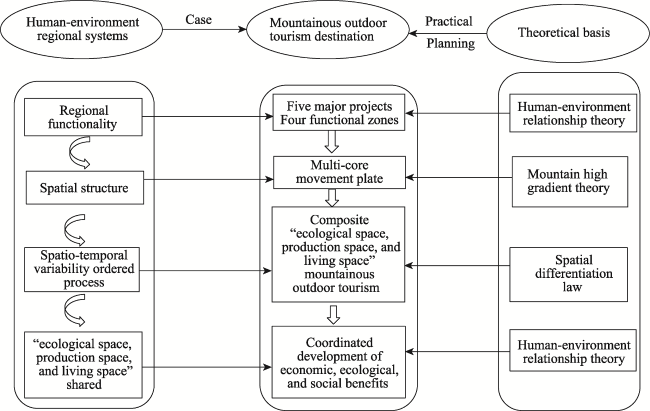
The human-environment relationship territorial system is based on a specific geographical area of the earth’s surface as the foundation for the human-environment relationship system (Wu, 1991; 2008). In the human-environment relationship territorial system, the natural geographic environment serves as the carrier for human life. The dependence of humans on the natural environment has the function of protecting nature, and the formation of territorial functions reflects the spatial occupancy and dependency of human activities on the natural environment. The natural environment bears the sustainable development of human activities, and the relationship between humans and nature is harmonious (Li and Tang, 2018). The mechanism that generates the territorial functions of mountain outdoor tourism must also follow the principles of the human-environment relationship territorial system theory to obtain a complete scientific basis. The human-environment relationship is a complex system, not a single ecological system, and it bears the comprehensive functions of the sustainable development of the human-environment relationship. The laws governing the growth and development of the territorial functions of mountain outdoor tourism are produced under the interaction of humans and nature. Fundamentally, the human-environment relationship territorial system constitutes the basic theory of the territorial functions of mountain outdoor tourism (Fig. 1).
Fig. 1 Research framework
Mountains consist of regions with a certain elevation, relative height, and slope, along with the accompanying valleys, mountain ranges, and other components. This type of territorial region not only has hierarchy but also spatial differentiation at different scales. Mountainous natural territorial types are extremely diverse and varied. Therefore, we can divide mountain outdoor tourism space into aquatic, terrestrial, and aerial spaces. According to the theory of the human-environment relationship territorial system, we can deepen the exploration of the embedded territorial functions of mountain outdoor tourism destinations, subdividing functional zones based on the spatial differentiation of the mountain outdoor tourism space. Over time, the interactions between humans and mountains constitute a changing spatial structure, and both vertical and lateral spaces undergo changes (Wang et al., 2020). The interactions and influences between regions determine the formation and evolution of territorial functions, leading to spatiotemporal variation of the tourism space. This spatiotemporal variation should exhibit a form of “orderliness”. In the evolutionary process and at each specific spatiotemporal scale, the regional effects of territorial functions and spatial structures differ, and this is mainly manifested in different economic, ecological, and social benefits.

2.2 Overview of the case study area

The Dashanbao Mountain Outdoor Tourism Destination is located on the western edge of the Dashanbao Scenic Area in Zhaotong City, Yunnan Province. It is situated at the intersection of Zhaoyang District and Ludian County, approximately 85 km from downtown Zhaotong. Zhaotong City is located in the northeastern part of Yunnan Province, adjacent to the provinces of Sichuan and Guizhou. Heavily reliant on land transportation due to its unique geographical location, Zhaotong City incurs relatively higher time costs for reaching major source markets. Consequently, it has been a blind spot for traditional tourism routes for many years.
The Dashanbao Mountain Outdoor Tourism Area has mainly formed three tourist circles in its surrounding region, namely, the South Sichuan Tourism Circle, the Central Yunnan Tourism Circle, and the Northwest Guizhou Tourism Circle. The Dashanbao Mountain Outdoor Tourism Area is positioned at the intersection of these three tourism circles, but despite having a relative geographical advantage, it is not integrated into any of them. It lacks regional linkage and its incorporation into traditional sightseeing tourism circuits has been challenging. The surrounding scenic areas of the tourist destination mainly feature mountainous and geological landscapes. Currently, the developed tourism projects primarily focus on natural sightseeing, but lack any experiential products.
The Dashanbao Mountain exhibits a strong visual impact and high-quality grades in terms of the natural landscape, but compared to the surrounding areas, it does not possess distinct advantages. Specifically, as a habitat for the black-necked crane, Dashanbao has not gained high visibility among tourists in the past, resulting in limited market awareness. To rapidly enhance the recognition of Dashanbao Mountain as an outdoor tourism destination, the most effective strategies are to cultivate unique tourism labels, establish a differentiated thematic positioning, and make extreme sports serve as a pivotal driver for the development of Dashanbao Mountain outdoor tourism. Mountain outdoor tourism destinations represent a unique type of social practice space formed by mountains under the influence of tourism, so the dynamics, mechanisms, and spatial trajectories of their human-environment relationships and evolution are distinctive.

2.2.1 Spatial structure of the case study area

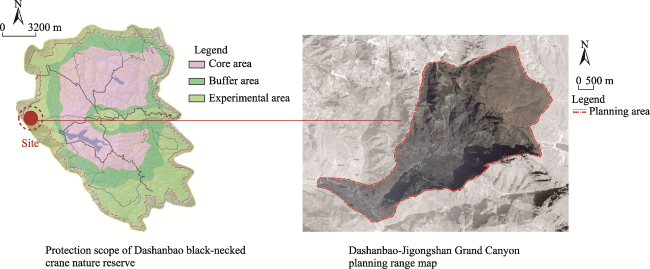
The interactions of spatial structures include the influences between lateral regions and vertical regional systems. With the change of spatial scale, the functionally combined relationships between different regions exhibit systematic variations in spatial structure that are characterized by rules of elevation or scale transformation (Liu and Zhang, 2020). This mountainous outdoor tourism destination covers an area of 1917.98 ha, and its planning scope is based on the mountainous shape and the trend of roads, forming a fish-shaped outline (Fig. 2)
Fig. 2 Range of the Dashanbao mountainous outdoor tourism area
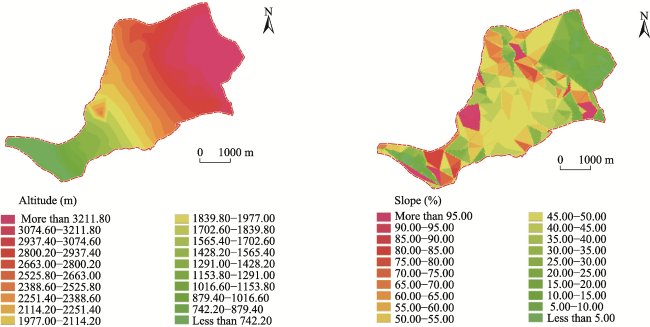
The Dashanbao mountainous outdoor tourism area is located at an altitude of 3100-3140 m, with an average annual temperature of 6.2 ℃. From the Plateau at an altitude of 3100 m to the deep mountain valleys at an altitude of 500 m (Fig. 3), this mountainous outdoor tourism area’s unique vertical height difference creates a diverse range of natural landscapes. For example, one mountain holds four seasons, and the scenery changes every ten miles. Meadows, streams, cliffs, and forest waterfalls form natural venues suitable for various mountainous outdoor activities.
Fig. 3 Vertical height difference and slope chart

Note: The slope is expressed as a percentage of the difference in elevation between the two points and their horizontal distance.

2.2.2 Development process

Research on the human-environment regional system aims to explore the interactions among various elements within that system, as well as the regulatory mechanisms and overall behavior of the system. This requires a comprehensive understanding and exploration of the regional human-environmental relationship system, including its spatial structure, temporal change processes, organizational structure sequencing, overall functional effects, and the synergies and complementarities among different units (Fan, 2018; Sun, 2020). Evaluating the spatial organization schemes and functional positioning based on regions with superior comprehensive benefits has become the effective goal of spatial planning. Therefore, scientific organization can be achieved by recognizing the rules of these orderly changes and using regulatory tools rationally, and by exploring the specific paths of change and implementation goals through the influencing causes and evolving factors. This ultimately results in a rational surface pattern and the effective activation of various regional functions to form a complete ecosystem.
Over the past few years, mountainous outdoor tourism in Dashanbao, Zhaotong, Yunnan, has undergone significant development, leading to the establishment of a diverse and vibrant tourism ecosystem that has attracted various types of visitors. The developmental stages of tourism projects in this region can be categorized into four phases: primitive, nascent, constructive, and renovative. These phases indicate a gradual evolution and enhancement of tourism projects in the area over the past years, as they have been continually updated and elevated. For example, the hosting of the International Wingsuit Flying World Cup in 2015 and 2016 attracted a considerable number of wingsuit flying enthusiasts. The active involvement of the government and investment in tourism infrastructure demonstrate a strong emphasis and support for this unique sporting event. From 2017 to 2020, Dashanbao was transformed into a national leisure demonstration base under natural geographical conditions. This suggests that the region has not only achieved success in sports projects but has also diversified into various fields such as leisure, scientific exploration, and photography, thereby forming a multi-dimensional tourism ecosystem.
The future development goals of Dashanbao include evolving into a sports-themed destination, establishing a national comprehensive sports tourism demonstration base, and striving to become an innovative and smart camping site with a 4A-level national scenic area status. These goals demonstrate the local government’s ambition and plans for the sustainable development of the tourism industry. The development statuses of various Dashanbao mountainous outdoor tourism projects are listed in Table 1.
Table 1 Overview of the major tourist attractions around Dashanbao Mountain
Area Scenic spot name Scenic spot level Scenic area type Main source of customers
South Sichuan
tourism circle
Dinosaur Museum 4A Geological science popularization Chengdu and southern Sichuan
Shunanzhuhai 4A Natural landscape Chengdu, Chongqing and Yibin
Buddha treasure ancient town Ancient town ancient street Luzhou and southern Sichuan
Renaissance stone sea 4A Geological landscape Chengdu, Chongqing and southern
Sichuan
Central Yunnan
tourism circle
Duoyi River 3A Natural landscape Kunming, Qujing
Hoodoos; stone forest 5A Geological landscape Nationwide
Northwest Guizhou tourism circle A hundred miles of cuckoo 4A Flower landscape Nationwide
Zhijin caves Geological cave Guiyang and cuckoo diversion people from a 100 mile radius
Weining grass sea Wetland lake Guiyang, northeast Guizhou
Tourism in northeast Yunnan The Dashanbao National Park Alpine wetland Yibin and the special scientific research crowd
In summary, the mountainous outdoor tourism in Dashanbao has successfully attracted diverse types of tourists by introducing extreme sports and other unique projects, thereby driving the tourism industry’s development in the region. The active intervention and investment by the government have played a crucial role in enhancing the local tourism sector. However, to achieve sustainable development, it will be essential to not only improve facilities and service levels but also to protect the natural environment and ensure a balanced consideration of the interests of both tourists and local residents.

3 Results and discussion

As elevated portions of the Earth’s land surface, mountainous areas constitute a unique and fragile territorial system that integrates both natural and human elements (Zhong, 2011). Understanding how mountainous environmental systems respond to global changes and human activities, and how to formulate sustainable development strategies for China's mountainous regions in this context, represent two crucial aspects of the problem (Zhong and Xiong, 2010). Only through in-depth research into the characteristics, patterns, and changes in mountainous environmental systems can we better formulate sustainable development strategies for mountainous regions. On the other hand, focusing on the national strategic needs for sustainable development in mountainous areas, research on mountainous environmental systems can identify opportunities for combining theory and applications. Studies on mountainous environmental systems tend to emphasize the systemic nature of regional differences, gradients, environmental changes in mountainous areas, and the coordination of human-environment relationships, all of which are crucial for research on the sustainable development strategies in mountainous regions (Ming and Zheng, 2022). The outdoor tourism space in Dashanbao is a three-dimensional and multi-dimensional spatial structure that is suitable for low-altitude flights in mountainous outdoor tourism. Unlike traditional tourism, the geographic space could be econstructed based on the foundation of territorial system theory, thereby optimizing the spatial structure of mountainous outdoor tourism destinations.

3.1 Territorial functionality of Dashanbao

Considering the vertical and horizontal variations in mountain systems and the diversity of tourist demands, the modes and intensity of the impacts of tourism on mountainous outdoor tourism destinations differ. This is evident in the spatial distribution and combination of elements in the human-environment relationship (Ming and Zheng, 2022).
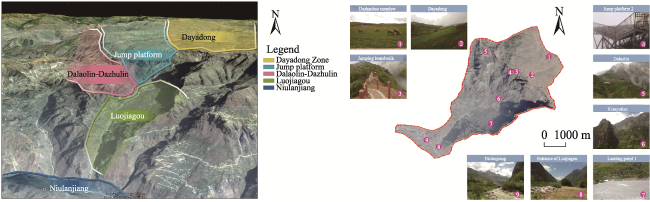
The functional formation of the geographical area in Dashanbao has resulted in five major project blocks and five functional zones that are designed to meet the diverse recreational needs of different populations. The outdoor tourism destination in Dashanbao is divided into five major project blocks based on topography: the Dayadong block centered around Dayadong Village on the west side of Dashanbao; the jump platform block centered around wingsuit flying platforms 2 and 3; the Dalaolin-Dazhulin block centered around the mid-mountain area with a significant elevation increase; the Luojiagou block with a noticeable elevation rise; and the Niulanjiang block featuring leveled land on both sides of the entrance and valley. These five blocks collectively constitute the planned area for outdoor tourism in Dashanbao, providing site spaces and infrastructure support for the construction of the main tourist destination. Among these five land-use blocks in the designated area, the Dayadong block is mostly located in the experimental zone; the jump platform block is situated at the edge of the conservation zone, belonging to the overall planning for recreational use in the Dashanbao tourism area; and the Dalaolin-Dazhulin block, Luojiagou block, and Niulanjiang block fall outside the conservation zone (Fig. 4).
Fig. 4 Land use analysis
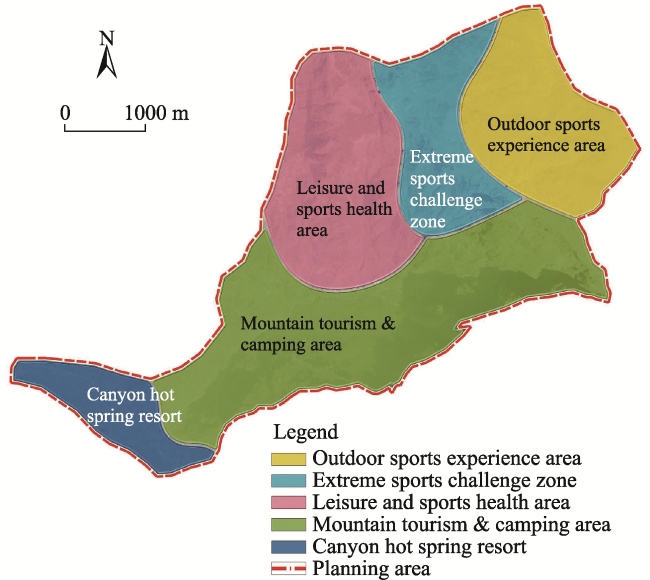
The outdoor tourism area of Dashanbao Mountain is organized around the theme of outdoor sports and is divided into five functional zones based on land conditions and primary functions: Outdoor Sports Experience Area, Extreme Sports Challenge Zone, Leisure and Sports Health Area, Mountain Tourism & Camping Area,and Canyon Hot Spring Resort (Fig. 5). The project space within the functional areas is divided reasonably based on three different difficulty levels and technical requirements: outdoor sports professionals, outdoor sports enthusiasts, and outdoor sports experiential tourists.

3.2 The differentiated characteristics of spatial pattern formation

The analysis of the spatial evolution of human-environment relationships in mountainous tourist destinations should distinguish between the differences in outdoor tourism activities in different terrain surfaces, elevations, and geographical environments in the mountains. It should also consider the distinctiveness of the spatial patterns and differentiated characteristics of the human-environment relationship elements (Ming and Wang, 2022).
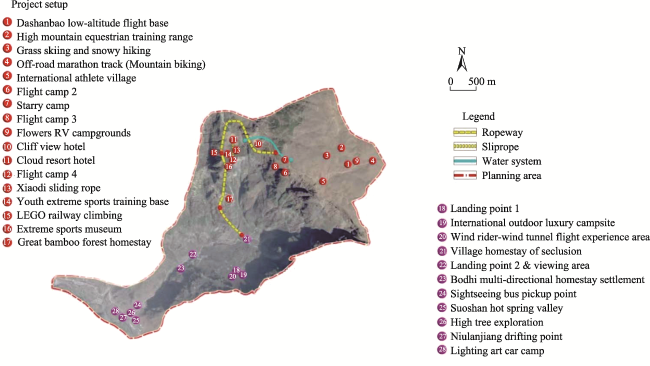
The spatial structure of Dashanbao forms a “multi-core module” structure, which optimizes the spatial pathways of the tourist destination. Considering the existing extreme sports types and land conditions in the Dashanbao mountainous outdoor tourism base, the tourist destination includes various activities such as aerial flight projects (low-altitude parachuting, wingsuit flying, paragliding, hot air ballooning), land cycling projects (horseback riding, mountain biking, mountain motorcycling), rock climbing activities (rock climbing, railway climbing), water sports (rafting, fishing), leisure activities (self-driving camping, treetop adventures), and survival training projects (youth extreme sports training base) (Table 2).
Table 2 Dashanbao Mountain outdoor tourism space optimization projects and their settings
Regional location Space region Project setting Core plate
Big cliff hole village Top of the mountain Dabao low-altitude flying base, High mountain equestrian training range, Grass sking and sonwy hiking (Mountain biking), Off-road marathon track, International Outdoor sports experience area
Diving tower;
diving platform
Half way on the side of big mountain Flight camp 2, Starry camp, Flight camp3, Flowers RV campgrounds, Cliff View hotel Extreme sports challenge zone
Leisure and sports health area
Big old forest-
big bamboo forest
Mouth of Luojiagou to the landing point Cloud resort hotel, Flight camp 4, Xiaodi sliding rope, Youth extreme sports training base, LEGO railway climbing,Extreme sports museum, Great bamboo forest homestay
Luojiagou Mouth of Luojiagou to the landing point Sightseeing bus pickup point, Wind rider-wind tunnel flighe experience area, Landing point1, International outdoor lixury campsite Mountain tourism & camping area
Mountain sports and sightseeing area Along the Niulanjiang Suoshan hot spring valley, High tree exploration, Niulanjiang drifting point, Lighting art car camp, Village homestay of seclusion, Landing point2 & viewing area, Bodhi multi-directional homestay settlement Canyon sports resort

3.3 The orderly process of temporal and spatial variation

The convergence of various elements in each sector forms a composite “ecological space, production space, and living space” mountain outdoor tourism space. Regional functionality serves as the carrier for the functions of the “ecological space, production space, and living space”. The environment that supports the survival and reproduction of all organisms, with a virtuous cycle in the biological chain, represents the ecological space. The space required for human activities such as agriculture, industry, or tertiary service industries constitutes the production space. The space that constitutes various living needs such as eating, living, transportation, tourism, shopping, and entertainment for humans is the living space. However, the composite regional functionality is not a simple superposition of the functions of the “ecological space, production space, and living space”. Based on the compatibility of its functions, the composite regional functionality is characterized by the coexistence, coordinated development, and mutual promotion of these three types of space functions. For the entire regional ecological environment system, the development of mountain outdoor tourism areas in Zhaotong, Yunnan, carries certain ecological functions that are characterized by green and eco-friendly tourism. For the local residents and tourists living in and visiting Zhaotong, Yunnan, the area also carries the living and production functions of the “ecological space, production space, and living space”. The development of mountain outdoor tourism promotes the living standards of local residents and enhances the recreational and leisure functions for tourists. The living function in Zhaotong, Yunnan, has been transformed from traditional to modern, the production function has transitioned from agriculture-dominated to agriculture-tourism integrated, and the ecological function has shifted from a single type to a multi-dimensional composite type.
The mountain outdoor tourism destination in Dashanbao uses a comprehensive 24 (all-weather) + 4 (all-season) + 4 (panoramic) dimensional mountain outdoor tourism product coverage system. This system seamlessly integrates the mountain sports and leisure vacation experiences, providing tourists with an ultimate experience (Fig. 6).
Fig. 6 The supporting facilities for the spatial zone projects

3.3.1 Sharing of ecological and production space

The interactions and feedback relationships among elements in the human-environment regional system make the evolution of the human-environment system complex (Fan, 2018). The development of mountain outdoor tourism is the result of multiple factors interacting and feeding back under a complex paradigm (Wang and Ming, 2017). Policy changes, shifts in ideologies, economic development, market demands, consumer transformations, and other issues, have led to the rise and continuous industrialization of mountain tourism. The contradictory unity, conflicts, and game-like relationships between tourism demand and supply, tourism resources and the market, mountain production and living, human-environment interactions and feedback, the market and operational management, mountain nature and culture, and other factors, collectively drive the continuous evolution of human-environment relationships in mountain tourism destinations (Ming and Wang, 2022).
The mountainous outdoor tourism destination of Dashanbao relies on tourism resources such as alpine meadows, flower fields, canyons, villages, and pastures. By using the natural outdoor sports venues of Dashanbao, it seeks a differentiated development path. The region's constructed thematic positioning focuses on the pursuit of the ultimate environment (high mountain meadows, sea of clouds, pastures, hot spring canyons), experiencing the ultimate adventure (seeking thrilling experiences of extreme sports, enjoying the secluded tranquility of an outdoor paradise), and creating ultimate residences (simple and beautiful Yi ethnic villages, elegantly comfortable landscape hotels, boutique guesthouses with original local features).
The mountainous outdoor tourism destination is based in the Dashanbao National Park, which can highlight the speed and dynamism of outdoor sports in the image branding. In addition to the thrilling glass viewing platform, the aviation flight camp uses open field space to establish a tent campsite and a comprehensive tourism service center. This facility offers professional experiences in gliders, paragliding, and hot air balloon flights, introducing a water feature to create a cascading water landscape in the flight camp. These features cater to the diverse consumption needs of participants in different segments of outdoor sports.

3.3.2 Integration of regional culture and living space

The mountainous geographical environment serves as a natural driving force for the evolution of tourist-human-environment relationships, and plays a foundational role in shaping their patterns (Ming and Zheng, 2022). The activities related to production, economic endeavors, local residents’ lifestyles, and developmental aspirations in mountainous regions contribute to internal changes in the tourist-human-environment relationships, which exerts a cumulative effect on their patterns. In the context of globalization and localization, the scope, forms, and content of human activities continue to expand, transforming the mountainous areas from closed systems to conditions conducive to the development of the tourism industry (Yang, 2001).
With the improvement of road transportation, a growing number of tourists are opting for short weekend getaways combined with outdoor recreational experiences. In particular, 1-3 day self-driving tours allow travelers to connect with nature and seek recreational enjoyment in expansive environments. The potential market size for self-driving tourism is substantial, with a rapid annual growth rate. In recent years, as living standards have risen and attitudes have shifted, tourists are no longer satisfied with conventional guided sightseeing tours. There is a greater emphasis on unique and distinctive travel experiences. The rapid development of the national economy has led to a surge in the number of vehicles, and “self-driving tours” which are known for their individuality, convenience, time savings, and freedom of movement, have gained popularity and become a prominent feature of holiday tourism. The target audience for the mountainous outdoor tourism and vacation markets is expanding. Vacation tourism primarily focuses on leisure, recreation, and rejuvenation, and involves less mobile tourist consumption activities at specific destinations. Vacation tourism emphasizes safety, serene and scenic environments, diverse entertainment, recreational facilities for enhancing physical and mental well-being, and high-quality services.

4 Conclusions

The formation of regional functionality in mountainous outdoor tourism is the result of the interactions between human activities in the living and production spaces and the natural environment. Within the theoretical framework of the human-environment regional system, this study systematically analyzed the regional functionality of mountainous outdoor tourism in Zhaotong, Yunnan, focusing on the evolution of the spatial structure from individual nodes and tourism systems to a flat networked “plate-like” spatial form. The resulting structure forms a “multi-core module” configuration through the matching process of cultural functional spaces, which constitute a moderately scaled mountainous outdoor tourism space. The aggregation process of each core plate and element forms a composite mountainous outdoor tourism space characterized by “ecology, life, and production”.
The innovation of this study lies in its consideration of the three-dimensional spatial structure of Yunnan Zhaotong’s Dashanbao, which is suitable for low-altitude flight in mountainous outdoor tourism. Unlike traditional tourism, the geographical space is redefined based on the theory of regional systems. We proposed a restructured three-dimensional spatial model for mountainous outdoor tourism, creating a spatial environment where humans and nature coexist harmoniously. However, specific interactions, coordination mechanisms, and the developmental roles among the ecological, productive, and living spaces in the regional functionality of mountainous outdoor tourism remain underexplored. Future studies should adopt a multidisciplinary approach, drawing on the theoretical framework of scientific systems and advanced technological methods, to conduct more in-depth comprehensive studies on the formation processes of regional functionality in mountainous outdoor tourism sites and the construction of the composite “ecological space, production space, and living space” in mountainous outdoor tourism.
[1]
Fan J. 2018. “Regional system of human-land relationship” is the theoretical cornerstone of the comprehensive study of the formation and evolution law of geographical pattern. Acta Geographica Sinica, 73(4): 597-607. (in Chinese)

[2]
Fu M Z, Yan F Y, Lin J T. 2019. Research on the spatial evolution and development of rural settlements in northern Zhejiang Province driven by human-land relations. Areal Research and Development, 38(6): 152-157. (in Chinese)

[3]
Gong J, Yang Y Y, Ling X P, et al. 2023. The influencing factors of tourist satisfaction in mountain outdoor tourism destinations—A case study of Siguniang Mountain. Journal of Resources and Ecology, 14(6): 1282-1291.

DOI

[4]
He X Q. 2011. Coordination and sustainable development of human and land relations in tourist areas. Social Scientist, (6): 74-77. (in Chinese)

[5]
Li X Y, Yang Y, Liu Y. 2016. Evolution of human-land relations and basic research on resources and environment in China. Acta Geographica Sinica, 71(12): 2067-2088. (in Chinese)

[6]
Li Y, Tang Q. 2018. Review of human-land relationship and man-land relationship in China. Geographical Research, 37(8): 1655-1670. (in Chinese)

[7]
Liu X L, Zhang L B. 2020. Application of spatial structure in the 2020 Tokyo Olympic Games. In:Proceedings of the twentieth National Symposium on Modern Structural Engineering. Tianjin, China: Tianjin University, Tianjin Steel Structure Society: National Academic Committee of Modern Structural Engineering: 10. (in Chinese)

[8]
Liu Y S, He S J. 2008. The 90th birthday of Academician Wu Chuanjun and the academic seminar on the regional system of human and land relations was held in Beijing. Acta Geographica Sinica, 63(6): 672-673, 560. (in Chinese)

[9]
Lu L, Zhang Q Y, Huang J F, et al. 2021. Discussion and prospect of the evolution theory of tourist land based on the perspective of global localization. Acta Geographica Sinica, 76(6): 1504-1520. (in Chinese)

[10]
Ming Q Z, Wang J. 2022. Research framework of human-environment relations in mountain tourist destinations. Mountain Research, 40(4): 485-490. (in Chinese)

[11]
Ming Q Z, Zheng B M. 2022. Research on the construction and horizontal measurement of the driving system of high-quality development of tourism in mountain scenic spots. Journal of Central China Normal University (Natural Science Edition), 56(1): 91-104. (in Chinese)

[12]
Ren J. 2015. Discuss the academic innovation of tourism geography theory from the relationship between man and land. Middle School Geography Teaching Reference, (16): 68-69. (in Chinese)

[13]
Ribeiro T, Orionn N. 2021. Educating for a holistic view of the earth system: A review. Geosciences, 11: 485. DOI: 10.3390/-geosciences11120485.

[14]
Shimel D, Hibbard K, Costa D, et al. 2015. Analysis, integration and modeling of the Earth System (AIMES): Advancing the post disciplinary understanding of coupled humanenvironment dynamics in the Anthropocene. Anthropocene, (12): 99-106.

[15]
Sun Q Z. 2020. Construction of urban green corridor spatial structure— Take Shanting District of Zaozhuang City as an example. Anhui Agricultural Science, 48(18): 139-141, 152. (in Chinese)

[16]
Tan J, Ming Q Z, Li P C, et al. 2021. Study on the spatial evolution of “Sansheng” in mountain outdoor tourism areas under the perspective of human-land relationship—Take mountain outdoor tourism in Siguniang Mountain as an example. Resource Development and Market, 37(7): 871-876. (in Chinese)

[17]
Tao H, Liu J M, Luo K, et al. 2016. Research on spatial zoning of tourism urbanization area based on the concept of Sansheng space—Take Mayangxi eco-tourism area as an example. Human Geography, 31(2): 153-160. (in Chinese)

[18]
Wang J, Ming Q Z. 2017. Main areas and recommendations for mountain tourism research. Journal of Guilin University of Technology, 37(4): 724-731. (in Chinese)

[19]
Wang J N, Shan B Y, Liu Y Y, et al. 2020. Study on the evolution of regional spatial structure in Shandong Province based on point axis theory. Resource Development and Market, 36(12): 1363-1368. (in Chinese)

[20]
Wang X. 2020. Research on rural spatial reconstruction planning in the North China Plain from the perspective of human-land relationship. Diss., Jinan, China: Shandong Jianzhu University. (in Chinese)

[21]
Wu C J. 1991. Research on the core of Geography. Economic Geography, 11(3): 1-6. (in Chinese)

[22]
Wu C J. 2008. Theoretical research and regulation of human and land relations. Journal of Yunnan Normal University (Philosophy and Social Sciences Edition), (2): 1-3. (in Chinese)

[23]
Xu Q L, Tan C F, Li K H, et al. 1994. Overview of mountain geographic system. Wuhan, China: Central China Normal University Press. (in Chinese)

[24]
Xue B, Zhang L M, Geng Y, et al. 2015. Research on human-land relations in old industrial zones based on the perspective of spatial reconstruction—Take Tiexi District of Shenyang City as an example. Scientia Geographical Sinica, 35(7): 890-897. (in Chinese)

[25]
Yang Q S, Mei L. 2001. Human-environment relationship, human-environment system, and human-environment regional system. Economic Geography, 21(5): 532-537. (in Chinese)

[26]
Yang Z, Yang X Z, Zhu Y, et al. 2020. Study on the spatial and temporal characteristics of the functional transformation and reconstruction of mountain tourism towns—Take Tangkou Town of Huangshan Scenic Area as an example. Mountain Research, 38 (1): 118-131. (in Chinese)

[27]
Yu J, Chen Y H, Tang Y X, et al. 2020. Research on the optimization of “three living space” in the Yangtze River Economic Belt based on the suitability of territorial space. Journal of Central China Normal University (Natural Science Edition), 54(4): 632-639. (in Chinese)

[28]
Zhong X H. 2011. Strengthen the mountain science research with the man-mountain relationship regional system as the core. Mountain Research, 29 (1): 1-5. (in Chinese)

[29]
Zhong X H, Xiong S F. 2010. New framework for mountain environment system research. Mountain Research, 28(4): 385-391. (in Chinese)

Outlines

/