Ecotourism

Spatial Differentiation, Typological Structure, and Influencing Factors of A-grade Scenic Spots in China

  • YANG Yuanyuan , 1 ,
  • YAO Yao , 2, *
Expand
  • 1. School of Public Administration, China University of Geosciences, Wuhan 430074, China
  • 2. School of Public Management, Guizhou University of Finance and Economics, Guiyang 550025, China
* YAO Yao, E-mail:

YANG Yuanyuan, E-mail:

Received date: 2024-01-27

  Accepted date: 2024-04-25

  Online published: 2024-10-09

Supported by

The Guizhou Province 2021 Philosophy and Social Science Planning Project(21GZQN14)

Abstract

Tourism scenic spots serve as direct attractions for tourists and crucial drivers for the transformation and upgrading of the tourism industry, so they play an irreplaceable role in the development of the tourism sector. The quantity and grades of A-grade scenic spots are the mainstay of competition in various tourism markets, and their spatial layout is very important for the development of regional tourism. Using 11970 A-grade scenic spots in China as the research sample, and methods such as the Nearest Neighbor Index Method, Kernel Density Estimation Method, and Grid Dimension Method, the spatial distribution, typological structure, and influencing factors of A-grade tourist attractions were analyzed to identify the main natural, economic, and social factors influencing the spatiotemporal pattern of A-grade scenic spots. The results indicated that China’s A-grade scenic spots exhibit clustering characteristics in their spatial distribution. The kernel density center shows a spatial pattern of “multiple cores, with secondary cores surrounding, and a gradual decrease”. The spatial structure is fractal and complex, with significant regional differences and a notable scale-free range. The types of tourist destinations and products exhibit distinct regional features, with a higher concentration of scenic spots in the regions in South China and East China, which are characterized by favorable natural and economic conditions and convenient transportation. A-grade scenic spots are densely distributed around the Beijing-Tianjin-Hebei region and the eastern regions such as Shanghai, Zhejiang, and Jiangsu provinces. Analyzing the spatial distribution characteristics of A-grade scenic spots in China contributes to our understanding of the complexity of scenic spot layout and spatial connections, which provides a basis for optimizing the layout of tourism development within regions, the rational allocation of resources, enhancing the quality and efficiency of the tourism industry, and promoting sustained and healthy regional economic development. It is conducive to the strategic work of tourism development and rural revitalization in China, and serves as a reference for decision-making.

Cite this article

YANG Yuanyuan , YAO Yao . Spatial Differentiation, Typological Structure, and Influencing Factors of A-grade Scenic Spots in China[J]. Journal of Resources and Ecology, 2024 , 15(5) : 1209 -1218 . DOI: 10.5814/j.issn.1674-764x.2024.05.009

1 Introduction

Tourism is one of the important drivers of economic growth, and A-grade scenic areas are important for the development of the tourism economy (Ferrari et al., 2021). With the improvement of people’s living standards, tourism has gradually become part of the lives of ordinary people. According to tourism statistical data from the 2020 China Statistical Yearbook, the number of domestic tourists increased from 4 billion in 2015 to 6.06 billion in 2019, a growth rate of nearly 51.5%; and tourism revenue increased from 3.419 trillion yuan in 2015 to 5.725 trillion yuan in 2019, an increase of 67.45%. These figures show that the tourism industry has made a significant contribution to China’s GDP in recent years (Chiang, 2012). China is now in a period of rapid development. The national rural revitalization strategy and the exploration of the concept of holistic tourism in some provinces have provided direction for the development of the national tourism economy. Therefore, the spatial layout of China’s A-grade scenic areas and the high-quality development of regional tourism will become complex issues that need to be addressed in the development of the domestic tourism economy. The spatial distribution pattern of China’s A-grade scenic areas, the internal connections of regional tourism, and the network structure of the sustainable development of regional tourism economy are key factors for optimizing the layout of China’s A-grade scenic areas. Analyzing the spatial distribution characteristics of China’s A-grade scenic areas and analyzing their influencing factors will promote the sustained and high-quality development of China’s tourism economy.
Tourism research has been a major focus of scholars both domestically and internationally. Tourism is a human economic activity fueled by desirable destinations (Romagosa et al., 2013; Richards, 2018). Research in other countries tends to focus on the classification and connotation of tourist attraction destination marketing, planning, and environmental impacts; the spatial distribution and evolutionary patterns of tourist attractions, and related topics (Li et al., 2020a). In contrast, domestic research focuses on tourist satisfaction evaluation, tourism perception, and the tourist experience; spatial characteristics of regional tourist attractions; the development and driving factors of tourist attractions; the management and marketing of tourist attractions; the concepts and evaluation of tourist attractions (Ma et al., 2022; Xiao et al., 2022), and similar issues. The research theories and methods include core-periphery theory, tourism cycle and tourist experience analysis, the construction of factors for tourist attraction evaluation theory, and others. The methods combine qualitative and quantitative evaluations, and utilize software such as ArcGIS and statistical analysis methods like SPSS. The research theories and methods are relatively mature, and the research results are abundant. In recent years, the application of fractal theory evaluation, multiple linear regression evaluation models, and statistical evaluation tests have achieved good results in terms of evaluation methods, models, and indicators.
Extensive research on the spatial layout of scenic areas has been conducted, mainly covering the spatial distribution characteristics, spatio-temporal evolution patterns, and hierarchical structures. The research methods primarily employ GIS spatial statistics (Guo and Liu, 2021) and mathematical models (Ma et al, 2021), with quantitative analysis as the main approach. The scope of the research includes discussions on the spatial layout of scenic areas in different provinces and cities, as well as studies across different natural zones and administrative regions. Other studies have examined different types of scenic areas, such as resource-based scenic areas, desert-type scenic areas, and ice and snow tourism scenic areas (Li et al., 2020b; Zhou et al., 2021; Wang et al., 2022). Overall, research both domestically and internationally has achieved maturity in the spatial evaluation methods for tourist attractions, mathematical evaluation models, and tourism market evaluation. The exploration of domestic tourist attractions mainly focuses on the establishment, distribution types, structure, tourist perception, and marketing of tourist attractions and scenic spots. Driven by economic interests in recent years, some regions in China have seen a relative proliferation of tourist attractions, while the management and services of these attractions have lagged. Disorderly competition and the presence of subpar attractions have led to a continuous increase in complaints from tourists. Identifying and classifying the spatial distribution of China’s A-grade scenic areas can help us to evaluate the tourism market and the characteristics of the tourism economy more accurately.
This study examined the scenic area data released by the Ministry of Culture and Tourism of China and the scenic area directory published by the cultural and tourism departments (bureaus) of various provinces (cities), as well as relevant tourism statistical data. The research data consisted of 11970 A-grade tourist scenic spots in China, and the spatial distribution pattern of 1A- to 5A-level scenic spots was analyzed, as well as the characteristics of spatial connectivity and complexity. This analysis revealed the spatial differentiation patterns and types of A-level scenic spots in China, and the spatial structure characteristics of scenic spots were investigated. ArcGIS 10.5 software and Excel software were used for spatial analysis and mapping, which helped to visually identify the clustering features and structural types of A-grade scenic spots. Based on regional distribution types, the spatial characteristics of scenic areas were accurately identified. This analysis of regional distribution types, structures, and influences provides a reference for the establishment, layout, and tourism management of A-grade tourist scenic spots in China.

2 Materials and methods

2.1 Data sources

The data for China’s A-grade scenic spots were sourced from the website of the Ministry of Culture and Tourism (http://www.mct.gov.cn), as well as the websites of cultural and tourism departments in various provinces and cities across the country. The domestic tourist counts and tourism revenue data were obtained from the China Statistical Yearbook and Tourism Statistical Yearbook for the years 2015-2020, as well as the tourism statistical yearbooks and relevant professional literature from various provinces and cities. Due to the timeliness and dynamic nature of the data on A-level scenic spots and attractions in each province and city, some of the provincial data are only available up until December 2019 and have not been updated in real time with the A-grade scenic spot data. The data obtained for China’s A-level scenic spots, consisting of 11970 locations for 1A- to 5A-level scenic spots, were converted and verified using the Google coordinate picking system. An attribute database was established and maps were created to obtain a spatial distribution map of China’s A-grade scenic spots (Fig. 1).
Fig. 1 Spatial distribution map of A-grade scenic spots

2.2 Research methods

2.2.1 Nearest Neighbor Index method

The nearest neighbor index can determine the proximity and distribution types of point features in space. There are three main distribution types for point features in space: random, uniform, and clustered. ArcGIS 10.5 software was used to determine the distribution type of China’s A-grade scenic spots. The calculation formula is:
R = r ¯ 1 r ¯ E = 2 A
In the equation, R represents the nearest neighbor index of the scenic spots; r ¯ 1 represents the average actual nearest neighbor distance of the scenic spots; r ¯ E represents the theoretical nearest neighbor distance of the scenic spots; and A represents the point density. When R=1, the scenic spots are randomly distributed; while R>1 indicates a uniform distribution and R<1 indicates a clustered distribution.

2.2.2 Kernel density estimation method

The kernel density estimation method is a nonparametric statistical method that assumes that the events of geographic phenomena occur at different probabilities in different geographic spaces within a defined study area. The probability of events occurring is higher in areas with dense point clusters, and lower in areas with sparse points. When the distances between points and the center reach a certain threshold, the density value is 0 (Zambom and Dias, 2013; Grant, 2022). The calculation formula is:
f ^ x = 1 n h d i = 1 n K x x i h
In the equation, f ^ x represents the kernel density function value of the scenic spots; K (·) is a Gaussian kernel function; xi represents the set of scenic spots to be estimated; h>0 is the bandwidth; n is the number of scenic spots within the threshold range, and d is the dimensionality of the number of scenic spots.

2.2.3 Grid dimension method

The grid dimension method involves dividing the entire study area into grids and counting the number of points within each grid cell. By creating rectangular grids with a value of K (2≤K≤10), the number of point features was calculated. Through regression analysis, the grid dimension of China’s A-grade scenic spots was obtained. The grid dimension method can effectively reveal the multilevel structural characteristics of the spatial distribution of A-grade scenic spots and serve as an indicator of the complexity and balance of the point distribution. When calculating the grid within the range of A-level scenic spots, the network dimension N(r) will vary with changes in the network scale (Wang and Tai, 2016). If the spatial distribution of China’s A-grade scenic spots exhibits scale-free characteristics, then:
N r r T
In the equation, T=D0, which represents the capacity dimension. Assuming that the number of grid points is Nij and the total number of points in the entire study area is N, the probability can be defined as Pij=Nij/N. Therefore, the formula for the information dimension is:
I r = i = 1 k j = 1 k P i j r ln P i j r
In the equation, K = 1/X, which represents the number of segments for each side within the study area. If the point set is fractal, then:
I r = I 0 D 1 ln r
In the equation, D1 represents the information dimension and Io is a constant that reflects the level of balance in the spatial distribution of the point data. Typically, the grid dimension D value ranges from 0 to 2. If the D value is 2, then the points are evenly distributed. When the D value is less than or equal to 1, the point data are concentrated in a geographic belt. When D1 equals D0, the point data exhibit simple fractal behavior.

2.3 Research area

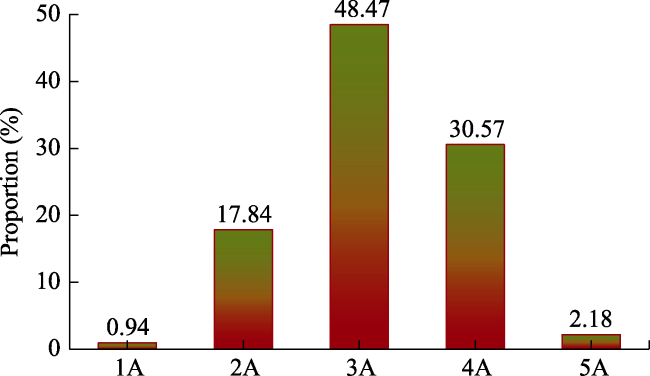
The development of the existing A-grade scenic spots in China is a result of national industrial policies. With the expansion of these scenic spots and the improvement of their grade structure, discussions have arisen regarding the pervasive issue of “quantity versus quality” in classical economics, especially under constraints such as the available investment amounts and construction periods. These factors present a complex decision-making problem for regional tourism development: whether to prioritize increasing the supply of Class A scenic spots to achieve economies of scale or to concentrate efforts on developing higher-grade Class A scenic spots. As of the end of 2019, China had a total of 12402 A-grade scenic spots, which were narrowed down to 11970 after screening. Their distribution characteristics indicate that over 80% of the scenic spots are located east of the Hu Huanyong Line, with higher densities in the eastern and central regions and a lower density in the western region. The grade structure exhibits a spindle-shaped pattern, with a larger middle and smaller ends. This uneven distribution of A-grade scenic spots in China holds significant research value for optimizing the rational allocation and benefits of regional resources (Yang, 2018; Gao and Sun, 2022).

3 Results

3.1 Spatial distribution characteristics of A-grade scenic spots in China

3.1.1 Characteristics of the spatial distribution and aggregation types

Using ArcGIS 10.5 software, a nearest neighbor analysis was conducted on the A-grade scenic spots in China. The average observed nearest neighbor distance r ¯ 1 for the scenic spots was 7.96 km. The expected nearest neighbor distance r ¯ E for the scenic spots, based on theoretical calculations, was 19.70 km. The nearest neighbor index (r) was calculated as R= r ¯ 1/ r ¯ E=0.40. Since R=0.40<1, the A-grade scenic spots in China tended to exhibit a clustered spatial distribution pattern. The Z-score for the analysis was -124.65, indicating a significant clustering pattern. The P-value for the significance test was 0.00, further confirming the significant clustering of the A-grade scenic spots in China. Therefore, based on the analysis, we concluded that the A-grade scenic spots in China tend to exhibit a clustered spatial distribution pattern (Table 1).
Table 1 Spatial nearest neighbor index of the A-grade scenic spots in China
Total number r ¯ 1(km) r ¯ E(km) R Z P
11970 7.96 19.70 0.40 -124.65 <0.001

3.1.2 Spatial distribution kernel density characteristics

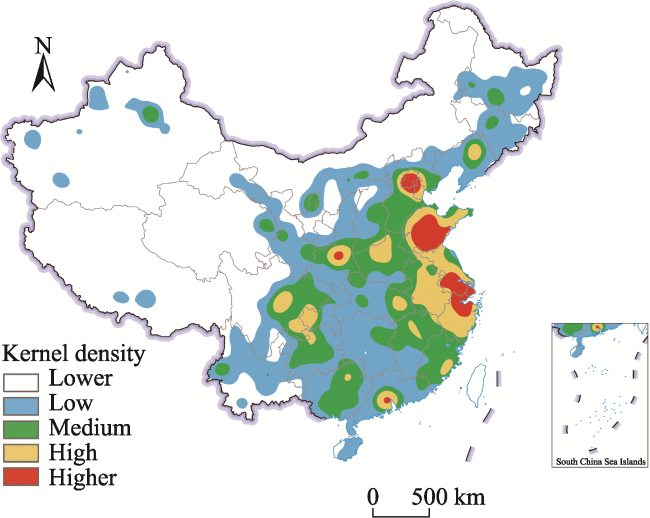
The kernel density analysis for the A-grade scenic spots in China (Fig. 2) shows a spatial pattern characterized by “multiple central cores, surrounding secondary cores, and decreasing levels”. The multiple central cores are mainly distributed in regions such as Beijing, Tianjin, Shandong, Shanghai, Zhejiang, Shaanxi, and Guangdong. These regions are characterized by surrounding central cities, historical and cultural cities, and economic centers. They have convenient transportation networks, including waterways, roads, and air travel, as well as a good natural foundation.
Fig. 2 Kernel density map of A-grade scenic spots
The surrounding secondary core areas are mainly extensions of the central cores, and they exhibit a hierarchical distribution pattern. According to the spatial distribution of kernel density, Qinghai, Tibet, Xinjiang, and Inner Mongolia have the lowest levels of kernel density. The A-grade scenic spots in China exhibit significant regional differences (Table 2).
Table 2 Distribution of partial values of kernel density in the A-level scenic spots in China
Region City Kernel density
(Number per 10000 km2)
The top five Shanghai 171.22
Beijing 146.83
Tianjin 81.12
Shandong 77.04
Zhejiang 75.16
The bottom five Gansu 7.96
Inner Mongolia 3.26
Xinjiang 2.50
Qinghai 1.58
Tibet 0.90
Countrywide 12.47
The spatial distribution of A-grade scenic spots in China also coincides with the key development areas of China’s tourism economy, i.e., the A-grade scenic spots are distributed in regions such as the Beijing-Tianjin-Hebei region, the Pearl River Delta, the Yangtze River Delta, and Shaanxi Province. These regions have the highest level of kernel density and are also the key areas for China’s economic development.

3.1.3 Spatial distribution equity characteristics

Based on the grid dimension method, the degree of spatial distribution equity of the A-grade scenic spots in China was calculated. Using ArcGIS 10.5 software, the coordinates of A-grade scenic spots in China were overlaid on a vector map, and rectangles covering the entire study area were created to ensure full coverage. The value of K grids (2≤K≤10) resulted in a total of 2K grids (2≤K≤10) in the study area. Then, based on the number of sides of each rectangle, the probability Pij of A-grade scenic spots in China and the information value I(r) for different grid numbers were calculated. Finally, the calculated data for the grid dimension of A-grade scenic spots in China (Table 3) were obtained, and the data were fitted and regressed to determine the capacity dimension and information dimension of the A-grade scenic spots in China.
Table 3 Calculation of grid dimensions of the A-grade scenic spots
K 2 3 4 5 6 7 8 9 10
N(r) 4 9 15 21 28 34 41 52 58
I(r) 0.9138 1.6081 2.0477 2.3959 2.6329 2.8036 2.9949 3.2355 3.4215
According to the results shown in Fig. 3, the coefficient of determination is 0.995. The Chinese A-grade scenic spots have a significant scale-free interval in terms of space, with a capacity dimension value of 1.6331, so the distribution of scenic spots exhibits characteristics of imbalance. The information dimension value is 0.7593 (with a coefficient of determination of 0.9499). The information dimension is smaller than the capacity dimension (D1<D0), indicating that the spatial distribution of Chinese A-grade scenic spots has an unequal probability trend. The system structure is fractal and complex, with significant spatial differences, mainly due to the unique location factors. Developed regions have more dense scenic spot distributions due to their relatively superior natural conditions, while the western regions have fewer tourist attractions due to constraints from natural factors and relatively weak location infrastructure.
Fig. 3 Double logarithm scatter plots for the grid dimensions of A-grade scenic spots

3.2 Characteristics of the distribution types of Chinese A-grade scenic spots

3.2.1 Types of tourist destinations and spatial distribution structure

According to the characteristics of tourist destination types and consultation with relevant experts, as well as referring to the existing research literature (Li et al., 2018; Zhang et al., 2021), the Chinese A-grade scenic spots were divided into destination types based on subjective classification criteria. After consulting with scholars, we believe that the classification types are reasonable. Based on an analysis of the characteristics of 11970 A-grade scenic spots in China, we divided them into six types: tourist attraction type, suburban leisure type, tourist resort type, ecological agriculture type, cultural tourism type, and characteristic industry type. The proportions of each type of tourist destination are shown in Fig. 4.
Fig. 4 Distribution of destination types of A-grade scenic spots
(1) The tourist attraction type is a type of tourist destination characterized by distinctive landscapes, accounting for approximately 20.14% of the total. These destinations are known for their prominent natural landscapes, such as Xichang Qionghai Lushan Scenic Area, Tianjin Panshan Scenic Area, Wuyi Mountain Scenic Area, Bijie Qixingguan Waterscape Park, and Changshan Huangtang Tourist Area. They are typically characterized by beautiful natural scenery and a pleasant environment.
(2) The suburban leisure type is characterized by destinations located around cities, mainly catering to short-term tourism and sightseeing during holidays. This type accounts for approximately 25.20% of the total. Examples include Northwest A&F University Expo Park, Jindongmen Old Street in Xinghua City, Qili Street in Shangrao City, Ningxiang Tianzi Drifting Scenic Area, and Shaping Town in Changsha. These destinations are typically located in suburban areas with convenient transportation, and are popular for weekend family trips and after-work relaxation and strolls.
(3) The tourist resort type is a type of tourism destination focused on vacationing. It is characterized by longer travel durations, complete living facilities, and good natural environments. These destinations provide a place for relaxation and self-cultivation. Examples include 20 tourist resorts in Jilin Province, Baoshan Lake Resort in Xian District of Mudanjiang City, Qunxianju Summer Resort in Maoba Township of Youyang County in Chongqing, Xilin River Grassland Tourist Resort in Xilingol League, and Huiya Hot Spring Resort in Fujian. This type accounts for approximately 5.72% of the total. The proportion of this type is relatively small, possibly due to the relatively low number of domestic tourists and tourism consumers in this category.
(4) The ecological agriculture type is characterized by beautiful ecological agricultural landscapes and wetland resources, accounting for approximately 15.51% of the total. This type mainly focuses on developing sightseeing tourism agriculture, characterized by changing the previous agricultural planting structure from production oriented to modern agricultural models, such as sightseeing agriculture, emphasizing landscape design in planting, and creating landscape sketches. Representative examples include Dongsheng Ecological Park, Liaoning Sanli Ecological Agricultural Sightseeing Park, Harbin Northern Agricultural Modern Urban Demonstration Park, Baiyang River Wetland Ecological and Cultural Scenic Area, Zhejiang Dayantou Agricultural Sightseeing Park, and Sanzigang Ecological Agricultural Tourism Area in Luyang District, Anhui Province.
(5) Cultural tourism is a type of tourism that focuses on ethnic and folk culture, with diverse folk customs, ethnic characteristics, and religious cultural elements. It accounts for the highest proportion, approximately 29.86%. By exploring unique folk customs, red culture, and other cultural aspects, cultural tourism aims to promote the integration of culture and tourism, and achieve sustainable development of the tourism industry.
Representative examples include the Yongle People’s Anti-Japanese Self-Defense Guerrilla Memorial Hall in Yueqing City, the Former Site of the Communist Party Committee in Chun’an County, the Fenghuang Nanhua Mountain Shengfeng Cultural Scenic Area in Xiangxi Prefecture, the Zhaoxing Dong Cultural Tourism Area in Liping County, Qiandongnan Prefecture, the Qinghai Tibetan Medicine and Culture Museum, and the Guanzhong Folk Art Museum in Xi’an.
(6) The special industry type refers to the characteristic industries or resources that have been formed during the development process, which have certain tourism value and attractiveness. The proportion of the special industry type is only 3.58%, which is relatively small, but this type has great development potential. It has industrial characteristics and serves as a reserve resource for the development of the rural tourism industry. Representative examples of the special industry type include the Xiuyan China Jade Carving Exhibition Center in Liaoning, the Inner Mongolia Yili Dairy Industry Tourism Area, the Hongxin Pavilion Guanyao Porcelain Painting Industrial Base in Jingdezhen, Jiangxi Province, the Bingshengwang Winery Tourism Area in Dongying City, the Qingdao Wine Museum, and the Dongfanghong Industrial Tour in Henan (China Yituo).
The distributions of the scenic area types in various regions exhibit imbalance (Fig. 5). For example, the cultural tourism types have the highest proportion in the Central China region, accounting for 34.87%. Suburban leisure types account for 33.78% in the South China region. Cultural tourism types have a distribution rate of 33.73% in the Southwest region and 31.45% in the Northwest region. In the North China region, the proportions of tourist attraction types, suburban leisure types, tourist resort types, ecological agriculture types, cultural tourism types, and characteristic industry types are 27.65%, 15.44%, 8.31%, 13.24%, 29.12%, and 6.25%, respectively. This analysis revealed that the factor behind this variation is the rich cultural resources in the Central China region, especially in terms of red tourism culture and other cultural resources. The presence of characteristic industry resources in the Northeast and North China regions is mainly determined by their natural resources and historical factors, such as the Mengniu Industrial Cultural Park, Yili Industrial Cultural Park, and the Northeast Heavy Industry Base Industrial Park, among others. The distribution of tourism industry resources in the country exhibits uneven characteristics, which can be attributed to differences in regional natural foundations, historical and folk culture, as well as local economic conditions.
Fig. 5 Spatial distributions of the destination types

3.2.2 Spatial distribution structure

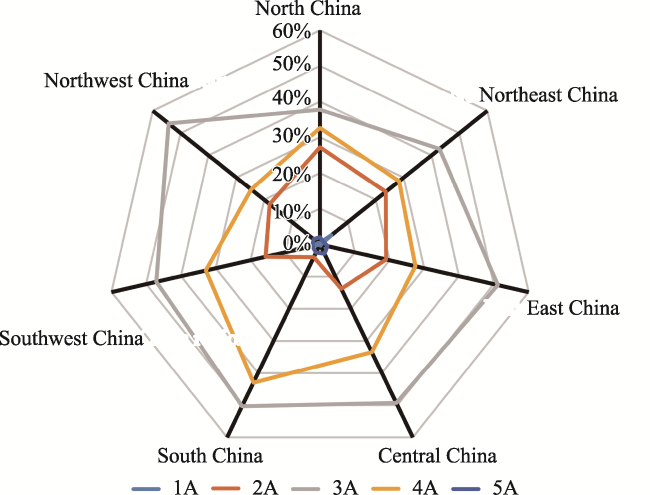
The types of tourism products have diverse, hierarchical, and diversified structural characteristics in different regions (Benur and Bramwell, 2015; Marylaure et al., 2017; Demiroglu et al., 2021). Based on the structural types and service characteristics of tourism products, this study classified and analyzed the 11970 1A to 5A scenic spots in China, and found significant regional differences among them. The spatial distributions of tourism products among the regions are shown in Fig. 6 and Fig. 7. The proportions of 5A-level scenic spots in Central China and South China are 2.93% and 2.57%, respectively, while the proportion of 1A-level scenic spots in South China is only 0.10% and in East China it is only 0.29%. This is mainly due to the local natural resource conditions, and there is a negative correlation between the 1A- and 5A-level scenic spots. In South China, the proportions of 1A-, 2A-, 3A-, 4A-, and 5A-level scenic spots are 0.10%, 4.00%, 50.33%, 43.01%, and 2.57%, respectively. Guangdong Province and Hainan Province in South China are both major tourist provinces with relatively good coastal economic conditions. The 5A-level scenic spots, such as Chimelong Tourist Resort in Guangzhou, Baiyun Mountain Scenic Area in Guangzhou, Overseas Chinese Town Tourist Resort in Shenzhen, Banting Binglang Valley Li and Miao Cultural Tourism Area in Hainan Province, and Sanya Daxiaodongtian Tourist Area, all have resource foundations and characteristics of upgrading and transformation through the introduction of social capital.
Fig. 6 Spatial distributions based on product structure
Fig. 7 Distribution of A-grade scenic products

4 Discussion

4.1 Distribution of A-grade scenic spots in China and population density

Studies have found that A-grade scenic spots in China exhibit spatial agglomeration and a point-like distribution, with significant regional disparities. They have also found that the spatial distribution of A-grade scenic spots reflects the geographical manifestation of tourism activities, encompassing the spatial attributes and interrelations of such activities, and directly influencing tourists’ spatial behaviors. This distribution pattern profoundly affects the development speed, scale, efficiency, and spatiotemporal layout of tourism resources. Some studies attribute the overflow of tourist flows between adjacent areas to the spillover effect of scenic spots. From the perspective of economic level and the distribution of scenic spots, areas with higher densities of A-grade scenic spots in China are mainly concentrated in the economically developed eastern and central regions, while the western regions exhibit lower densities (Truchet et al., 2016). Regarding the actual cause, economically developed areas, regions with concentrated historical and cultural resources, and areas with better natural conditions have higher concentrations of scenic spots. These regions are characterized by large populations, high tourist flows, and economic prosperity, which aligns with the population migration and agglomeration patterns in China. Therefore, we can conclude that there is a positive correlation between the distribution of scenic spots and population density.

4.2 Main factors that affect the development of the tourism industry

Natural resources are a crucial factor influencing the development of regional tourism, as they determine the quality and level of tourist attractions and directly impact the tourism industry of a region. Regions with abundant water resources tend to have greater numbers of scenic spots, which in turn affect what is referred to as the “production-living- ecological” spaces of human beings. The A-grade scenic spots situated in South China, East China, and Central China are all located in regions with abundant water resources, particularly along the banks of the Yangtze River, where numerous scenic resources are distributed. Represented by Jiangsu, Zhejiang, and Shanghai, the regional tourism economy has flourished, benefiting from the rich water resources, beautiful environments, and a dense concentration of scenic spots. The river system influences the cost of living, and in the western regions of China such as Xinjiang, Qinghai, Tibet, and Inner Mongolia, where water resources are scarce and ecological conditions are harsh, the sparse distribution of A-grade scenic spots can be attributed to these factors.
Transportation conditions are the foundation for the development of regional scenic areas, since they influence the travel of tourists and impact the development of scenic areas. Convenient transportation conditions not only promote the development of the tourism industry but also act as the locomotive driving economic development. Using ArcGIS 10.5 software, the 20 km buffer zones of highways and railways in China were mapped (Fig. 8). Note that most of China’s A-grade scenic spots are distributed within the buffer zones of major highways and railways, indicating a significant spatial influence of transportation on the distribution of A-grade scenic areas. The reason behind this is that good transportation shortens the distance people need to travel, increases the tourists’ sightseeing time, enhances their service experience, further elevates the purpose of tourism, and promotes the layout of A-grade scenic areas by facilitating transportation conditions, which in turn affects the aggregation of roads.
Fig. 8 Distribution of A-grade scenic spots relative to the main highways and railways, showing their spatial relationships

4.3 The A-grade scenic areas in China are influenced by economic development

The results of this study confirm the density of A-grade scenic areas, types of tourism products, and types of tourist destinations in China. The A-level scenic areas are mainly distributed in the economically developed regions of China. The proportions of 5A-level scenic areas in South China, Central China, and East China are 10.345%, 13.409%, and 33.716%, respectively. Economically developed regions account for nearly 57.47% of the 5A-level scenic areas. The 3A- and 4A-level scenic areas have higher proportions in East China, Central China, and South China, where the natural resources and environmental conditions are good, and transportation conditions such as railways, highways, high-speed trains, waterways, and aviation are convenient. The dense road network and strong economic foundation contribute to this distribution.
In conclusion, the spatial distribution structure, types, and influences of A-grade scenic areas in China are constrained by combinations of natural, economic, and cultural factors. Natural resources serve as the foundation for the existence of scenic areas, economic development conditions act as the engine, and cultural management factors are the key. Increases in tourism economic income can be achieved only when these three elements are organically connected. The development of scenic areas can only be achieved by seizing opportunities, promoting economic efficiency, and thus achieving sustainable development in the tourism industry.

4.4 Limitations and prospects

The study analyzed the spatial distribution, type structure, and influencing factors of A-grade scenic areas in China from a macro perspective. Therefore, it only provides a macroscopic analysis of the uneven distribution of A-grade scenic areas among provinces, without a microscopic interpretation of the scenic areas within each province and city. Due to limitations in data acquisition methods, data updates, and the mapping of visual materials, this study has not been dynamically updated, so there is room for further improvements in the completeness of the data.
This study only interpreted the A-grade scenic areas in China based on spatial differentiation. In terms of research methods, it will be necessary to incorporate other qualitative and quantitative analysis methods to comprehensively evaluate the spatial distribution characteristics of scenic areas and classify the tourism product types. This study did not examine perspectives such as resource and environmental carrying capacity, scenic area development planning, and tourist psychological cognition. Future research should focus on the carrying capacity of resources and the combination of tourist economy and rural revitalization, which will be the key areas of future research.

5 Conclusions

The spatial distribution and types of A-grade scenic areas in China are generally constrained by factors such as resources, the economy, and social development. This study analyzed the level of spatial complexity using data from tourism statistical yearbooks and spatial distribution data of scenic spots. The rating of scenic areas tends to be market-oriented, emphasizing tourism revenue over visitor satisfaction and experience. Particularly in the western region of China, despite the abundance of tourism resources, various factors such as economic conditions prevent them from entering the A-grade category, leading to significant regional disparities between the east and west, as well as between the north and south. Evaluating the layout of scenic area resources can reflect the actual situation of the scenic areas and tourism product development. Continuously improving the evaluation system and methods is of great value for studying the layout of scenic areas. This study found four main features of the A-grade scenic areas in China. 1) They tend to exhibit spatial agglomeration characteristics, particularly in economically developed regions such as Shanghai, Zhejiang, and the Beijing-Tianjin-Hebei region, where scenic spots are densely distributed, resources are abundant, and transportation is convenient, leading to significant economic aggregation and benefits. 2) The spatial kernel density characteristics of A-grade scenic areas in China show a pattern of “multiple core centers, with secondary centers surrounding, and a hierarchical decrease”. Among them, the multiple core centers are formed in regions such as Beijing, Shanghai, Tianjin, and Shaanxi, where the economic foundation, historical and cultural resources, and transportation conditions are favorable, resulting in a higher density of A-grade scenic areas. In regions such as Xinjiang, Qinghai, Tibet, and Inner Mongolia, factors such as the large land area and fewer scenic spots lead to lower levels of regional kernel density. 3) The A-grade scenic areas in China exhibit an uneven distribution among the provinces, with diverse types and forms of scenic spots and products, indicating significant heterogeneity and diversity. 4) The diversity and structural characteristics of tourism destination types in scenic areas show that the 1A- to 5A-grade scenic areas account for a small proportion, presenting a pattern of relatively fewer at the extremes and larger numbers in the middle, with distinct spatial grading of the A-grade scenic areas. Their distribution is constrained by regional economic and natural conditions, with economically developed regions having more A-grade scenic areas, such as in the southern and eastern regions of China. The central region has a larger proportion, mainly due to the relatively large number of red tourism sites. The northern and northeastern regions are dominated by characteristic industry types of destinations, such as the specialty industrial parks like Mengniu and Yili in Inner Mongolia and the old heavy industrial base scenic areas in the northeastern region.
[1]
Benur A M, Bramwell B. 2015. Tourism product development and product diversification in destinations. Tourism Management, 50: 213-224.

[2]
Chiang M H. 2012. The changing role of tourism in China’s economy. Journal of China Tourism Research, 8: 207-223.

[3]
Demiroglu O C, Turp M T, Kurnaz M L, et al. 2021. The Ski Climate Index (SCI): Fuzzification and a regional climate modeling application for Turkey. International Journal of Biometeorology, 65: 763-777.

[4]
Ferrari G, Mondéjar-Jiménez J, Secondi L. 2021. The role of tourism in China’s economic system and growth: A social accounting matrix (SAM)-based analysis. Economic Research, 1: 1-21.

[5]
Gao Y, Sun G N. 2022. Spatial correlation and heterogeneity analysis of A-class scenic spots in China. Economic Geograrhy, 42(12): 194-204. (in Chinese)

[6]
Grant R L. 2022. Non-parametric Bayesian updating and windowing with kernel density and the kudzu algorithm. International Journal of Computational Economics and Econometrics, 12: 405-428.

[7]
Guo Y P, Liu M. 2021. Classification and spatial distribution characteristics of tourist attractions in Shanxi Province based on POI data. Scientia Geographica Sinica, 41(7): 1246-1255. (in Chinese)

DOI

[8]
Li D, Deng L, Cai Z. 2020b. Statistical analysis of tourist flow in tourist spots based on big data platform and DA-HKRVM algorithms. Personal and Ubiquitous Computing, 24(1): 87-101.

[9]
Li D H, Zhang X Y, Lu L, et al. 2020a. Spatial distribution characteristics and influencing factors of high-level tourist attractions in the Yellow River Basin. Economic Geography, 40(5): 70-80. (in Chinese)

[10]
Li T, Liu J, Zhu H. 2018. Business characteristics and efficiency of rural tourism enterprises: An empirical study from China. Asia Pacific Journal of Tourism Research, 23: 1-11.

[11]
Ma X, Yang Z, Zheng J H. 2022. Analysis of spatial patterns and driving factors of provincial tourism demand in China. Scientific Reports, 12: 2260. DOI: 10.1038/s41598-022-04895-8.

PMID

[12]
Ma X B, Hou G L, Li L, et al. 2021. Identification, distribution pattern and influencing factors of homestay cluster based on DBSCAN algorithm: A case study of Nanjing. Human Geography, 36(1): 84-93. (in Chinese)

[13]
Marylaure H P, Margot P R, Dirk N K, et al. 2017. Molecular ecology studies of species radiations: Current research gaps, opportunities and challenges. Molecular Ecology, 26: 2608-2622.

DOI PMID

[14]
Richards G. 2018. Cultural tourism: A review of recent research and trends. Journal of Hospitality and Tourism Management, 36: 12-21.

[15]
Romagosa F, Priestley G K, Llurdés J C. 2013. The role of tourism in sustainable development strategies. Tourismos, 8: 77-95.

[16]
Truchet S, Piguet V, Aubert F, et al. 2016. Spatial influence of attractions on tourism development. Tourism Geographies, 18(5): 539-560.

[17]
Wang T, Tai P F. 2016. Spatial differentiation and its influencing factors of national rural tourism destination in Shandong Province. Economic Geography, 36 (11): 161-168. (in Chinese)

[18]
Wang T, Wang L, Ning Z Z. 2022. Spatial distribution characteristics and influencing factors of ski resorts in China. Geographical Research, 41(2): 390-405. (in Chinese)

[19]
Xiao Z, Muhtar P, Huo W, et al. 2022. Spatial and temporal differentiation of the tourism water footprint in mainland China and its influencing factors. Sustainability, 13. DOI: 10.3390/su131810396.

[20]
Yang Y. 2018. Understanding tourist attraction cooperation: An application of network analysis to the case of Shanghai, China. Journal of Destination Marketing & Management, (8): 396-411.

[21]
Zambom A Z, Dias R. 2013. A review of kernel density estimation with applications to econometrics. International Econometric Review (IER), 5: 20-42.

[22]
Zhang A, Yang Y Q, Chen T, et al. 2021. Exploration of spatial differentiation patterns and related influencing factors for National Key Villages for rural tourism in China in the context of a rural revitalization strategy using GIS-based overlay analysis. Arabian Journal of Geosciences, 14(2): 1-15.

[23]
Zhou H T, Zhang Y H, Ning X L, et al. 2021. Spatiotemporal differentiation characteristics and influencing factors of A-class tourist attractions in Inner Mongolia. Resources and Environment in Arid Lands, 35(12): 202-208. (in Chinese)

Outlines

/