Rural Tourism Destination and Homestay Development

Understanding the Value Co-creation Behavior of Rural Tourists: An Application of fsQCA

  • LI Chuangxin , 1, 2, * ,
  • LI Rong 1, 2 ,
  • YE Liqing 1, 2
Expand
  • 1. School of Tourism Sciences, Beijing International Studies University, Beijing 100024, China
  • 2. Research Center for Beijing Tourism Development, Beijing 100024, China
*LI Chuangxin, E-mail:

Received date: 2023-08-28

  Accepted date: 2023-12-12

  Online published: 2024-05-24

Supported by

The Major Art Program of the National Social Science Fund of China(21ZD07)

Abstract

Promoting rural tourism development is an important way to achieve rural revitalisation and common prosperity. Tourists are facilitators and participants of rural tourism, whose participation in value co-creation is of great significance. However, previous research on tourists' value co-creation behaviors mostly explored the linear relationship between variables, with the complex mechanisms being insufficiently examined. Based on complexity theory, this study created a theoretical framework, where destination support (information support, emotional support), personal psychological driving forces (self-efficacy, outcome expectation) and destination emotion (place identity, destination trust) are treated as condition variables and the value co-creation behaviors of rural tourists as outcome variable, and empirical tests were carried out using a survey questionnaire with fuzzy-set qualitative comparative analysis (fsQCA) analysis being employed. It finds that none of the six conditional variables can constitute a sufficiently necessary condition for tourists’ value co-creation behavior; Six conditional variables together generate 64 path combinations, resulting in five paths that drive tourist participation in value co-creation behavior through three modes. These modes include perceived outcome value-driven, people-place emotional connection and people-place-environment integration driven. Among them, emotional support plays a significant role in influencing tourist value co-creation behavior. The study expands the research on value co-creation behavior, revealing the complex mechanisms of tourists value co-creation behaviors and provides a theoretical basis for promoting tourists’ engagement in value co-creation behavior that enhance the tourist experience and promote rural tourism high-quality development.

Cite this article

LI Chuangxin , LI Rong , YE Liqing . Understanding the Value Co-creation Behavior of Rural Tourists: An Application of fsQCA[J]. Journal of Resources and Ecology, 2024 , 15(3) : 614 -625 . DOI: 10.5814/j.issn.1674-764x.2024.03.009

1 Introduction

Rural tourism has typical population anti-siphoning effect, economic boosting effect and infrastructure driving effect, and its high-quality development is an important strategy to promote the execution of rural revitalization strategy (Shen and Wang, 2022). As the rural contains rich regional cultural connotations and nostalgic memories, it has become an important belonging of people’s hearts and minds. Tourists are facilitators of rural tourism and tasters of rural resources (Sheng and Liu, 2021), whose participation in the value creation of rural tourism destinations create an unforgettable tourism experience and promote the high-quality development of rural tourism. Therefore, the value co-creation behavior of rural tourism tourists has attracted widespread attention from scholars.
Value is created in the process of interaction, and value co-creation leads to a satisfactory outcome for the subjects of the interaction (Dolan et al., 2019). Service-dominated value co-creation considers the customer is the owner of actionable resources and co-create value with the company. Tourists value co-creation means that tourists participate in the process of tourism services and production, including in-role tourist participation behavior and out-of-role tourist citizenship behavior (Yi and Gong, 2013). In the process of rural tourism, the influencing factors of tourists value co-creation are diverse and complex, at the same time tourists’ behavior can be influenced by multi-stakeholder. Existing research on tourism value co-creation, on the one hand, examined the influencing factors of value co-creation, and found that the social environment, organizational factors, customers-related and facilitating technological resources have positive effects on value co-creation (Bertella et al., 2018; Lei et al., 2019; Pedro and Helena, 2023). On the other hand, previous research focused on the positive impact on visitor value perception, well-being (Prebensen et al., 2016; Fan et al., 2020). However, the existing literature on the impact of tourists’ value co-creation mainly adopts multiple regression analysis, which has great limitations in dealing with multiple relationships (Zhang and Long, 2022).
Tourists are the core subject on the process of value co-creation, which directly determines the final effect. Social cognitive theory assumes that individual cognition, environment, and behavior are mutually determined and interact with each other (Bandura, 1977), of which individual factors include self-efficacy and outcome expectations, environment refers to possible support for their actions, including information and emotional support from destination. In addition, in the rural tourism, the place of tourism activities is the same as residents’ production and living space, which provides favorable condition for host-guest interaction, and enhance tourist connections to destinations. Therefore, tourists’ place identity and trust towards destinations will influence their behaviors. In order to fully understand the influencing factors of tourists value co-creation behavior, this study constructs a theoretical framework, in which destination support, personal psychological driving forces and destination emotion are assumed to influence tourists’ value co-creation behavior, and applies the fuzzy-set qualitative comparative analysis (fsQCA) approach to explore the combined paths. The results attempts to address how tourists participate in rural tourism and how to guide tourists to participate in value co-creation behaviors in order to achieve win-win situation, aiming to providing a reference for tourists in rural tourism to participate in value co-creation behaviors and the construction of rural tourism destinations.

2 Literature review and modeling

2.1 Literature review

2.1.1 Tourists’ value co-creation behavior

Value co-creation is an interaction between producers and consumers that creates value for the benefit of both parties. In the era of exchange economy, value creation is based on commodity-dominant logic, emphasizing the central position of commodities and the role of enterprise as a value creator. In this stage, customers are the recipients of commodities created by the value chain and the destroyers of value (Liu et al., 2010). With the development of practice, the role of customers in value creation is highlighted, and customers are involved in the enterprise production creating value with producer or by themselves (He et al., 2022). Value co-creation based on customer experience proposed by Prahalad and Ramaswamy (2000) and value co-creation based on the service-dominant logic proposed by Vargo and Lusch (2004) are widely recognized. Both different logics of value co-creation emphasize the participatory role and experience of customers, with the difference that in the former, companies do not sell experiences to customers but provide scenarios, customers create meaningful experiences by themselves. While for service-dominant value co-creation, customers are regarded as owners of actionable resources, and create value together with companies. In addition, the value co-creation based on the service-dominant logic has gradually shifted from focusing on the binary interaction between enterprises and customers to the value co-creation formed by the interaction of multiple subjects, emphasizing that the service is the basis of commodity exchange and the consumers realize the value co-creation through the service (Vargo and Lusch, 2008).
Tourism is an ideal environment for value co-creation (Shaw et al., 2011), and the concept of tourism value co-creation has emerged and developed extensively. Song et al. (2022a) defined two branches of tourism value co-creation as behavior and psychological aspects. The behavior aspect focuses on the action of subjects, while psychological aspect pays more attention to the value co-creation of tourism experience, reflecting the wholeness of tourists’ experience. Most of the existing research on tourism value co-creation examines the participation of tourists, who as the owner of operative resources spend time and energy to participate in product design and service delivery to obtain a unique and memorable tourism experience. With the development of value co-creation, there has been a growing interest in the behavior and outcomes of multi-stakeholder, which provides value for tourists through the integration of resources between multiple subjects (Song et al., 2022b).
Tourist’ value co-creation behavior is usually a proactive behavior with strong purpose and autonomy (Li and Shi, 2022). Yi and Gong (2013) classified tourists’ value co-creation behavior into tourist citizenship behavior and tourist participation behavior based on the fact that the behavior belongs to in-role or extra-role. Tourist participation behavior refers to the process in which tourists participate in the production and delivery of services, including information sharing, personal interaction, and so on. Tourist citizenship behavior is an altruistic behavior that can benefit the destination directly or indirectly (Liu and Tsaur, 2014), including recommending the destination to others, providing advice to the destination and helping tourists on site. Rural areas are developed in the long process of interaction between people and place, and their unique culture is the core feature of rural tourism. Tourists are the crucial subject of rural tourism, playing significant roles in identifying resources, constructing and spreading images. The activity space in rural tourism overlaps with the space of residents’ life, which facilitates the interaction between tourists and residents. It’s conducive to convey the meaning of the place to tourists, and enhance the emotional connection between tourists and tourist destinations, which leads tourists to see themselves as a part of the countryside and to join in value co-creation. This improves the quality of tourism products and enhances the construction of rural destinations. In addition, tourists are more inclined to immersive and high-quality tourism experiences, the unique atmosphere and culture of rural destinations match the psychological needs, thus stimulating the enthusiasm of tourists to participate in value co-creation.

2.1.2 Environmental factors influencing tourist value co-creation

Social support was first applied to psychology and medicine, focusing on the value of social support in the individual’s sense of well-being, belonging, respect, and other spiritual support (Cobb, 1976; Cohen and Wills, 1985). Then it was widely used in the field of marketing, management, and sociology (Luo and Chen, 2018), with extended concepts including online social support (Lin and Zhang, 2022), organizational support, and subjective social support being coined based on specific contexts. Social support refers to an individual’s perception of available external support, or resources available to the individual from formal support organizations or informal relationships (Gottlieb and Bergen, 2010). Social support is valuable information that enables individual to feel cared for, loved, and respected, as well as to feel that the individual is part of a social network and assumes the responsibilities of a social network member (Cobb, 1976). Social support is a universal social behavior, and every individual is the object of social support (Van der Poel, 1993). Existing studies have pointed out that social support is positively correlated with individuals’ positive emotions and contributes to alleviating individuals’ negative emotions such as tension and anxiety, and promoting individual’ physical and mental health (Wang, 2004). It also produces a positive effect on individuals’ behaviors, and motivates individuals to implement altruistic and value-creating behaviors such as mutual help behaviors (Yao et al., 2017), customers’ citizenship behaviors (Chang et al., 2015), and tourists’ environmentally responsible behaviors.
Tourist destination support is an important social resource for tourists to adapt to non-customary environments, forming destination perceptions and making behavioral patterns that conform to destination norms. Tourist destination information support includes informational support and emotional support (Schaefer et al., 1981). Informational support refers to providing advice or knowledge to help tourists solve problems. Emotional support means making tourists feel emotional connection including cared for and respected. The social exchange theory states that when an individual gains value from interacting with others, he or she needs to reciprocate with behavior that benefits the other person in order to maintain a positive efficacy relationship (Sun and Guo, 2016). Therefore, when tourists obtain information and emotional support needed to solve problems from destinations, they will show positive behaviors to return the destination, such as the customer citizenship behaviors of recommendation and help. The existing research confirms that different types of social support have a positive impact on customer citizenship behaviors (Rosenbaum and Massiah, 2007). In addition, when the destination provides enough advice, knowledge, and respect, tourists feel warmth, improve confidence in completing the task, and enhance the performance of tourists to participate in value co-creation.

2.1.3 Personal psychological driving forces influencing tourist value co-creation

Self-efficacy is the degree of self-confidence and subjective judgment of whether an individual can use knowledge and skills to reach a set goal, which has a significant impact on individual behavioral choices, and the higher the self-efficacy, the higher the degree of self-confidence and the more likely to produce positive outcome expectations (Ding and Chen, 2017). In the context of value co-creation, self-efficacy is the subjective judgment of tourists regarding their ability to participate successfully in value co-creation activities (Zhao, 2018). Self-efficacy serves as the foundation for individual behavioral motivation and outcomes. Since value co-creation behavior is voluntary, individuals will not engage in such behavior unless they are confident in their ability to achieve desired results through their actions (Bandura, 2003). When individuals possess sufficient professional knowledge and information and have relevant skills, the higher their confidence in completing value co-creation activities, the more likely they are to believe they can contribute to the tourist destination and are thus more likely to participate in value co-creation or engage in altruistic civic behavior.
Personal outcome expectation is the results judgement after taking action. Outcome expectation include personal outcome expectation and expectation related to job performance. In the value co-creation environment, on the one hand, it refers to personal outcome expectation that represent a sense of achievement, honor, friendship; On the other hand, it refers to participation in value co-creation outcome expectation, such as providing suggestions for the development of the destination and helping other tourists. Outcome expectation are important antecedents of behavior (Lam and Lee, 2006). When tourists perceive that they will receive positive benefits, such as rewards from tourist destinations, honor and recognition, it will motivate tourists’ willingness to participate in value co-creation. Self-efficacy and outcome expectations are evaluated before taking actions, expectancy theory also states that people will only take action when they expect attractive outcomes from the behavior. Existing studies have confirmed the positive effect of individual outcome expectations on tourists’ value co-creation, and He and Guo (2016) found the positive effect of individual outcome expectations on knowledge contribution behavior. Li et al. (2019) found that personal outcome expectations significantly influence customer’ intention to consume green.

2.1.4 Destination emotions affecting tourists value co-creation

Place identity and destination trust reflect tourists' attitude towards the destination, which are important indicators to evaluate the quality of human-place relationship. Place identity is an individual’s evaluation and perception of place symbols and emotions (Williams et al., 1992), which consists of symbolic signs, collective memories, and local space (Zheng, 2012). It embodies an individual’s recognition of the significance of a place and improves tourists’ sense of belonging to destination. Place identity influences tourists’ behavioral performance, and tourists with strong place identity are more willing to give time and energy to participate in value co-creation behaviors. Yuan and Wang (2022) found that the place identity of island tourism tourists has a significant positive influence on tourists’ value co-creation behaviors. Ye et al. (2020) found that tourists’ identity of grassland tourist places positively influences tourists’ behavioral intentions such as conservation behaviors, positive evaluation, and recommendation. Existing studies have also found that place identity has an influence on tourists’ civic behaviors (Jia et al., 2023), tourists’ environmental responsibility behaviors (Qi et al., 2018) and other altruistic behaviors.
Destination trust is a state in which tourists perceive that the destination has the will to act in its own way and that the tourist cause bears the corresponding potential risks (Yao et al., 2013). Destination trust reflects tourists’ positive perception of the image of the destination, including trust in the image of the destination, interpersonal relationships, destination brand, etc., which is conducive to reducing the uncertainty and risk of tourists in the destination (Sichtmann, 2007). Trust is a prerequisite for tourists’ behavior, which affects tourists’ loyalty, word-of-mouth recommendation, and intention to travel behavior. When tourists establish an image of the destination as trustworthy and reliable, tourists feel very relieved to visit the destination, and thus are prone to emotional attachment and influence tourists’ positive behaviors (Ma and Zhang, 2021). Conversely, if tourists perceive the destination as untrustworthy, tourists may engage in a range of resistant and uncooperative behaviors in their behavior to distance themselves from the destination. Thus, trust in the destination affects tourists’ value co-creation behaviors.

2.2 Conceptual model

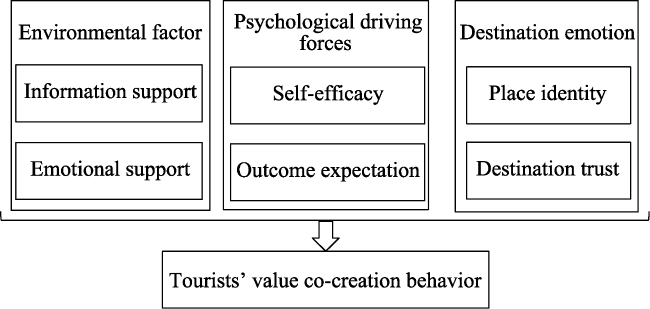
Tourism is the process of interaction among three elements - environment, individual and place. The interaction process influences tourist’ value co-creation behavior in rural tourism. However, previous research only partially analyzed the interaction among these elements. So, this paper aims to extend the existing research to explore the complex mechanisms influencing rural tourism tourists’ value co-creation behavior by selecting environmental factors (information support, emotional support), personal psychological driving forces (self-efficacy, outcome expectation) and destination emotion (place identity, destination trust) as conditional variables (Fig. 1).
Fig. 1 Conceptual model of tourists’ value co-creation behavior

3 Research methodology

3.1 Complexity theory and fsQCA approach

Complexity theory is not to explore the simple linear relationship between variables, but to demonstrate the effect of combinations of elements between independent variables on the dependent variable, and to analyze in depth the causal relationship between conditional variables and the outcome. This theory has been widely used to explain various complex phenomena in disciplines such as management, marketing, sociology, etc. Woodside (2014) puts forward the principles of complexity theory: 1) A single factor may constitute the necessary but rarely sufficient conditions for the outcome; 2) The combination of two or more variables is sufficient for the outcome variable; 3) Many different combinations of conditioning variables produce the same outcome; 4) The relationship between conditioning variables and the outcome variable could be positive, negative, or nonexistent in different combinations; and 5) No single combination can reflect the full range of respondents’ opinions, and therefore its coverage is less than 1.
Complexity theory has also been used to study complex relationships in the field of tourism. Xu and Cheng (2020) investigated the relationships of tourism sharing perception, community belonging and residents’ quality of life on the level of residents’ satisfaction, and found that there are 18 and 13 combinations of paths that lead to high and low satisfaction respectively. Rasoolimanesh et al. (2021) used PLS-SEM and fsQCA methods to examine the relationships between memorable tourism experience and tourists’ satisfaction, revisit intention, and word-of-mouth in linear and combinatorial relationships, and found that there exist four paths that lead to high-level destination behavioral intentions. Yu et al. (2022) studied the influence of tourists’ motivation on subjective well-being in rural tourism and found 8 paths lead to subjective well-being of tourists. The application of complexity theory in tourism provides new ideas and explanations for a deeper understanding of tourism phenomena.
The fsQCA approach originates from complexity and includes the integration of qualitative comparative analysis (QCA) and fuzzy-set principles (Skarmeas et al., 2014). It was used to explore which combinations of independent variable lead to the outcome from a holistic perspective. Thus, it’s applicable to examine the complex mechanisms of tourists’ value co-creation behaviors in this study.

3.2 Method

First, this study used SPSS and PLS-SEM to filter the data, with common method bias, kewness, kurtosis, reliability and validity analyses being conducted. Second, a contrarian case analysis was conducted to reveal the asymmetric relationship between condition variables and outcome variables through cross-tabulation analysis. Finally, the analysis was conducted using fsQCA 3.0 software to explore the combinations that influence the value co-creation behavior of rural tourism tourists.

3.3 Questionnaire design

The questionnaire is divided into three parts: In the first part, the definition of value co-creation behavior of tourists is explained. Before formally responding, respondents were asked to answer “whether they had participated in rural tourism in the past year” and “where the destination of rural tourism was”. The second part is about the measurement of the condition variables in this paper, including information support, emotional support, self-efficacy, personal outcomes expectation and value co-creation behavior. These variables are measured by using a 5-point Likert scale, with 1-5 representing strongly disagree to strongly agree. In the third section, demographic information, including age, gender, education level and income was collected. Among them, information support and emotional support were adapted from Chen and Zeng (2023), self-efficacy was adapted from Kankanhalli et al. (2005), personal outcome expectations were adapted from Zhao et al. (2019), place identity was adapted from Kyle et al. (2003), destination trust was adapted from Liu and Lin (2018), and value co-creation behavior was adapted from Yi and Gong (2013).

3.4 Data collection

In order to ensure the quality of the questionnaire, a pilot survey was conducted. The factor loadings of “I can gain happiness by participating in value co-creation behaviors” in personal outcome expectation and “I will pay attention to the local humanistic landscape” in value co-creation behaviors were less than 0.5, so these two items were deleted, and the rest of the questions met the criteria of reliability and validity tests. Then, the formal research was conducted from July 20 to 28, 2023, with the data being collected by using snowball method on Wenjuanxing. A total of 315 questionnaires were collected in this research, and after eliminating invalid questionnaires such as taking too long to answer and not filling out the questionnaires carefully, the remaining valid questionnaires were 281, with a validity rate of 89.2%.
In terms of the structure of the research sample, women predominated, accounting for 55.52% of the sample. The age of the respondents is mainly concentrated in 18-30 years old, accounting for 42.7% of the sample, followed by 31-40 years old, accounting for 32.38% of the sample. In terms of education level, there are more people with bachelor degree or above, accounting for 64.06% of the sample. In terms of average monthly income level, the majority of respondents with a monthly income of less than 3000 yuan, accounting for 32.38%, 3000 yuan to 5000 yuan, accounting for 25.27%, and 5000 yuan to 8000 yuan, accounting for 19.57%.

3.5 Variable calibration

Calibration is the concept of converting a measured variable into a set so that the data lies between the sets 0-1. In data calibration, the most important thing is to determine the values of full out, crossover points and full out based on the theory and the actual situation of the case by choosing the criteria that reflect the intermediate degree of the variable. Due to the possible subjectivity of questionnaire filling, 1, 3, and 5 could not be directly selected as the three anchors, so this paper, based on Andrews et al. (2016), sets the three anchors to the 95%, 50%, and 5% quartiles of the sample data.

4 Empirical analysis

4.1 Common method bias test

As fsQCA explores the combinatorial relationship between multiple variables, there can be no covariance between the variables, and since the data were collected from respondents’ self-reports at the same point in time, a common method bias analysis was required. The common method bias test was conducted using Harman’s one-factor test, and the first factor had an explanatory rate of 36.136%, which is less than the 40% criterion, so there is no common method bias problem.

4.2 Reliability and validity analysis

In order to verify the reliability of the data, SPSS was first used to test the kurtosis and skewness of each question item, and it was found that the skewness was located between ‒0.647 and ‒0.035, and the kurtosis was located between ‒0.9 and 1.636, which meets the criterion of the skewness being less than 3 in absolute value and the kurtosis being less than 10 in absolute value.
The model reliability and validity were analyzed using Smart PLS 3.0 software, and as shown in Table 1, the factor loadings of the question items of each variable ranged from 0.64 to 0.855, satisfying the criterion that the factor loadings of each question item were greater than 0.6. The Cronbach’s α of the seven variables is greater than 0.703 and the CR is greater than 0.824, which all satisfy the criterion of greater than 0.7, so the scale has good reliability; the validity of the scale is tested by the convergent validity and discriminant validity, in which the AVE ranges from 0.542 to 0.683, which satisfies the criterion of AVE greater than 0.5. As shown in Table 2, the arithmetic square root of the AVE of each latent variable is greater than the correlation coefficient between the variable and other variables, so the scale has good discriminant validity.
Table 1 Results of variable analysis
Dimension Subject Factor loading Cronbach’s α CR AVE
Information support The destination provided enough information for me to engage in value co-creation behaviors 0.855 0.743 0.854 0.661
The destination provided enough advice for me to engage in value co-creation
behaviors
0.783
The destination provided sufficient guidelines for me to engage in value co-creation behaviors 0.799
Emotional support The destination valued my participation in value co-creation behaviors 0.827 0.769 0.866 0.683
The destination has recognized my participation in value co-creation behaviors 0.837
The destination recognized me for my participation in value co-creation behaviors 0.816
Self-efficacy In the value co-creation process, I believe I can provide valuable information 0.764 0.738 0.835 0.560
In the value co-creation process, I think I can offer valuable advice 0.719
In the value co-creation process, I think I can make my point clearly 0.704
I believe I have sufficient knowledge and skills to participate in the value co-creation 0.801
Ouctcome expectation I get satisfaction and fulfillment from participating in value co-creation 0.776 0.703 0.834 0.626
I have a reputation for engaging in value-creating behaviors 0.772
I can earn rewards for participating in value co-creation activities 0.824
Place
identity
I consider myself a part of that tourist place 0.812 0.835 0.890 0.668
I’m very fond of this place 0.811
I have a strong identification with the place I am traveling to 0.835
I found my true self here 0.812
Destination trust This destination is trustworthy 0.814 0.718 0.824 0.542
The people of the destination have integrity and honesty 0.754
I am confident about the future of this destination 0.724
It’s very safe to travel here 0.640
Tourists’ value co-creation behavior I will be concerned about the development of the environment and construction of the destination 0.749 0.733 0.833 0.555
I am willing to make suggestions for the development of the destination 0.772
I will help other travelers to solve problems related to the tour and provide
appropriate assistance
0.711
I will understand that for some reason the service of the destination is defective 0.747
Table 2 Distinctive validity test of variables
Dimension Information support Emotional support Self-efficacy Outcome expectation Placeidentity Destination trust Tourists’ value co-creation behavior
Information support 0.813
Emotional support 0.644 0.827
Self-efficacy 0.524 0.524 0.748
Outcome expectation 0.512 0.531 0.509 0.791
Place identity 0.500 0.564 0.502 0.469 0.817
Destination trust 0.550 0.569 0.460 0.525 0.512 0.736
Tourists’ value co-creation behavior 0.483 0.508 0.491 0.582 0.547 0.580 0.745

Note: The diagonal line is the arithmetic square root of the AVE value of each variable, and the lower triangle is the correlation coefficient between the corresponding variables.

4.3 Results of cross-tabulation analysis

The relationship between variables is not crystal clear, which might be positive, negative or might not exists (Xu and Cheng, 2020). Contrarian case analysis is needed before fsQCA. Through the cross-tabulation of place identity and value co-creation behavior in Table 3, it is found that there is a contrarian case between place identity and tourists’ value co-creation behavior. A low level of place identity may lead to a high level of tourists’ value co-creation behavior, while a high level of place identity may lead to an average level of tourists’ value co-creation behavior. Therefore, a fsQCA is needed in order to incorporate a contrarian case in tourists’ value co-creation behavior.
Table 3 Cross tabulation of local identity and value co-creation behaviors
Place identity Tourists’ value co-creation behavior
Strongly disagree Disagree Neutral Agree Strongly agree Total
Strongly disagree Number of cases 0 1 0 0 1 2
Percentage (%) 0 0.4 0 0 0.4 0.7
Disagree Number of cases 0 0 2 14 4 20
Percentage (%) 0 0 0.7 5.0 1.4 7.1
Neutral Number of cases 0 1 5 18 9 33
Percentage (%) 0 0.4 1.8 6.4 3.2 11.7
Agree Number of cases 0 0 4 81 28 113
Percentage (%) 0 0 1.4 28.8 10.0 40.2
Strongly agree Number of cases 0 0 1 31 81 113
Percentage (%) 0 0 0.4 11.0 28.8 40.2
Total Number of cases 0 2 12 144 123 281
Percentage (%) 0 0.7 4.3 51.2 43.8 100.0

Note: The bolded portions of the table represent reverse cases that existed.

4.4 Results of fsQCA analysis

In the fsQCA analysis, the necessity analysis of the calibrated data is conducted to test whether a single conditional variable constitutes a necessary condition for tourists’ value co-creation behavior, and when the level of consistency is greater than 0.9, then the variable is a necessary condition for the dependent variable. As shown in Table 4, the consistency of the six factors is less than 0.9, which means that none of them is a necessary condition for the composition of the tourists’ value co-creation behavior. Only the configuration of multiple factors can influence tourists’ participation in value co-creation behavior.
Table 4 Analysis of the necessity of tourists’ participation in value co-creation behavior
Dimension Consistency Coverage
Information support 0.824 0.754
Emotional support 0.812 0.761
Self-efficacy 0.811 0.764
Outcome expectation 0.787 0.806
Place identity 0.760 0.817
Destination trust 0.772 0.811
The fsQCA analysis yields three kinds of results: complex solution, parsimonious solution and intermediate solution, where the complex solution is the unsimplified configuration, and the parsimonious solution incorporates the counterfactual analysis into the simplification process, which may be inconsistent with the implementation or ignore important conditions. Therefore, this paper takes the intermediate solution as the sufficient condition and distinguishes between the core and marginal conditions with the parsimonious and intermediate solutions (Chi et al., 2021). Table 5 presents the five configurations of tourists’ value co-creation behaviors, with an overall consistency of 0.854, which explains 72.2% of the cases. The raw coverage represents the number of cases that can be explained by a certain combination, and the raw coverage of tourists’ value co-creation behaviors ranges from 0.301 to 0.613, indicating that there is no combination that can completely explain all samples. The unique coverage rate represents the situation of the number of cases that can only be explained by this configuration and cannot be explained by other configurations, and the unique coverage rate ranges from 0.011 to 0.031, which indicates that the tourists’ value co-creative behaviors are influenced by a variety of configurations, and that none of the configurations is a sufficiently necessary condition for the tourists’ value co-creative behaviors. By analyzing and comparing the factors present in each configuration, the 5 configurations were grouped into 3 types of mechanisms that drive tourists’ value co-creation behaviors.
Table 5 Grouping analysis of tourists’ value co-creation behavior
Prerequisite Perceived outcome value-driven People-place emotional connection People-place-environment integration driven
Configuration 1 Configuration 2 Configuration 3 Configuration 4 Configuration 5
Information support
Emotional support
Self-efficacy
Outcome expectation
Place identity
Destination trust
Raw coverage 0.613 0.591 0.577 0.301 0.531
Unique coverage 0.031 0.012 0.030 0.017 0.011
Consistency 0.887 0.898 0.904 0.880 0.931
Overall consistency: 0.854
Overall coverage: 0.722

Note: ● indicates that the core condition is present; ○ indicates that the marginal condition is present; ⊗ indicates that the marginal condition is missing, and a space indicates that the condition is irrelevant.

The first type is perceived outcome value-driven, with emotional support and outcome expectations playing core roles. This type includes configuration 1 and configuration 2. Configuration 1 indicates that high emotional support and high personal outcome expectations play a central role in tourists’ value co-creation behaviors, with information support and self-efficacy playing a peripheral role, and place identity and destination trust having no effect. Configuration 1 has the highest raw coverage, explaining 61.3% of the cases. Configuration 2 illustrates that when conditions of high emotional support and high personal outcome expectations are present, high tourists’ value co-creation behavior occurs regardless of the presence of self-efficacy and place identity, and configuration 2 is able to explain 59.1% of the cases, which is slightly lower than configuration 1.
The second type is driven by people-place emotional connection, where emotional support and place identity playing core roles.. This type includes configuration 3 and configuration 4. Configuration 3 indicates that emotional support and place identity play a central role, information support and destination trust play a peripheral role, and self-efficacy and personal outcome expectations have no effect. Configuration 3 had a raw coverage of 0.577, explaining 57.7% of the cases. Configuration 4 shows that when high emotional support and high place identity are present, tourists engage in value co-creation behaviors even when personal outcome expectations and destination trust are absent.
The third type is driven by people-place-environment integration, with emotional support, personal outcome expectations and place identity being core conditions. This type is represented by configuration 5, which can explain 53.1% of the cases. This model suggests that when the emotional support of the destination, outcome expectations and place identity are high, the tourists can be driven to participate in value co-creation behaviors regardless of whether or not the destination gives sufficient information support.

4.5 Application of complexity theory

Based on complexity theory, this paper reveals the complex combinations of influencing factors of rural tourism tourists’ value co-creation behavior through fsQCA analysis, and supports the basic principle of complexity. As can be seen from Table 5, no single variable constitutes a sufficient condition for tourists’ value co-creation behavior, which supports principle 1; A total of five paths of tourists’ participation in value co-creation behavior are formed, and each path is a combination of more than two variables, which supports principle 2; In the five configurations, each path is a sufficient but unnecessary condition for tourists’ value co-creation behavior, which supports principle 3; Personal outcome expectations are found to have no, missing, and positive influence on tourists’ value co-creation behavior in configuration 3, 4, and 5 respectively, implying the existence of contrarian cases, supporting principle 4; the coverage rate is less than 1 for all the 5 configurations found in this paper, indicating that none of these configurations can explain all the cases, supporting principle 5.

5 Discussion

(1) Applying fsQCA, this study based on social cognitive theory investigates the combined paths of environmental factors, personal psychological driving forces and emotional factors on tourists’ value co-creation in rural tourism, which provides the basis for an in-depth understanding of tourists’ value co-creation behavior. This study uncovers the complex mechanisms behind tourists’ value co-creation behavior, overcoming the limitations of the existing research that understands tourists’ value co-creation behavior by examining single linear relationships. The rural area is an open and relational space, with stakeholders constructing its meaning by dynamic negotiation. Rural tourism destinations should realize that tourists’ value co-creation behavior is the result of joint efforts of stakeholders such as the destination and tourists. Only one power cannot make tourists truly participating in value co-creation. Managers can encourage local residents, tourism operators and tourism enterprises by propagating and training to provide resources for tourists to carry out value co-creation behaviors, maintain good relationships with them, and accordingly, enhance the emotional connections between tourists and destinations.
(2) Emotional support of destination plays an important role in influencing the value co-creation of tourists. When tourist destinations provide sufficient emotional support, tourists feel respected and realize the positive benefits by value co-creation, which is more likely to increase their willingness to participation in value co-creation behaviors. When tourists come to an unusual environment, the information and knowledge they have may not be applicable to the destination. The emotional support of the destination shortens the psychological distance between tourists and the destination, helping tourists solve problems, form a positive impression on the destination and generate a sense of belonging. Besides, as the value co-creation is a voluntary behavior, the emotional support meets the tourists’ psychological needs of relaxation and nostalgia, and enhances their confidence to participate in value co-creation. Tourism destinations can organize activities such as “travel experts” and “travel notes” to attract tourists, and at the same time, provide rewards to tourists for their positive behaviors such as help and feedback, so as to encourage tourists to contribute to the development of tourism destinations.
(3) The driving forces of tourists’ value co-creation behaviors in rural tourism are complex. Destinations should not only provide good environment but also pay much attention on tourists’ psychological driving force and place emotion. It is found that individual psychological driving force and place emotion do not necessarily exist at the same time to affect tourists’ value co-creation behavior. When tourists’ place emotion is strong, they will still participate in value co-creation behavior even if they have no confidence of their own knowledge and skills in terms of value co-creation. When assessment of tourists’ ability to co-create value is better, tourists will also participate in value co-creation behavior no matter whether they have place emotions or not. This might depend on individual differences of tourists; rational tourists may assess outcomes to decide whether to take action, while emotional tourists may be driven by place emotion. Therefore, tourism destinations can carry out targeted marketing, clearly and thoroughly publicize the resources of the destination, so that tourists know more about the destination and establish communication channels with tourists to enhance their sense of self-efficacy and positive assessment of the results of value co-creation. Destination should establish a good image, improve tourism infrastructure, provide quality tourism products, highlight the characteristics of scenic spots, and enhance tourist identification with the destination. In addition, tourism destinations should regulate the tourism market, linkg multiple actors to safeguard the legitimate rights and interests of tourists, respond promptly and positively to problems that arise in the process of tourism, punish illegal behaviors of tourism businesses, and strengthen the trust of tourists towards the destination.

6 Conclusions

Using fsQCA, this study explores the complex mechanisms behind the impacts of environmental factors (information support, emotional support), personal psychological driving forces (self-efficacy, personal outcome expectations), and place emotion (place identity, destination trust) on the tourists value co-creative behavior in rural tourism. It finds that:
(1) The results of the sufficiency and necessity analysis showed that, although the consistency of information support, emotional support and self-efficacy was high, all the individual factors could not constitute a sufficient condition for tourists’ value co-creation behavior, and it was necessary to analyze these influencing factors in a combined manner.
(2) The 6 factors may produce 64 combinations, and according to the results of grouping analysis, there are 5 configurations and 3 major types of situations that can have an impact on tourists’ value co-creation behavior, including perceived outcome value-driven, people-place emotional connection and people-place-environment integration driven. Tourists’ value co-creation driven by perceived outcome value has relatively high raw coverage and the unique coverage, which indicates that when the destination provides high emotional support and the tourists have higher outcome expectations, the more likely tourists are to engage in value co-creation behaviors, and it’s because of people’s instinct of drawing on the advantages and avoiding disadvantages. Furthermore, when personal outcome expectations and destination trust are missing, high destination support and tourist local identity still promote tourists’ value co-creation behavior.
(3) Emotional support from destinations is a key factor in driving value co-creation of tourists. All configurations with raw coverage larger than 50% include emotional support, which also shows the importance of the interactive relationship between destinations and tourists. Tourists will be willing to engage in value co-creation behaviors only when the destination provides a good value co-creation atmosphere, and tourists are understood and respected by the destination.
(4) Tourists’ value co-creation behavior is the result of the interaction of multiple factors, and the grouping analysis shows that none of the environmental factors, personal psychological driving forces and emotional factors can drive tourists’ value co-creation behavior alone. Tourists may also participate in value co-creation behavior when there is a lack of personal psychological driving forces and emotional factors. In other words, tourists are likely to engage in value co-creation behaviors with the support of destination when they have strong personal psychological driving forces or strong destination emotion.
However, there are still some shortcomings in this study that need further attention. Firstly, this study only focuses on the influence of tourism destination support, tourists’ individual drive and place emotion on tourists’ value co-creation behavior. Future research can explore the influence of other tourists and residents on tourists’ value co-creation behavior. Secondly, this study only investigates the direct relationship between tourist destination support and tourists’ value co-creation behavior, but does not analyze whether tourist destination support affects tourists’ value co-creation behavior through individual psychological internal drive and emotion. Future research can explore the mechanism behind rural tourism tourists’ participation in value co-creation behavior. Thirdly, the respondents are highly educated, and more people with different educational backgrounds can be investigated in the future to see if there are differences in their behaviors. Finally, rural tourists’ value co-creation behavior is a two-dimensional concept, including tourists participation behavior and tourists citizenship behavior. This paper did not examine the separate effects of conditional variables on these two dimensions, and in the future we can investigate how each variable plays a role in tourists participation behavior and tourists citizenship behavior.
[1]
Andrews R, Beynon M J, McDermott A M. 2016. Organizational capability in the public sector: A configurational approach. Journal of Public Administration Research and Theory, 26(2): 239-258.

[2]
Bandura A. 1977. Self-efficacy: Toward a unifying theory of behavioral change. Advances in Behaviour Research and Therapy, 1(4): 139-161.

[3]
Bandura A. 2003. Negative self-efficacy and goal effects revisited. Journal of Applied Psychology, 88(1): 87-99.

DOI PMID

[4]
Bertella G, Cavicchi A, Bentini T. 2018. The reciprocal aspect of the experience value: Tourists and residents celebrating weddings in the rural village of Petritoli (Italy). Anatolia, 29(1): 52-62.

[5]
Chang Y P, Lu Z Y, Zhu D H. 2015. The influence of online social support on customer citizenship behaviors: An empirical study of online brand communities. Chinese Journal of Management, 12(10): 1536-1543. (in Chinese)

[6]
Chen G Z, Zeng T Y. 2023. Destination support and tourist environmentally responsible behavior: Ecological values as a moderator. Areal Research and Development, 42(2): 106-110, 117. (in Chinese)

[7]
Chi M M, Du Y Z, Wang W J. 2021. Configurational perspective and qualitative comparative analysis: The new way of empirical research in library and information science. Journal of the China Society for Scientific and Technical Information, 40(4): 424-434. (in Chinese)

[8]
Cobb S. 1976. Social support as a moderator of life stress. Psychosomatic Medicine, 38(5): 300-314.

DOI PMID

[9]
Cohen S, Wills T A. 1985. Stress, social support, and the buffering hypothesis. Psychological Bulletin, 98(2): 310-357.

PMID

[10]
Ding D R, Chen W M. 2017. A study about the impact of self-efficacy on individual improvisation: The mediating effect of expection of individual outcome and the modearting effect of organization support. Forecasting, 36(1): 21-27. (in Chinese)

[11]
Dolan R, Seo Y, Kemper J. 2019. Complaining practices on social media in tourism: A value co-creation and co-destruction perspective. Tourism Management, 73: 35-45.

[12]
Fan D X F, Hsu C H C, Lin B N. 2020. Tourists’ experiential value co-creation through online social contacts: Customer-dominant logic perspective. Journal of Business Research, 108: 163-173.

[13]
Gottlieb B H, Bergen A E. 2010. Social support concepts and measures. Journal of Psychosomatic Research, 69(5): 511-520.

DOI PMID

[14]
He B, Xie D M, Wu C N, et al. 2022. Effects of exhibitors’ value co-creation behavior on perceived value, satisfaction, and future behavioral intention. Tourism Tribune, 37(5): 137-152. (in Chinese)

[15]
He D D, Guo D Q. 2016. A study on the influence factors of individual knowledge contribution in mobile communities based on social cognitive theory-mediated by individual outcome expectations. Information Studies: Theory & Application, 39(9): 82-89. (in Chinese)

[16]
Jia Y J, Zhu M Y, Zhang J J. 2023. Effect of tourism destination perception on tourist citizenship behaviors—An empirical study from Shandong and Qinghai provinces. Journal of Arid Land Resources and Environment, 37(2): 186-193. (in Chinese)

[17]
Kankanhalli A, Tan B, Wei K K. 2005. Contributing knowledge to electronic knowledge repositories: An empirical investigation. MIS Quarterly, 29(1): 113-143.

[18]
Kyle G, Graefe A, Manning R, et al. 2003. An examination of the relationship between leisure activity involvement and place attachment among hikers along the Appalachian trail. Journal of Leisure Research, 35(3): 249-273.

[19]
Lam J C Y, Lee M K O. 2006. Digital inclusiveness-longitudinal study of internet adoption by older adults. Journal of Management Information Systems, 22(4): 177-206.

[20]
Lei S, Wang D, Law R. 2019. Hoteliers’ service design for mobile-based value co-creation. International Journal of Contemporary Hospitality Management, 31(11): 4338-4356.

[21]
Li R Y, Shi Z Y. 2022. Effects of tourist value co-creation behavior on tourist satisfaction: A moderated mediation model. Journal of Arid Land Resources and Environment, 36(8): 201-208. (in Chinese)

[22]
Li Z L, Ma X Y, Ma Y. 2019. The effect of subjective norms and public media influence on green consumption intention—A moderated mediation model. Soft Science, 33(11): 113-119. (in Chinese)

[23]
Lin X J, Zhang H. 2022. The relationships among online social support, reciprocity, and customer citizenship behavior: Taking an online travel community as an example. Tourism Tribune, 37(12): 99-110. (in Chinese)

[24]
Liu J S, Tsaur S H. 2014. We are in the same boat: Tourist citizenship behaviors. Tourism Management, 42: 88-100.

[25]
Liu L Q, Lei H, Tan L W. 2010. From commodity dominant logic to service dominant logic—A case of Apple Co. Ltd. China Industrial Economics, (9): 57-66. (in Chinese)

[26]
Liu W M, Lin D R. 2018. Mechanism of word-of-mouth tourism recommendations based on destination trust. Tourism Tribune, 33(10): 63-74. (in Chinese)

[27]
Luo Z W, Chen S Y. 2018. A literature review of social support in marketing and prospects. Foreign Economics & Management, 40(1): 18-32. (in Chinese)

[28]
Ma D Y, Zhang X H. 2021. Research on the intention of tourism behavior in ethnic villages. Journal of Southwest Minzu University (Humanities and Social Sciences Edition), 42(1): 33-41.. (in Chinese)

[29]
Pedro C, Helena A. 2023. Customer value co-creation in the hospitality and tourism industry: A systematic literature review. International Journal of Contemporary Hospitality Management, 35(1): 250-273.

[30]
Prebensen N K, Kim H L, Uysal M. 2016. Cocreation as moderator between the experience value and satisfaction relationship. Journal of Travel Research, 55(7): 934-945.

[31]
Prahalad C K, Ramaswamy Y V. 2000. Co-opting customer competence. Harvard Business Review, 78(1): 79-87.

[32]
Qi X X, Zhao L, Hu Y C. 2018. Tourists’ awe and environmentally responsible behavior: The mediating role of place attachment. Tourism Tribune, 33(11): 110-121. (in Chinese)

[33]
Rasoolimanesh S M, Seyfi S, Ahmad Rather R, et al. 2021. Investigating the mediating role of visitor satisfaction in the relationship between memorable tourism experiences and behavioral intentions in heritage tourism context. Tourism Review, 77(2): 687-709.

[34]
Rosenbaum M S, Massiah C A. 2007. When customers receive support from other customers: Exploring the influence of intercustomer social support on customer voluntary performance. Journal of Service Research, 9(3): 257-270.

[35]
Schaefer C, Coyne J C, Lazarus R S. 1981. The health-related functions of social support. Journal of Behavioral Medicine, 4(4): 381-406.

DOI PMID

[36]
Shaw G, Bailey A, Williams A. 2011. Aspects of service-dominant logic and its implications for tourism management: Examples from the hotel industry. Tourism Management, 32(2): 207-214.

[37]
Shen S Z, Wang P F. 2022. Logical mechanism, realistic dilemma and breakthrough path of rural tourism boosting rural revitalization. Journal of Northwest A&F University (Social Science Edition), 22(5): 72-81. (in Chinese)

[38]
Sheng Y C, Liu Q. 2021. The evolution of human-land relationship in the evolution transmutation of rural tourism in traditional villages in suburban cities: A case study of Xunlonghe Village. Tourism Tribune, 36(3): 95-108. (in Chinese)

[39]
Sichtmann C. 2007. An analysis of antecedents and consequences of trust in a corporate brand. European Journal of Marketing, 41(4): 999-1015.

[40]
Skarmeas D, Leonidou C N, Saridakis C. 2014. Examining the role of CSR skepticism using fuzzy-set qualitative comparative analysis. Journal of Business Research, 67(9): 1796-1805.

[41]
Song X, Liang X C, Zhang X C, et al. 2022a. Intangible cultural heritage into scenic spots: Multi-case study of the logic and mechanism of multi-subject value co-creation. Tourism Tribune, 37(11): 85-100. (in Chinese)

[42]
Song X, Liang X C, Zhang X C, et al. 2022b. Tourism value co-creation: literature review and future prospects. Tourism Science, 36(3): 36-57. (in Chinese)

[43]
Sun N J, Guo G Q. 2016. Customer commitment, self-enhancement and customer citizenship behavior: Driving mechanism and moderating effect from the perspective of social exchange theory. Management Review, 28(12): 187-197. (in Chinese)

[44]
Van der Poel M G M. 1993. Delineating personal support networks. Social Networks, 15(1): 49-70.

[45]
Vargo S L, Lusch R F. 2004. Evolving to a new dominant logic for marketing. Journal of Marketing, 68(1): 1-17.

[46]
Vargo S L, Lusch R F. 2008. Service-dominant logic: Continuing the evolution. Journal of the Academy of Marketing Science, 36(1): 1-10.

[47]
Wang Y F. 2004. An introduction of the theory and researches of social support. Psychological Science, 27(5): 1175-1177. (in Chinese)

[48]
Williams D R, Patterson M E, Roggenbuck J W, et al. 1992. Beyond the commodity metaphor: Examining emotional and symbolic attachment to place. Leisure Sciences, 14(1): 29-46.

[49]
Woodside A G. 2014. Embrace perform model: Complexity theory, contrarian case analysis, and multiple realities. Journal of Business Research, 67(12): 2495-2503.

[50]
Xu J, Cheng L. 2020. A research on tourism satisfaction of residents in rural destinations based on the perspective of complexity. Human Geography, 35(6): 149-160. (in Chinese)

[51]
Yao T, Qiu Q, Mu L, et al. 2017. Psychology and behavior mechanism of customer online interactive support: In the perspective of social support. Advances in Psychological Science, 25(6): 912-922. (in Chinese)

[52]
Yao Y B, Chen Z X, Jia Y. 2013. Tourist trustworthiness of destination-dimension and its consequence. Tourism Tribune, 28(4): 48-56. (in Chinese)

[53]
Ye J M, Li J Y, Li L. 2020. Relationship among tourists’ perceived value, place identity and behavior intention in grassland tourism. Journal of Arid Land Resources and Environment, 34(9): 202-208. (in Chinese)

[54]
Yi Y, Gong T. 2013. Customer value co-creation behavior: Scale development and validation. Journal of Business Research, 66(9): 1279-1284.

[55]
Yu R Z, Huang Z F, He Z L. 2022. A study on the driving mechanism of the subjective sense of well-being of rural tourists from the motivation perspective—A case study of the traditional ancient villages on south Anhui. Tourism Science, 36(6): 90-105. (in Chinese)

[56]
Yuan C L, Wang J. 2022. Influence of island authenticity perception on tourists’ value co-creation behavior: Place attachment as mediation. Transactions of Oceanology and Limnology, 44(3): 176-184. (in Chinese)

[57]
Zhang H, Long S J. 2022. How business environment shapes urban tourism industry development? Configuration effects based on NCA and fsQCA. Frontiers in Psychology, 13: 947794. DOI: 10.3389/fpsyg.2022.947794.

[58]
Zhao X Y. 2018. Impact of customer-oriented organizational socialization on customers’ value co-creation behaviors. Journal of Technology Economics, 37(7): 72-80. (in Chinese)

[59]
Zhao Y, Chen Y, Zhou R X, et al. 2019. Factors influencing customers’ willingness to participate in virtual brand community’s value co-creation the moderating effect of customer involvement. Online Information Review, 43(3): 440-461.

[60]
Zheng H M. 2012. Formation and structure of place identity in perspective of folk deity belief: A case study on the Guangde Lakeland in Ningbo. Geographical Research, 31(12): 2209-2219. (in Chinese)

DOI

Outlines

/