Rural Tourism Destination and Homestay Development

Effect of Traditional Village Landscape Genes on Tourists’ Image Construction: Case Study of Zhangguying Village

  • LIU Ruirui , 1, 2 ,
  • LIU Peilin 1, 2 ,
  • SHEN Xiuying , 3, * ,
  • ZHOU Wenlong 3
Expand
  • 1. UNESCO International Centre for HIST Changsha Workstation, Changsha 410022, China
  • 2. Rural Vitalization Institute, Changsha University, Changsha 410022, China
  • 3. School of Geography and Tourism, Hengyang Normal University, Hengyang, Hunan 421002, China
*SHEN Xiuying, E-mail:

LIU Ruirui, E-mail:

Received date: 2023-06-28

  Accepted date: 2023-11-23

  Online published: 2024-05-24

Supported by

The Hunan Provincial Philosophy and Social Science Foundation Project(22JD051)

Abstract

Landscape genes and destination image are important concepts in the traditional village tourist destination research. Clarifying their relationship is of great significance for understanding tourists’ behavioral characteristics at traditional village sites and promoting the sustainable development of traditional village tourism. This study analyzes the relationship between landscape genes and tourists’ image construction in Zhangguying Village. It uses a structural equation model to identify and extract traditional village landscape genes used in tourists’ image construction, based on the “cognitive-affective-overall” framework. The results show that: (1) Traditional village landscape genes play important but varying roles in tourists’ image construction. The “丰”-shaped zigzag structure architectural gene plays the most important role in tourists’ cognitive image construction followed by the filial piety and family style cultural gene and the “回”-shaped courtyard layout gene. The “dragon”-shaped mountain layout environmental gene has the least important role. (2) The mediation effect analysis reveals that tourists’ cognitive images mediate the relationship between landscape genes and overall image construction, while cognitive and affective images mediate the relationship between landscape genes and overall images. (3) The multicluster analysis reveals that the results significantly differ according to tourists’ gender, age, number of trips, and place of permanent residence. The findings enrich the traditional village landscape image research and promote the sustainable development of traditional village tourism through the practices of cultural landscape protection and inheritance.

Cite this article

LIU Ruirui , LIU Peilin , SHEN Xiuying , ZHOU Wenlong . Effect of Traditional Village Landscape Genes on Tourists’ Image Construction: Case Study of Zhangguying Village[J]. Journal of Resources and Ecology, 2024 , 15(3) : 587 -600 . DOI: 10.5814/j.issn.1674-764x.2024.03.007

1 Introduction

Traditional villages are rural settlements with certain historical, cultural, and unique regional characteristics that have been relatively preserved (Liu et al., 2022). In China, there are 8155 state-level traditional villages that are jointly protected by the Ministry of Housing and Urban-Rural Development, the Ministry of Natural Resources, the Ministry of Culture and Tourism, and other departments. As important carriers of China’s cultural heritage, traditional villages have condensed cultural connotations and external characteristics that are important for supporting the development of local cultural tourism industries (Sun, 2017; Xiao et al., 2022). Such tourism development can activate cultural genes, revitalize nostalgic cultural elements, and enhance local economic development. Tourism development is also an important path for traditional villages to realize rural revitalization; a concept that is gaining widespread attention from scholars.
With the rapid development of rural tourism, traditional villages have been established as unique tourism resources. However, many tourism-driven traditional villages suffer from insufficient heritage information, brand positioning, and prominent local characteristics. Accordingly, the homogenization of traditional villages’ cultural landscapes and the display of “one side of a thousand villages” have intensified (Liu et al., 2022). A key issue for the sustainable development of local tourism concerns whether tourists perceive the unique cultural landscapes of traditional villages and construct them into tourism images. Destination images and landscape genes are two important concepts in the traditional village tourism research. Destination images refer to tourists’ concepts, views, and impressions of touristic places and influence tourists’ travel decisions and behaviors. As such, destination images reflect tourists’ cognitions and evaluations of traditional villages, that tourists may use to determine whether the local cultures of traditional village tourism destinations are worth visiting. Landscape genes refer to the decisive factors in the formation of traditional village landscapes. They have a dominant influence on the expression of traditional villages’ iconic landscape forms and features and are highly “recognizable” and “impressionable”, constituting unique elements of village images (Tang, 2000). The traditional village tourism research has combined landscape genes with destination images (Cao and Li, 2015; Yang and Peng, 2022). However, the extant literature has mostly explored traditional village tourism images or landscape genes from one perspective rather than both, and there is a lack of combined analysis with other variables. Accordingly, the relationship between landscape genes and destination images is unclear.
This study takes Zhangguying Village, Hunan Province, as a case study and uses structural equation modelling (SEM) to identify and extract traditional village landscape genes and tourists’ image construction, based on the “cognitive-affective-overall” framework. It discusses the differences in the roles of village landscape genes on tourists’ image construction to enrich the research and provide a reference for the sustainable development and management of traditional village tourism.

2 Theoretical hypotheses

2.1 Landscape genes

Due to different local cultural influences, traditional villages demonstrate unique regional differences. To understand the landscape differences of traditional villages, their intrinsic elements must be examined. In 1995, Liu and Dong (1998) combined traditional villages’ site selection, compositions, and spatial images with ideas from biological genes, municipal morphology genes, and geographic information mapping theory to propose the “cultural landscape genes of traditional villages” concept. Liu (2003) suggested that “landscape genes” formed the essences of distinct cultural landscapes, similar to the concept of biological genes’ replicability, variability, and uniqueness. Scholars have since used this idea to explore the identification and extraction (Hu et al., 2015), cartography (Liu, 2011), and characterization (Hu et al., 2018) of traditional village landscape genes. Moreover, scholars have increasingly updated the landscape gene concept’s underlying theoretical system. Shen et al. (2006) proposed four methods to identify and extract landscape genes: Element, pattern, structure, and meaning extraction. Hu et al. (2015) combine the extant extraction method with the OOCPLG classification model to propose the landscape gene feature deconstruction extraction method. Currently, the practical application of landscape gene theory mainly focuses on four aspects: The protection and restoration of traditional settlements (Zeng et al., 2022), cultural heritage protection and inheritance (Tang et al., 2021), landscape planning and design (Zhao et al., 2018), and tourism planning and development (Liu, 2008). In the tourism field, Li et al. (2021) proposed that landscape reconstruction should be used to realize the genetic inheritance of characteristic tourism town construction to solve the problem of such towns’ lack of cultural characteristics. Zhan et al. (2022) believe that landscape gene theory can provide a basis for the three-dimensional digital presentation and protection of specific red tourism resources and provide material for the establishment of a subsequent digital gene pool. Tourists’ images of traditional villages are largely determined by landscape gene information, so clarifying landscape gene information is valuable for tourists’ image construction (Liu et al., 2022).
The extant research is aware that cultural landscape genes play important roles in promoting the development of traditional village tourism. However, there is a lack of empirical research on whether tourists can perceive traditional village landscape genes, and the roles of these landscape genes in tourists’ image construction.

2.2 Tourism images

Tourism images play important roles in local practices and impact tourists’ development of symbolic landscape expressions. Boulding first proposed the concept of tourism images (Boulding, 1956). Since then, the concept has been examined in the psychology, tourism, and geography fields. From the psychological perspective, people remember and recognize environments based on “recognizable” features that can be cognitively reproduced; such reproduced impressions are called “images”. According to cultural anthropologists, human psychology is universally consistent (Carneiro, 2004), so, based on the universal deconstruction of human psychology, Lynch asserts that roads, boundaries, areas, nodes, and markers constitute the five elements of urban image construction (Lynch, 2017). Tourism images are formed through tourists’ experiences, feelings, opinions, impressions, expectations, and expectations about the places that they travel to; the syntheses of which form condensed “image schemas” that tourists use to cognitively process information about the places they have visited (Crompton, 1979). Gunn (1972) proposed that processing the composition and formation of tourists’ images is conducted via native and induced images. Drawing on Gunn’s work, Fakeye and Crompton (1991) present the concept of composite images, while Echtner and Ritchie put forward the three major continua structural theory; namely, the “feature-total”, “functional-psychological”, and “general-unique” model (Echtner and Ritchie, 1991). This model suggests that cognitive and affective images work together to create tourism images (Gartned, 1994). Subsequently, Baloglu and McCleary (1999) proposed that tourism images comprise of three correlated elements: Cognitive, affective, and overall. Cognitive images refer to tourists’ knowledge, understanding, and attitudes toward objective attributes, such as landscapes, cultures, and local environments of tourist destinations. Affective images refer to tourists’ subjective affective evaluations of tourist destinations (Pan et al., 2021). Cognitive and affective images are two dimensions that are hierarchical, interconnected, and work in tandem to form tourists’ overall images of tourist destinations (Bai and Zhao, 2011). The cognitive-affective structural model has been widely recognized by scholars.
Based on their study of tourists’ images of traditional Chinese villages, Liu and Dong (1998) suggest that village landscape images are comprised of landscape, ecological, clan, and auspicious images. They assert that tourists’ traditional village image construction plays an important role in the development of local tourism landscape resources. Meanwhile, the combination of rural landscapes and cultural images form the construction of rural images (Xiong, 1999). Zhang et al. (2007) proposed that traditional village landscape images comprise of spatial patterns, natural environments, historical architecture, cultural atmospheres, and other dimensions. Based on tourists’ photo data, Cao et al. (2020) reveal that tourists construct traditional village images from natural scenery, architecture, flora and fauna, local specialty items, and material cultural remains. Song assert that architectural forms, folk characteristics, flora and fauna, lifestyles, landscapes, rural sceneries, and meteorological sceneries constitute the elements of traditional village images (Song et al., 2022). Under traditional Eastern culture and the psychological trait of visual thinking, traditional villages’ cultural factors can be ascertained through the images formed from people’s perceptions of environments and objective things. Specifically, each person creates and forms an image, with differences between individuals. When the number of individuals increases, the images tend to stabilize. For tourism destinations, it is crucial that the group images stabilized by most tourists form the core destination landscapes. The sustainable development of traditional village tourism is affected by tourists’ ability to derive landscape images and generate positive affective attitudes after their tourism experiences.
There is insufficient research on tourists’ traditional village image construction and image systematization, which affects the understanding of the structural relationships between tourists’ traditional village image construction as a whole. Therefore, this study construct a framework of tourists’ traditional village image construction via a case study of a tourism site. Simultaneously, it explores the roles of landscape genes in tourists’ image construction.

2.3 Research hypotheses

Landscape genes and tourism images are important concepts in the traditional village tourism research. Clarifying the relationship between them is important for understanding the behavioral characteristics of tourists at traditional village sites and the sustainable development of traditional villages. However, scholars have only explored the relationships between landscape perception, local attachment, and local identity (Yang et al., 2015). As such, the link between traditional village landscape genes and tourists’ image construction is unclear. As core factors of local culture, landscape genes are intrinsic to tourists’ image construction (Liu et al., 2022). Scholars have theoretically explored the dimensional compositions of tourism images through UGC data and have found that cultural and landscape images are important when formulating destination images (Song et al., 2022). Although studies have shown that landscape genes are unique elements that form village images, the relationship between the influence of landscape genes on tourists’ image construction lacks sufficient empirical support. Accordingly, this study explores the impact of traditional village landscape on impact tourists’ image construction, and the influencing factors.
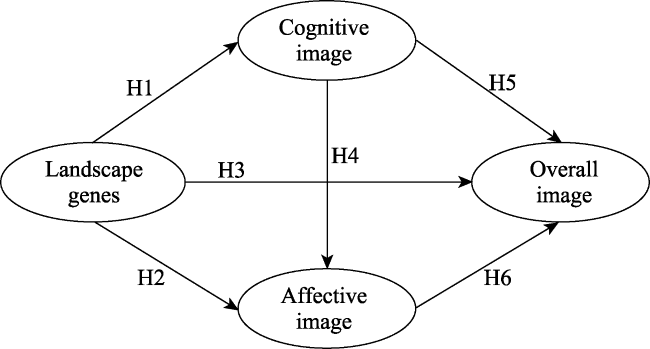
In the tourism image research, scholars have found that cognitive, affective, and global tourism images influence each other (Baloglu and McCleary, 1999). Chiu et al. (2016) state that cognitive image directly influences affective image, while Zhang et al. (2011) reveal that cognitive and affective images have significant positive effects on overall images, and cognitive image has a significant positive effect on affective image. In their empirical study of Xiamen City, Guo et al. (2014) find that although cognitive image significantly and positively influences affective and overall images, affective image does not have a significant positive effect on overall image. In their study of black tourism sites, Wang et al. (2019) point out that cognitive image significantly and positively influences affective image and indirectly influences overall image through the mediation of affective image. Accordingly, this study explores how these three constituents influence tourists’ traditional village image construction. To identify and extract traditional village landscape genes using the “cognitive-affective-overall” framework of tourists’ image construction (Fig. 1), this study proposes the following hypotheses:
H1: Landscape genes have a significantly positive effect on cognitive image construction.
H2: Landscape genes have a significantly positive effect on affective image construction.
H3: Landscape genes have a significantly positive influence on overall image construction.
H4: Cognitive images have a significantly positive effect on affective image construction.
H5: Cognitive image has a significantly positive effect on overall image construction.
H6: Affective image has a significantly positive effect on overall image construction.
H7: Cognitive image mediates the influence of landscape genes on overall image construction.
H8: Affective image mediates the influence of landscape genes on overall image construction.
H9: Cognitive and affective images play chain mediating roles in the relationship between landscape genes and overall image construction.
Fig. 1 Effects of traditional village landscape genes on tourists’ image construction

3 Research design

3.1 Identification of landscape genes in Zhangguying Village

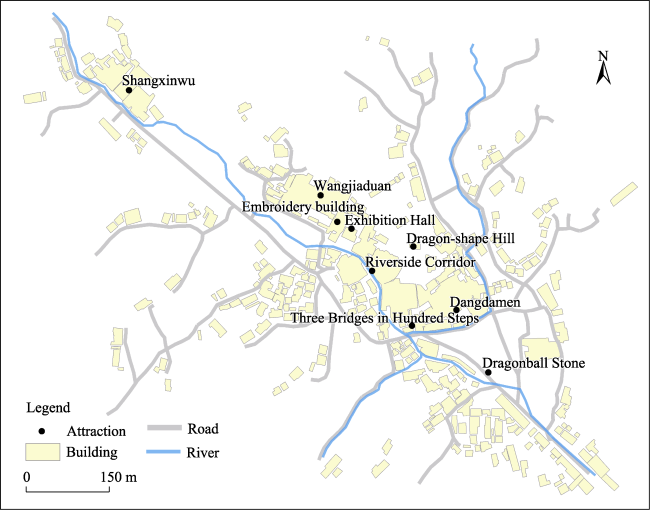
This study selected Zhangguying Village, Hunan Province, as a case study. The village has a total area of 504.4 ha and contains some of southern China’s best-preserved Hunan and Chu traditional residential buildings from the Ming and Qing dynasties. Tourism in Zhangguying Village began to develop in 1991; in 2001, the State Council approved it as a key national cultural and historical relic protection village and an 4A scenic spot. Zhangguying Village has focused on the protection of its traditional buildings and culture. It has rich and mature heritage landscapes and cultural and tourism resources, and is representative of tourism-driven traditional villages in Hunan Province (Fig. 2).
Fig. 2 Map of Zhangguying Village
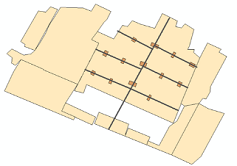
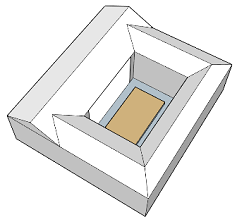
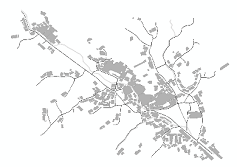
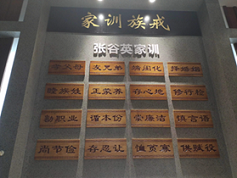
Based on the previous research, this study adopted the feature deconstruction gene extraction method to identify traditional village landscape genes based on the Zhangguying Village’s architectural, layout, environmental, and cultural features. By dividing the landscape features into categories, this study established a landscape gene identification index and combined the identification results based on the principle of “merging as if the categories are similar” (Liu, 2011). This study identified the village’s architectural features based on their architectural form, structure, material, and decoration; layout features based on their composition and concepts; environmental features based on the village’s terrain and geomorphology, river and water systems, and sitting forms; and cultural features based on the village’s production, living, institutional, and spiritual cultures. The results were classified into environmental genes, which were then sorted into four categories: environmental, architectural, cultural, and layout genes. Before conducting the landscape gene identification and extraction, the author conducted field research on the cultural landscape of Zhangguying Village from July 15-18, 2022 to understand the local environment, traditional culture, tourism development status, and characteristics of each landscape through participant observation and unstructured resident interviews. References were made to historical documents and related books about Zhangguying Village, such as local histories. The author also conducted unstructured interviews with experts and scholars who had deep knowledge of landscape gene theory. Accordingly, this study extracted four landscape genes in Zhangguying Village: the “dragon”-shaped mountain layout, “丰”-shaped zigzag structure, “回”-shaped courtyard layout centered around a patio, and filial piety and family style (Table 1).
Table 1 Landscape gene recognition and extraction in Zhangguying Village
Element Factor Analysis Result Image
Architectural characteristics Architectural morphology The central axis of the
building complex is symmetrical, witha north-south depth and an east-westlongitudinal structure, which forms a “丰”-shaped zigzag
building structure
“丰”-shaped
zigzag building
structure
Architectural structure
Architectural material
Architectural decoration
Layout characteristics Layout composition The house is centered around a patioand connected to other houses to forma “回”-shaped courtyard layout surrounded on all sides “回”-shaped courtyard centered around a patio
Layout feature
Layout concept
Environmental characteristics Topography The village has a “dragon”-shapedmountain layout along the Weixi
River
“Dragon”-shaped mountain layout
River system
Location
Cultural characteristics Production culture The Zhang clan co-resides here, adheres to Confucian culture, continues the 16 family rules, is diligent and respectful, and advocates for family customs Filial piety
Living culture
Institutional culture
Spiritual culture

3.2 Questionnaire design

The data were obtained via a questionnaire on the role of traditional village landscape genes in tourists’ image construction. Based on mature scales proposed by experts and scholars in related fields, the questionnaire was designed by combining Zhangguying Village’s landscape genes, tourism development status, qualitative information, and expert opinions. The questionnaire was divided into three major parts. The first part gathered information on tourists’ demo graphic characteristics, including gender, age, occupation, education level, monthly income, number of trips, and place of residence, which were obtained via single-item selection. The second part gathered information on tourists’ landscape gene perceptions, which included four items that drew on tourists’ previous experiences as well as the landscape genes extracted from the field research. The third part gathered information on the tourism image scale, which was based on the “cognitive-affective-overall” model (Baloglu and McCleary, 1999). To measure cognitive images, this study removed six tourism elements, such as tourism service facilities, entertainment, and so on, as Zhangguying Village was not an industrial complex. It then designed four items to measure cognitive images and overall images using Zhangguying’s official website (Liu and Dong, 1998; Peng and Huang, 2019; Cao et al., 2020). To measure affective images, this study used two dimensions, pleasure and comfort, by referring to Fuchs and Reichel (2011), Chen and Phou (2013), and Guan et al. (2021). To measure overall images, this study designed three items: satisfaction, willingness to revisit, and willingness to recommend. For the second and third items, respondents rated their attitudes on a five-point Likert scale (1=strongly disagree, 2=disagree, 3=average agreement, 4=agree, and 5=strongly agree).

3.3 Data collection

In July 2022, the author conducted a pilot survey in Zhangguying Village and made appropriate modifications and adjustments to the items based on the results and feedback. Then, from September 29 to October 4, 2022, the author distributed the questionnaire to tourists in Zhangguying Village and collected on-the-spot responses. For tourists who had reading difficulty, the author read the questions aloud and recorded their verbal responses. A total of 357 questionnaires were distributed and collected (100% recovery rate). After eliminating the incomplete and invalid responses, 342 valid questionnaires were obtained (effective rate of 96%). The sample size was more than 10 times the number of variable parameters, meeting the SEM data requirements.
In terms of the sample, 52% were female, 44.2% were aged between 31-55 years, 36.8% held an undergraduate degree, 27.2% were corporate employees and 27.2% were students, 31.6% had a monthly income of 5001-10000 yuan, 76.3% were first-time travelers, and 60.5% were from Hunan Province (Table 2). Thus, the sample was varied and representative for the subsequent analysis.
Table 2 Respondents’ demographic characteristics
Basic information Category Proportion (%)
Gender Male 48.0
Female 52.0
Age Under 18 years 11.4
18-30 years 36.0
31-55 years 44.2
56-65 years 6.7
Over 65 years 1.8
Educational attainment High school or below 23.4
College 15.8
Undergraduate 36.8
Graduate degree or above 24.0
Occupation Institution 20.2
Corporate employee 27.2
Student 27.2
Businessman 12.6
Retired 5.5
Freelancer 7.3
Monthly income ≤3000 yuan 29.5
3001-5000 yuan 20.2
5001-10000 yuan 31.6
>10000 yuan 18.7
Number of trips First-time traveler 76.3
Repeat traveler 23.7
Place of residence Yueyang City 27.5
Hunan Province
(except Yueyang City)
60.5
Outside Hunan Province 12.0
This study used SPSS 26.0 and AMOS 24.0 to analyze the data. The analysis steps were as follows. First, this study tested the reliability and validity of the scale items. Second, it analyzed the constructed conceptual SEM via path analysis to verify the structural relationships between landscape genes and tourists’ image construction in Zhangguying Village.

4 Analyses and results

4.1 Measurement model check

First, this study analyzed the Skewness and Kurtosis values of the scale items: the Skewness values ranged from -1.449 to -0.536 and the Kurtosis values ranged from -0.116 to 3.053; the absolute values of Skewness for the scale items were less than 2 and the absolute values of Kurtosis were less than 4. Thus, the data were evenly distributed (Wu, 2010).
Second, this study analyzed the reliability and validity of the scale items to ensure the authenticity and validity of the questionnaire data. The results show that the scale’s Kaiser-Meyer-Olkin (KMO) value is 0.915, Bartlett’s test of sphericity value is 2655.957, the degree of freedom (df) value is 78, and the accompanying probability value (Sig.) is <0.001, confirming the validity of the data. The overall scale’s internal consistency coefficient value (Cronbach’s α) is 0.925 and the internal consistency coefficient values of the four dimensions of landscape genes, cognitive images, affective images, and overall images are 0.823, 0.837, 0.769, and 0.906, respectively. Thus, the scale and dimensions have good reliability (Table 3).
Table 3 Reliability and convergence validity results
Facet Index Estimate AVE CR α
Landscape genes “Dragon”-shaped mountain layout 0.689 0.543 0.825 0.823
“丰”-shaped zigzag building structure 0.807
“回”-shaped courtyard centered around a patio 0.713
Filial piety 0.732
Cognitive images Architectural image 0.762 0.566 0.839 0.837
Cultural images 0.742
Spatial images 0.757
Landscape images 0.748
Affective images Pleasure 0.812 0.623 0.768 0.769
Comfort 0.766
Overall images Satisfaction 0.938 0.785 0.916 0.906
Revisit willingness 0.767
Willingness to recommend 0.942
Subsequently, this study analyzed the measurement model’s reliability by combining the reliability and mean- variance extracted values. The higher the combined reliability, the higher the degree of internal consistency. Table 3 shows that the combined reliability of all variables ranges from 0.768-0.916, which exceeds the critical value of 0.70 and indicates a high degree of internal consistency among the variables. The larger the value of the average variance extracted (AVE), the more representative the variable measure, and the better the convergent validity (Jörg and Fassott, 2010). When the AVE value exceeds 0.5, the measurement scale of the latent variable has good convergent validity (Henseler et al., 2015). The mean variance extracted values of each variable exceed 0.5, showing that each variable has good convergent validity and there is convergent validity among the variables. Discriminant validity refers to the non-correlation degree between the measure of latent variables (Wu, 2010). Table 4 shows that the square root of the mean variance values extracted for each variable exceed those of the correlation coefficients between the variables, verifying the discriminant validity of each variable.
Table 4 Validity results
Variable Landscape genes Cognitive images Affective images Overall images
Landscape genes 0.737
Cognitive images 0.656 0.752
Affective images 0.343 0.602 0.789
Overall images 0.068 0.38 0.365 0.886

Note: The bold values on the diagonal denote the square root of AVE.

4.2 Model fit and hypotheses tests

This study performed SEM using AMOS 24.0; Table 5 shows the results. The fit indices are satisfactory (χ2/df= 2.835, GFI=0.932, RMSEA=0.034, RMR=0.018, NFI=0.938, CFI=0.959, IFI=0.959, PNFI=0.710, PGFI=0.604), indicating good model fit with the sample data and a valid conceptual model.
Table 5 Conceptual model fit index
Fit indicator χ2/df GFI RMSEA RMR NFI CFI IF PNFI PGFI
Fit criteria <3 >0.90 <0.08 <0.08 >0.90 >0.90 >0.90 >0.50 >0.50
Conceptual model 2.835 0.932 0.034 0.018 0.938 0.959 0.959 0.710 0.604
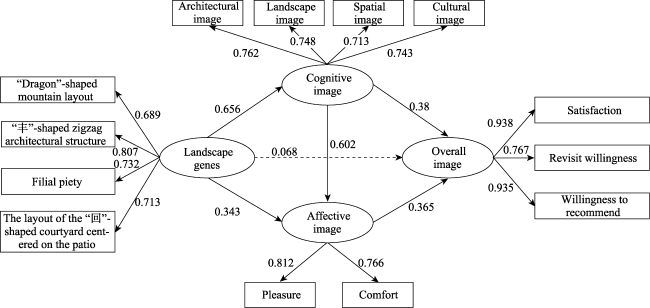
The model validation results (Table 6) show that H1 holds as landscape genes have a significantly positive effect on cognitive images, with a standardized path coefficient of 0.656, P<0.001. Assuming that H2 holds, landscape genes have a significantly positive effect on affective images, with a standardized path coefficient of 0.343, P<0.001. H3 does not hold and there is no significant effect of landscape genes on overall images, with a standardized path coefficient of 0.068, P>0.1. H4 holds as cognitive images have a significantly positive influence on affective images, with a standardized path coefficient of 0.602, P<0.001. H5 holds as cognitive images have a significantly positive influence on overall images, with a standardized path coefficient of 0.38, P<0.001. Finally, H6 holds as affective images have a significantly positive influence on overall images, with a standardized path coefficient of 0.365, P<0.05.
Table 6 Model path analyses and hypotheses validation results
Path Normalized path coefficient t P Outcome
H1: Landscape genes→Cognitive images 0.656 9.034 *** Established
H2: Landscape genes→Affective images 0.343 4.654 *** Established
H3: Landscape genes→Overall images 0.068 0.85 0.395 Not established
H4: Cognitive images→Affective images 0.602 7.683 *** Established
H5: Cognitive images→Overall images 0.38 3.411 *** Established
H6: Affective images→Overall images 0.365 2.677 ** Established

Note: * P<0.1, ** P<0.05, *** P<0.001.

4.3 Mediating effect test

To investigate the impact of landscape genes on tourists’ image construction, this study used bootstrapping to examine the mediating roles of cognitive and affective images on the relationship (Hayes, 2009). If the overall effect is t>1.96 and the bias-corrected and percentile confidence intervals do not contain 0 at the 95% confidence level, the model’s overall path effect is significant, and a mediating effect may exist (Hayes, 2009). If both the indirect and direct effects satisfy the condition, there may be a partially mediating effect between the variables. If the direct effect does not satisfy the condition but the indirect effect does, there may be a fully mediating effect between the variables. If both the direct and indirect effects do not satisfy the condition, there may be no mediating effect between the variables (Preache et al., 2007).
Table 7 presents the mediating effect test results. In the landscape genes-cognitive images-overall images path, the overall and indirect effects meet the criteria while the direct effect does not, indicating that cognitive images fully mediate the relationship between landscape genes and overall images, supporting H7. In the affective images-overall images path, the overall effect meets the criteria while the direct and indirect effects do not, indicating that affective images do not mediate the relationship between landscape genes and overall images, rejecting H8. In the affective images-overall images path, the overall and indirect effects meet the criteria while the direct effect does not, indicating that cognitive and affective images play chain mediating roles in the relationship between landscape genes and overall image construction, supporting H9 (Table 8).
Table 7 Mediating effect test results
Path Mediation type Value Coefficient Bootstrapping
Bias-corrected 95% CI Percentile 95% CI
SE t Lower Upper Lower Upper
Landscape genes→Overall images Total effect 0.696*** 0.079 8.810 0.551 0.862 0.551 0.863
Landscape genes→Overall images Direct effect 0.073 0.119 0.613 -0.172 0.292 -0.194 0.276
Landscape genes→Cognitive images→Overall images Indirect effect 0.294* 0.161 1.826 0.061 0.665 0.077 0.698
Landscape genes→Affective images→Overall images Indirect effect 0.153 0.102 1.500 0.010 0.440 -0.002 0.387
Landscape genes→Cognitive images→Affective images→Overall images Indirect effect 0.176* 0.102 1.725 0.050 0.485 0.007 0.388

Note: * P<0.1, ** P<0.05, *** P<0.001.

Table 8 Mediating effect results
Path Outcome
H7: Landscape genes→Cognitive images→Overall images Fully mediating role
H8: Landscape genes→Affective images→Overall images No mediating role
H9: Landscape genes→Cognitive images→Affective images→Overall images Chain mediating role

4.4 Multicluster analysis

Multicluster analysis is used to explore whether there are significant differences in the coefficients between variables. Tourists have different perceptions and attitudes owing to differences in their gender, age, number of trips, and permanent residence status. Therefore, tourists’ image construction may differ. Using AMOS 24.0, this study performed a multicluster analysis to identify the heterogeneity and moderating effects of the demographic characteristics (Jörg and Fassott, 2010).
Before conducting the multicluster analysis, this study dichotomously transformed the demographic characteristics into variables to reduce the impact of sample size on the model results (Jörg and Fassott, 2010). Gender, age, number of trips, and usual place of residence were selected as moderating variables for the multicluster analysis to evaluate the similarities and differences in tourists’ image construction. Age was divided into those aged 30 years and below and over 30 years, number of trips was divided into first-time travelers and repeat travelers, and place of residence was divided into inside and outside Yueyang City.
By comparing and analyzing the fit results of the restricted and unrestricted parameter models, this study selected a structural covariance model to assess the number of trips and permanent residence clusters, and a measurement weighting model to explore the gender and age clusters. Table 9 shows that the differences in the chi-square values of the gender cluster are significant and P<0.05, indicating that the clusters are different. While the differences in the chi-square values for age, number of trips, and place of residence are not significance, the absolute value of the difference in the value-added fit indicator is <0.05, indicating insufficient evidence to reject the hypothesis that models with restricted parameters are not significantly different (Wu, 2010). The results show that gender, age, number of trips, and place of residence have a moderating effect on the model, requiring further analyses of the similarities and differences between these different tourist subgroups in the model.
Table 9 Summary of fit indicators for the multicluster SEM
Variable Δχ2/df P ΔNFI ΔIFI ΔRFI ΔTLI χ2/df RMSEA PNFI PCFI
Gender 8.769/3 0.033 0.003 0.003 0.001 0.001 1.923 0.052 0.727 0.760
Age 3.483/3 0.323 0.001 0.001 -0.001 -0.001 2.127 0.058 0.721 0.753
Number of trips 2.488/1 0.115 0.001 0.001 0.000 0.000 2.124 0.058 0.721 0.754
Place of residence 0.001/1 0.974 0.000 0.000 -0.001 -0.001 2.013 0.055 0.724 0.757
This study used the standardized path coefficients and their significance values to explore the similarities and differences between the tourist subgroup results in the SEM and test H1, H2, H4, H5, and H6. Table 10 shows that when gender is the moderating variable, H1, H2, H4, H5, and H6 are validated. The female subgroup’s results are more significant than those of the male subgroup’s for path H1 (landscape genes-cognitive images) and path H2 (landscape genes-affective images), whereas the male subgroup’s results are more significant for path H4 (cognitive images-affective images), path H5 (cognitive images-overall images), and path H6 (affective images-overall images). The male subgroup’s results are generally more significant than those of the female subgroup’s for the landscape gene, cognitive image, affective image, and overall image paths.
Table 10 Multicluster analysis of path coefficient results
Path Gender Age Number of trips Place of residence
Male Female ≤30 yr >30 yr First-time traveler Repeat traveler Inside Yueyang City Outside Yueyang City
H1 0.619*** 0.692*** 0.644*** 0.657*** 0.667*** 0.626*** 0.574*** 0.685***
H2 0.324*** 0.362*** 0.339*** 0.368*** 0.385*** 0.422*** 0.306** 0.342***
H4 0.608*** 0.607*** 0.570*** 0.606*** 0.529*** 0.619*** 0.638*** 0.596***
H5 0.416*** 0.367*** 0.332** 0.354** 0.396*** 0.417*** 0.374** 0.341**
H6 0.364*** 0.321*** 0.390** 0.390*** 0.379** 0.341** 0.377** 0.367**
“丰”-shaped zigzag structure 0.797*** 0.803*** 0.727*** 0.876*** 0.764*** 0.925*** 0.894*** 0.785***
Filial piety 0.795*** 0.688*** 0.724*** 0.744*** 0.722*** 0.771*** 0.858*** 0.692***
“回”-shaped courtyard layout 0.757*** 0.679*** 0.701*** 0.729*** 0.679*** 0.835*** 0.665*** 0.729***
“Dragon”-shaped mountain layout 0.719*** 0.675*** 0.714*** 0.665*** 0.702*** 0.645*** 0.581*** 0.715***
Cultural images 0.755*** 0.729*** 0.686*** 0.791*** 0.717*** 0.847*** 0.661*** 0.768***
Spatial images 0.783*** 0.727*** 0.766*** 0.756*** 0.746*** 0.776*** 0.706*** 0.770***
Landscape images 0.745*** 0.788*** 0.757*** 0.741*** 0.712*** 0.850*** 0.738*** 0.753***
Architectural images 0.787*** 0.736*** 0.720*** 0.792*** 0.788*** 0.705*** 0.690*** 0.777***
Pleasure 0.854*** 0.756*** 0.809*** 0.817*** 0.797*** 0.861*** 0.815*** 0.812***
Comfort 0.818*** 0.727*** 0.712*** 0.831*** 0.766*** 0.781*** 0.732*** 0.776***
Satisfaction 0.936*** 0.941*** 0.929*** 0.949*** 0.925*** 0.992*** 0.961*** 0.928***
Revisit willingness 0.786*** 0.754*** 0.735*** 0.808*** 0.755*** 0.836*** 0.792*** 0.754***
Willingness to recommend 0.955*** 0.916*** 0.918*** 0.950*** 0.930*** 0.938*** 0.976*** 0.918***

Note: * P<0.1, ** P<0.05, *** P<0.001.

When age is the moderating variable, H1, H2, H4, H5, and H6 are validated. The over 30 subgroup’s results exceed those of the under 30 subgroup’s for H1, H2, H4, and H5. Path H6 (affective images-overall images) has the same coefficients for both subgroups, suggesting that the fully mediating role of cognitive images (path H7) and the chain mediating roles of cognitive and affective images (path H9) are more significant for the over 30 subgroup. Regarding landscape genes, the over 30 subgroup’s results are more significant for the “丰”-shaped building structure, filial piety and family style, and the “回”-shaped courtyard layout paths, while the under 30 subgroup’s results are more significant for the “dragon”-shaped mountain range layout path. Regarding cognitive images, the over 30 subgroup’s results are high for cultural and architectural images, suggesting that this subgroup pays more attention to the cultural connotations of a destination. While the cultural landscapes also play an important role, the under 30 subgroup’s results are more significant for the environment and layout. The over 30 subgroup’s results are more significant for affective and overall images.
When the number of trips is the moderating variable, H1, H2, H4, H5, and H6 are validated. The first-time traveler subgroup’s results are more significant than those of the repeat traveler subgroup’s for path H6 (landscape genes- cognitive images) and path H1 (affective images-overall images), whereas the repeat traveler subgroup’s results are more significant for path H2 (landscape genes-affective images), path H4 (cognitive images-affective images), and path H5 (cognitive images-overall images). The repeat tourist subgroup’s results are more significant for the landscape genes, cognitive images, and affective images paths, suggesting that these tourists understand Zhangguying Village in more detail, form deeper tourism images, and have higher degrees of satisfaction; these aspects generate repeat tourism.
When place of residence is the moderating variable, H1, H2, H4, H5, and H6 are validated. The subgroup outside Yueyang City have more significant results than those of the subgroup inside Yueyang City for path H1 (landscape genes- cognitive images) and path H2 (landscape genes-affective images), while the subgroup inside Yueyang City have more significant results for path H4 (cognitive images-affective images), path H5 (cognitive images-overall images), and path H6 (affective images-overall images). The subgroup outside Yueyang City has more significant results for cogni tive images, while the subgroup inside Yueyang City has more significant results for satisfaction, willingness to revisit, and willingness to recommend.

5 Impact mechanism analysis of traditional village landscape genes on tourists’ image construction

5.1 Direct effect of landscape genes on cognitive images

This study combined the landscape gene and standardized factor loading results to analyze the impact on tourists’ image construction in Zhangguying Village (Fig. 3). The results show that landscape genes play a positive role in tourists’ cognitive image construction (path coefficient: 0.656). The “丰”-shaped building structure path scores the highest (0.807) followed by filial piety and family style (0.732), “回”-shaped courtyard layout centered around a patio (0.713), and “dragon”-shaped mountain layout (0.689). Among the cognitive image dimensions, the architectural image is the most prominent, emphasizing the importance of architecture in landscape genes. Since Zhangguying Village’s tour guides provide free guided tours that showcase the village’s most prominent architectural features, tourists strongly perceive the “丰”-shaped zigzag building structures, while the “dragon”-shaped mountain layout landscape features are difficult to perceive compared with other landscape elements. Moreover, during the data collection period (summer), the weather was hot, and most of the tourists did not pass the “dragon”-shaped mountain to get a panoramic view of Zhangguying Village. Thus, they did not see the “dragon”-shaped Mountain Range’s landscape features, which attributed to their weak perceptions of the dragon- shaped layout.
Fig. 3 Path coefficient diagram of the Zhangguying Village SEM

5.2 Mediating roles of cognitive and affective images

Cognitive images play a fully mediating role in the relationship between landscape genes and overall image construction (path coefficient: 0.294). Among the cognitive image dimensions, architectural images scores the highest (0.762), followed by landscape images (0.748), cultural images (0.743), and spatial images (0.713). This shows that architectural image plays an important role in cognitive image construction, reflecting the tourists’ recognition of Zhangguying Village as “the living fossil of Ming and Qing houses in Xiangchu”. Common architectural image keywords included “gate complex”, “embroidery building”, “traditional architecture,” and “building structure”. Affective image does not play a mediating role in the relationship between landscape genes and overall images; therefore, this study did not analyze this impact mechanism further.
Landscape genes do not play a role in tourists’ overall image construction. Cognitive and affective images play chain mediating roles in the relationship between landscape genes and overall image construction (path coefficient: 0.176): landscape genes influence cognitive images, which, in turn, impact affective and overall images. Moreover, cognitive images significantly and positively influence affective images (path coefficient: 0.602): the more significant the cognitive images, the higher the affective images. Table 8 shows that affective images do not play a mediating role in the relationship between landscape genes and overall images, so cognitive images play a decisive role in H9. Accordingly, cognitive and affective images are the key components of the internal evolution of tourists’ traditional village image construction.

6 Conclusions and suggestions

6.1 Conclusions

This study explores the relationship between the role of landscape genes and tourists’ image construction via a case study of Zhangguying Village. The main findings are as follows. First, it verifies the important impact of traditional village landscape genes on tourists’ image construction. This is in agreement with the traditional village tourism revitalization research, which has asserted that traditional village landscape genes are intrinsic to tourists’ image construction (Liu et al., 2022). Moreover, this study reveals that village landscape genes have varying effects on tourists’ image construction: the “丰”-shaped zigzag building structure architectural gene plays an important role in tourists’ cognitive image construction followed by the filial piety and family style cultural gene, the “回”-shaped courtyard layout gene, and the “dragon”-shaped mountain layout environmental gene. The “dragon”-shaped mountain range layout environmental gene has the least important impact on tourists’ cognitive image construction. This confirms the prior conclusion that tourists’ traditional village image construction focuses on historical buildings, spatial patterns, and cultural features (Xiong, 1999; Zhang et al., 2007; Cao et al., 2020).
Second, this study verifies that cognitive and affective images play chain mediating roles in the relationship between landscape genes and overall image construction, and that cognitive and affective images are the key components of the internal evolution of tourists’ traditional village image construction.
Third, the multicluster analysis results reveal that tourists’ image construction dimensions significantly differ based on gender, age, number of trips, and place of permanent residence. For the age subgroup, older people focus more on the cultural connotations of the destination and the cultural and architectural landscapes. Meanwhile, younger people pay more attention to the environment and the overall layout. For the numbers of trips subgroup, repeat travelers have higher affective image construction that that of first-time travelers, which affects tourists’ repeat travel behavior. For the permanent residence subgroup, the impact of landscape genes is more significant for the cognitive and affective image construction of tourists residing outside Yueyang City. This may be because this group lives further away from scenic spots, and their travel motivation may be based on the natural and cultural differences that distinguish such scenic spots from their usual places of residence. Moreover, local tourists will be more familiar with scenic spots than foreign tourists, so the effect of landscape genes on their cognitive and affective image construction will be less significant, and the emotions generated during their tourism experiences will impact on the outcomes of their experiences.

6.2 Suggestions

Through the comparative analysis of the role of each dimension in the model, this study provides the following suggestions for the sustainable development of traditional village tourism. First, traditional village landscapes should display genetic heritage information. With rapid economic development and the continuous improvement of cultural quality, tourists’ pursuit of quality trips is increasing, and they are paying more attention to the cultural connotations of tourist places. Cultural factors have become important indicators that affect their choices of tourist destinations. Landscape genes are unique local landscape symbols, and the identification of landscape genes that shape the uniqueness of tourist locations plays an important role. Therefore, in the process of tourism development, traditional villages that showcase China’s important historical and cultural heritage should clarify the village landscape genes, make implicit landscape genes explicit, and strengthen cultural village landscape genes to become more impressionable, increase the tourist gaze, and enhance the sites as tourist attractions. Accordingly, the villages will showcase traditional cultures and landscapes and become symbolic production spaces, so that visitors feel the local culture when they go for the traditional village tourism experience.
Second, affective connections between tourists and traditional villages should be reinforced. This study’s results show that tourists’ affective attitudes significantly influence their satisfaction, willingness to recommend, and willingness to revisit. Therefore, traditional village tourism sites should focus on tourists’ in-place experiences and affective evaluations. Tourism denotes the process of consuming places and landscapes that differ from one’s usual environment, motivating travel intention. Traditional village tourism sites should focus on scene designs, local cultural atmospheres, strengthen tourists’ knowledge of village landscapes, mobilize tourists’ positive emotions as much as possible, and satisfy tourists’ understanding of the sites’ social and cultural knowledge.
Third, the digital communication and experiences of traditional village tourism should be enhanced. On one hand, traditional village tourism sites should digitally disseminate traditional village cultural landscapes. With the advent of the Web 4.0 era, the rapid development of social media, tourism websites, microblogs, video apps, and other media platforms have become important channels from which tourists obtain destination information. Tourism sites can digitally disseminate their traditional cultural landscapes using virtual interactive platforms, such as 3D animated videos, live streaming, and cloud tourism experiences, to form induced images and attract tourists. On the other hand, the interpretation of traditional village tourism sites differs from that of natural tourist sites. If a tourist walks around a traditional village but cannot perceive its cultural connotations, they will not form a deep landscape image. Therefore, traditional village tourism sites should use digitalization to make the interpretations of their sites more diversified, efficient, and immersive, thereby enabling tourists to fully understand the landscape characteristics. With the rapid development of communication and network technologies, digitalization has been widely used in daily life, and the tourism industry is undergoing a digital transformation. In traditional village tourism, the dissemination of village landscape genes through digitalization can, on one hand, protect cultural heritage, and on the other hand, enhance traditional site activity so that tourists can have a more intuitive, immersive, and comprehensive understanding of traditional villages.

6.3 Research limitations and scope for further study

This study empirically explores the roles of traditional village landscape genes on tourists’ image construction. The results clarify the impact of traditional village landscape genes on tourists’ image construction, based on the “cognitive-affective-overall” framework, so as to provide another perspective. However, this study only examined the relationship between traditional village landscape genes and tourists’ image construction using one traditional village as a case study. The future research should explore whether there are differences in the roles of landscape genes in tourists’ image construction among different types of traditional villages. Overall, understanding how tourists construct traditional village images is essential in the context of the rapid development of traditional village tourism and landscape conservation.
[1]
Bai K, Zhao A Z. 2011. Studies on convergence and divergence of city image and destination image. Progress in Geography, 30(10): 1312-1320. (in Chinese)

DOI

[2]
Baloglu S, McCleary K W. 1999. A model of destination image formation. Annals of Tourism Research, 26(4): 868-897.

[3]
Boulding K E. 1956. The image. Ann Arbor, USA: University of Michigan Press. (in Chinese)

[4]
Cao S Q, Li M. 2015. Traditional settlement landscape image guest rating based on perception: Take the south town as a case. Yunnan Geographic Environment Research, 27(1): 22-30. (in Chinese)

[5]
Cao X P, He H, Feng Q, et al. 2020. Destination image of ancient villages in southern Anhui Province based on tourists’ photos: A case from Hongcun Village. Resources Science, 42(5): 933-945. (in Chinese)

[6]
Carneiro R L. 2004. Classical foundation of the theory of cultural evolution. Wang L (translated). Historical Review, (1): 1-12, 126.

[7]
Chen C, Phou S. 2013. A closer look at destination: Image, personality, relationship and loyalty. Tourism Management, 36: 269-278.

[8]
Chiu W, Zeng S, Cheng S T. 2016. The influence of destination image and tourist satisfaction on tourist loyalty: A case study of Chinese tourists in Korea. International Journal of Culture Tourism & Hospitality Research, 10(2): 223-234.

[9]
Crompton J L. 1979. An assessment of the image of Mexico as a vacation destination and the influence of geographical location upon that image. Journal of Travel Research, 17(4): 18-23.

[10]
Echtner C M, Ritchie J R B. 1991. The meaning and measurement of destination image. Journal of Tourism Studies, 2(2): 2-12.

[11]
Fakeye P C, Crompton J L. 1991. Image differences between prospective, first-time, and repeat visitors to the lower Rio Grande Valley. Journal of Travel Research, 30(2): 10-16.

[12]
Fuchs G, Reichel A. 2011. An exploratory inquiry into destination risk perceptions and risk reduction strategies of first time vs. repeat visitors to a highly volatile destination. Tourism Management, 32(2): 266-276.

[13]
Gartned W C. 1994. Image formation process. Journal of Travel & Tourism Marketing, 2(2-3): 191-216.

[14]
Guan J J, Bi J P, Dong X W. 2021. Home and away: Reconstructing tourist’ perception of destination in the context of situation transfer. Tourism Tribune, 36(1): 112-122. (in Chinese)

[15]
Gunn C. 1972. Vacation scape: Designing tourist region. Diss., Austin, USA: University of Texas.

[16]
Guo A X, Huang F C, Sun X F. 2014. Research on the impact of tourism motivation on destination image: A case study of Xiamen City. Research on Financial and Economic Issues, (6): 132-139. (in Chinese)

[17]
Hayes A F. 2009. Beyond Baron and Kenny: Statistical mediation analysis in the new millennium. Communication Monographs, 76(4): 408-420.

[18]
Henseler J, Ringle C M, Sarstedt M. 2015. A new criterion for assessing discriminant validity in variance-based structural equation modeling. Journal of the Academy of Marketing Science, 43(1): 115-135.

[19]
Hu Z, Liu P L, Deng Y Y, et al. 2015. A novel method for identifying and separating landscape genes from traditional settlements. Scientia Geographica Sinica, 35(12): 1518-1524. (in Chinese)

DOI

[20]
Hu Z, Zheng W W, Liu P L, et al. 2018. The forms and structures of traditional landscape genome maps: A case study of Hunan Province. Acta Geographica Sinica, 73(2): 317-332. (in Chinese)

DOI

[21]
Jörg H, Fassott G. 2010. Handbook of partial least squares. Berlin, Germany: Springer.

[22]
Li B H, Li X, Chen X X, et al. 2021. Two-wheel driven construction of characteristic tourist towns under the background of new urbanization. Progress in Geography, 40(1): 40-49. (in Chinese)

DOI

[23]
Liu P L. 2003. The gene expression and the sight identification of the ancient villages’ cultural landscape. Journal of Hengyang Normal University (Social Science), 24(4): 1-8. (in Chinese)

[24]
Liu P L. 2008. “Landscape information chain” theory and its utilization in planning of cultural tour destinations. Economic Geography, 28(6): 1035-1039. (in Chinese)

[25]
Liu P L. 2011. Study on the construction and application of genetic map of Chinese traditional settlementlandscape. Diss., Beijing, China: Peking University. (in Chinese)

[26]
Liu P L, Dong S S. 1998. Study of landscape-image of Chinese ancient village. Geographical Research, 17(1): 31-38. (in Chinese)

DOI

[27]
Liu P L, Peng K, Yang L G. 2022. The storage, expression, and tourism value of the genetic information of traditional village landscape: A case study of Zhongtian Village of Changning City, Hunan Province. Tourism and Hospitality Prospects, 6(2): 1-25. (in Chinese)

[28]
Lynch K. 2017. The image of the city. Fang Y P, He X J (translated). Beijing, China: Huaxia Publishing House. (in Chinese)

[29]
Pan L, Xu X A, Xie X Y. 2021. Feeling the real warmth after traveling: Different perceptions of country tourism image of south Africa. Tourism Tribune, 36(1): 123-134. (in Chinese)

[30]
Peng D, Huang Y T. 2019. A study on the tourism destination imagination of Lijiang ancient town: Content analysis based on travel blogs. Tourism Tribune, 34(9): 80-89. (in Chinese)

[31]
Preache K J, Rucker D D. Hayes A F. 2007. Addressing moderated mediation hypotheses: Theory, methods, and prescriptions. Multivariate Behavioral Research, 42(1): 185-227.

DOI PMID

[32]
Shen X Y, Liu P L, Deng Y Y. 2006. Seeking the landscape’s genes atlas: one kind of new angle of view about settlement’s cultural landscape districts research. Human Geography, 4(4): 109-112. (in Chinese)

[33]
Song Z L, Fu H, Yang J N, et al. 2022. Research on destination image and temporal and spatial characteristics of Peitian ancient village based on UGC data. Journal of Natural Science of Hunan Normal University, 45(2): 83-93. (in Chinese)

[34]
Sun J X. 2017. Traditional villages: Theoretical connotations and development paths. Tourism Tribune, 32(1): 1-3. (in Chinese)

[35]
Tang C C, Wan Z W, Liu M, et al. 2021. Perception and improvement of the protection and inheritance of traditional village cultural heritage based on multi-agent. Journal of Arid Land Resources and Environment, 35(2): 196-202. (in Chinese)

[36]
Tang M L. 2000. The inventory and progress of cultural landscape study. Progress in Geography, 19(1): 70-79. (in Chinese)

DOI

[37]
Wang J W, Yang J X, Zheng C H, et al. 2019. Effect of tourist motivation on destination image with a dark tourism site: Case study of the Beichuan Earthquake Memorial Site, China. Tourism Tribune, 34(9): 114-126. (in Chinese)

[38]
Wu M L. 2010. Structural equation modeling:Operation and application of AMOS. Chongqing, China: Chongqing University Press. (in Chinese)

[39]
Xiao X Y, Tang C C, Liang W Q. 2022. Spatial distribution and cultural features of traditional villages in Beijing and influencing factors. Journal of Resources and Ecology, 13(6): 1074-1086. (in Chinese)

DOI

[40]
Xiong K. 1999. A preliminary study on rural image and development of rural tourism. Areal Researchand Development, (3): 70-73. (in Chinese)

[41]
Yang L G, Liu P L, Lin L. 2015. The effect of traditional village landscape genes in construction place identity: Taking the Dong Minority Village as an example. Scientia Geographica Sinica, 35(5): 593-598. (in Chinese)

DOI

[42]
Yang L G, Peng Z M. 2022. Evaluation on the integration of traditional village cultural landscape gene inheritance and tourism development: A case study of the first batch of Dong traditional villages. Journal of Natural Science of Hunan Normal University, 45(2): 74-82. (in Chinese)

[43]
Zeng C, Liu P L, Zuo Y L, et al. 2022. Research on rural revitalization path from the perspective of settlement “double repair”: Taking Shajing Village in Qidong County as an example. Journal of Natural Resources, 37(8): 2018-2032. (in Chinese)

[44]
Zhan L, Huang J, Wang C, et al. 2022. Three-dimensional digital presentation of red tourism resources based on landscape gene theory: Taking the former residence of Mao Zedong and Yang Kaihui in Qingshuitang as an example. Tourism Tribune, 37(7): 54-64. (in Chinese)

[45]
Zhang H M, Lu L, Cai L P, et al. 2011. Tourism destination image structural model and visitors’ behavioral intentions: Based on a confirmatory study of localization of potential consumers. Tourism Science, 25(1): 35-45. (in Chinese)

[46]
Zhang J, Zhao Y, Xu Z X, et al. 2007. Image oriented planning theory of conservation and sustainable development for vernacular town. Tourism Studies, (2): 241-245. (in Chinese)

[47]
Zhao X C, Yuan C, Xiang W Y. 2018. Research on modern village planning and construction in southern Hunan based on landscape gene theory. Journal of Human Settlements in West China, 33(5): 84-91. (in Chinese)

Outlines

/