Rural Revitalization and Rural Tourism High-quality Development

Coordinated Situation and Dynamic Mechanism of Rural Tourism and Rural Revitalization in the Metropolitan Area of Xi’an

  • FU Xiaomeng ,
  • ZHANG Pei
Expand
  • School of Architecture, Xi’an University of Architecture and Technology, Xi’an 710055, China

FU Xiaomeng, E-mail:

Received date: 2023-07-18

  Accepted date: 2023-11-03

  Online published: 2024-05-24

Supported by

The National Natural Science Foundation of China(52378076)

The New Urbanization Research Fund of Xi’an University of Architecture and Technology(2022SCHZ05)

Abstract

Metropolitan areas are an inevitable outcome of urbanization development. The countryside is the key problem restricting the quality of urbanization development in such areas. Rural tourism-driven revitalization is of considerable importance for the integrated development of urban and rural areas in metropolitan areas. Based on comprehensive development level and coupling coordination degree models, we used the fuzzy comprehensive evaluation method to calculate the coupling and coordinated development level of rural tourism and revitalization in the metropolitan area of Xi’an in 2021. Furthermore, we explored the dynamic mechanism of coordinated development in combination with typical cases. The results indicate the following: (1) In 2021, the overall level of rural tourism development was good, and the spatial difference exhibited a decreasing phenomenon from the core circle to the outer circle. (2) The coupling and coordination degree of rural tourism and revitalization is generally in a balanced state, which indicates that the core circle is superior to the peripheral circle in space. (3) The combined effect of “supply-demand-guarantee” is an important driving mechanism for the coordinated development of rural tourism and revitalization in the metropolitan area, in which “supply” is the basic factor for the coordinated development, “demand” is the core factor for the improvement of its coupling coordination level, and “guarantee” is the supporting factor for its sustainable development. This study enriches the theory of rural revitalization in metropolitan areas to a certain extent and provides new insights for improving the quality of urban and rural integrated development in metropolitan areas.

Cite this article

FU Xiaomeng , ZHANG Pei . Coordinated Situation and Dynamic Mechanism of Rural Tourism and Rural Revitalization in the Metropolitan Area of Xi’an[J]. Journal of Resources and Ecology, 2024 , 15(3) : 554 -564 . DOI: 10.5814/j.issn.1674-764x.2024.03.004

1 Introduction

In recent years, with the continuous attention toward the development of rural industries, the combination of rural tourism with poverty alleviation projects and rural revitalization has become a hot topic. Since 2014, the National Development and Reform Commission, the former National Tourism Administration, and the Ministry of Culture and Tourism have issued multiple documents to support the development of rural tourism and assist in rural revitalization. There is a close interrelationship between rural tourism and revitalization. On the one hand, the population anti-siphon, economic boost, and infrastructure-driving effects of rural tourism can form an effective connection with the rural revitalization strategy and promote its smooth implementation (Shen and Wang, 2022). With the continuous improvement of resource capacity, the development vitality of rural tourism is stimulated, leading to deep-seated changes in rural areas, especially the reconstruction of rural spatial, economic, and social structures, promoting the gradual optimization of rural functions, and thereby driving the comprehensive revitalization (Li and Wu, 2022). On the other hand, the rural revitalization work of “talent going to the countryside” and “technology going to the countryside” has also promoted the transformation and development of rural industries (Shi et al., 2019). However, not all rural areas are suitable for rural tourism to achieve revitalization. Many rural tourism projects in China are mostly rushed and do not undergo mature strategic analysis and comprehensive planning before implementation, leading to the failure of rural tourism and even the gradual loss of rural identity in the wave of urbanization (Dragan, 2023). With the development of urbanization, changes in the economic development mode and market demand of cities have brought about changes in the development mode of rural industries, especially in rural areas located in urban areas. The social and cultural information of cities has also infiltrated rural areas, while the original natural resources, history, spatial patterns, buildings, and other material environments of rural areas, as well as rural folk customs. Residents’ rights and rural roots gradually transform into capital for the development of rural tourism in this process. The key issue for the development of urban and rural areas is achieving rural modernization while protecting rural nature in the game between the two. Therefore, to provide theoretical guidance for the healthy development of rural tourism and revitalization, research on the coupling and coordination relationship between the two is urgently required.
The development of rural tourism is an important path to promote rural revitalization. First, the rural tourism industry is an important type of modernization development in rural industries. The development of such industry integrates agriculture, handicrafts, and other industries to achieve coordinated development of the primary, secondary, and tertiary industries. Thus, new industrial formats are derived to achieve industrial prosperity. Second, the development of rural tourism is based on the natural ecological environment of rural areas. By improving such an environment, the development of ecotourism also provides improvements for rural ecological livability. Third, the unique rural style is an important resource for attracting urban residents to travel and reflects the connotation of rural nature. The exploration and protection of rural nature promotes a more civilized rural style. Fourth, the development of rural tourism can effectively utilize idle land, attract talents to return to their hometowns for entrepreneurship, improve the employment rate of rural residents, solve the problem of rural hollowing out, and assist in the modernization of rural governance. Fifth, the development promotes employment by transferring surplus agricultural labor, increasing farmers’ income, narrowing the urban-rural gap, and promoting common prosperity in rural areas (Ma et al., 2021).
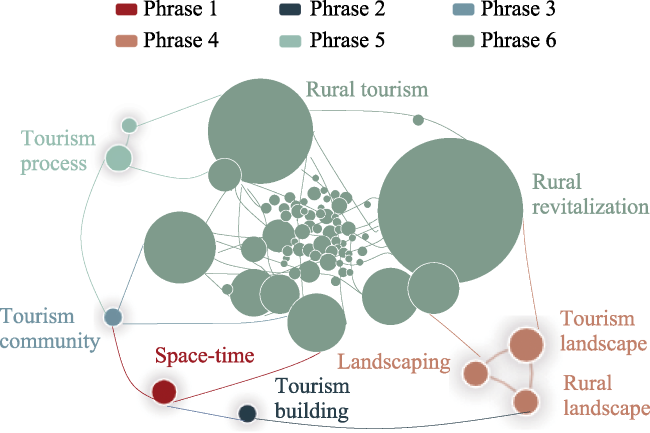
With the transformation of urban-rural relations in China, rural tourism research should break away from the unidirectional perspective of the impact of rural tourism on rural areas and re-examine its bidirectional and comprehensive role from the perspective of urban-rural relations (Luo and Lu, 2017; Sun and Wang, 2021). There is abundant research on rural tourism. Through the China National Knowledge Infrastructure (CNKI), a total of 4712 Chinese literature were retrieved from the “Peking University Core(① Catalogue of Peking University Core Chinese Journals.)”, “CSSCI(② Chinese Social Sciences Citation Index by Nanjing University.)” and “CSCD(③ Chinese Science Citation Database by Chinese Academy of Sciences.)” journal libraries, using the theme of “rural tourism”. Considering the publication time, citation rate, and correlation, 200 studies were selected for quantitative visualization analysis. From the keyword co-occurrence network graph (Fig. 1), relevant research can be divided into six categories: First, the spatiotemporal evolution of rural tourism, including the spatiotemporal pattern of rural tourism service level (Gao et al., 2021) and the spatiotemporal characteristics of the customer source market (Rong et al., 2020). Second, the design and research of rural residential (Huang and Wang, 2020), landscape (Wu, 2022), and ecological buildings (Hao, 2022) from the perspective of rural tourism. Third, to explore the conflict (Zhang et al., 2022a), integration (Zhu and Qiao, 2020), and development path (Li et al., 2022) between community-based and scenic areas in the development of rural tourism. Fourth, the research on landscape environment design and the relationship between humans and land in landscape management in rural tourism (Xue and Yang, 2022). Fifth, to explore social issues such as the relationship between tourism projects (Li, 2022) and rural areas in the development of rural tourism and the issue of spatial justice in rural tourism (Zhang et al., 2022b). Sixth, the study of the relationship between rural tourism and rural revitalization is currently a hot topic. From a research perspective, most of the research on the relationship between rural tourism and revitalization is based on geographical units such as rural areas. Only a few scholars have analyzed the rural tourism space around large cities (Wei et al., 2021; Guo et al., 2023), human-land relationship in rural tourism (Sheng and Liu, 2021), mode of rural transformation guided by tourism development (Wei et al., 2018), perception of urban residents participating in rural tourism (Zhang et al., 2019; Robina-Ramírez et al., 2023), and transformation and upgrading of rural tourism. In terms of research methods, the first explores the type and mode of rural tourism development in the large rural-urban fringe through qualitative analysis. Second, combining big data, the spatial distribution of rural tourism around large cities or the evolution of its spatial pattern is examined (Yin et al., 2021). The third method adopts statistical data to analyze the development potential of rural tourism resources (Zhao et al., 2019; Jiang et al., 2023).
Fig. 1 Co-occurrence network of research keywords related to “rural tourism”
Overall, research on rural tourism and rural revitalization has derived fruitful results. However, related studies only qualitatively explore the logical relationship between these factors and fail to explore whether rural areas at the regional level are suitable for developing rural tourism and what kind to develop based on the transformation of urban-rural relations and the goal of urban-rural integration in China. How to develop rural tourism and the impact of rural tourism on regional rural revitalization requires investigation. Based on this, this study considers the Xi’an metropolitan area, constructs a coupling coordination model between rural tourism and revitalization, analyzes the degree of coupling coordination, and explores the driving mechanism of their coordinated development. The aim is to provide a reference for improving the coordinated development of the two and the quality of urban-rural integration development in the metropolitan area.

2 Research methods and data sources

2.1 Research methods

2.1.1 Comprehensive development level measurement model

(1) Comprehensive evaluation function
uj$=\underset{i=1}{\overset{n}{\mathop \sum }}\,{{W}_{j}}{{X}_{ij}}$
${{X}_{ij}}=\frac{{{x}_{ij}}\min \left( {{x}_{1}},{{x}_{2}},\cdots,{{x}_{n}} \right)}{\max \left( {{x}_{1}},{{x}_{2}},\cdots,{{x}_{n}} \right)-\min \left( {{x}_{1}},{{x}_{2}},\cdots,{{x}_{n}} \right)}$
where uj represents the comprehensive evaluation function of each subsystem, Wj represents the weight of each indicator in each subsystem, Xij represents the standardized values of various indicators, and xij is the actual variable value (Chen et al., 2019; Liu et al., 2020). i represents the number of evaluation objects, j represents the number of evaluation indicators.
(2) Entropy weighting method
First, we calculate the entropy value of the indicator:
$~{{e}_{j}}=k\underset{i=1}{\overset{n}{\mathop \sum }}\,{{P}_{ij}}\ln \ {{P}_{ij}}$
${{P}_{ij}}=\frac{{{X}_{ij}}}{\sum\limits_{i=1}^{n}{{{X}_{ij}}}}$
where ej represents the entropy value of the indicator, Pij represents the proportion of each indicator, which is the ratio of the standardized values of the indicators to the total standardized values of all indicators, k>0, k=1/lnn, ej≥0, and Xij represents the standardized values of various indicators. Where i represents the number of evaluation objects, j represents the number of evaluation indicators.
Second, we calculate indicator weights:
${{W}_{j}}=\frac{{{e}_{j}}}{\sum\limits_{j=1}^{m}{{{g}_{j}}}}$
${{g}_{j}}=1-{{e}_{j}}$
where Wj represents the weight, gj is the differential coefficient of each index, and 0≤gj≤1. Where j represents the number of evaluation indicators.

2.1.2 Coupling coordination model

$D=\sqrt{C\times T}$
$C={{\left\{ \frac{{{u}_{1}}\times {{u}_{2}}\times \cdot \cdot \cdot \times {{u}_{n}}}{{{\left[ \frac{{{u}_{1}}+{{u}_{2}}+\cdots +{{u}_{n}}}{n} \right]}^{n}}} \right\}}^{\frac{1}{n}}}$
$T=\alpha u_{1}+\beta u_{2}+\gamma u_{3}+\delta u_{4}+\varepsilon u_{5}$
where D represents coupled co-scheduling, C is the coupling degree, un is the comprehensive evaluation function of each subsystem, T represents the comprehensive development level of the subsystem,α, β, γ, δ, and ε represent undetermined coefficients. This study evaluates the five goals of rural revitalization from the perspective of relevant research and expert opinions, and sets the undetermined coefficients to 0.2.

2.2 Construction of evaluation index system

To accurately measure the comprehensive development level of the rural tourism industry in urban areas and its coupling and coordination status with rural revitalization, we constructed an evaluation index system consisting of five criteria: “industrial prosperity”, “ecological livability”, “rural civilization”, “effective governance”, and “affluent life”, and 15 indicators (Table 1).
Table 1 Evaluation Index system and weights
Target layer Criterion layer Indicator layer Data sources Weight
Coupling and coordination of rural tourism and rural revitalization Industrial prosperity Rural tourism helps industry prosperity Proportion of rural tourism industry income to total income of farmers Statistical bulletin 0.0040
Industrial prosperity reacts to the expansion of the rural tourism scale Proportion of tourism professionals Field research 0.0108
Proportion of farmers participating in economic cooperative organizations Field research 0.0014
Ecological livability Rural tourism helps rural ecological livability Garbage treatment rate Statistical yearbook 0.0048
Ecological livability counteracts the improvement of rural tourism quality Convenience of transportation Related planning 0.0083
Rural green coverage rate Related planning 0.0048
Rural civilization Rural tourism helps rural civilization Home informatization coverage rate Statistical yearbook 0.0134
Per capita area of public cultural facilities Statistical yearbook 0.0125
Rural civilization has become the core selling point of rural tourism Proportion of cultural, sports, and entertainment consumption among farmers Field research 0.0161
Effective governance Rural tourism helps effective rural governance Satisfaction rate of villagers with the openness of government and village affairs Field research 0.0114
Proportion of villagers participating in the “one matter, one discussion” system Field research 0.0134
Effective governance reacts to rural tourism management Enthusiasm of villagers to participate in rural development Field research 0.0280
Affluent life Rural tourism helps rural life prosperity Growth rate of per capita income of farmers Statistical bulletin 0.0143
Family Engel’s coefficient Statistical yearbook 0.0187
Prosperity in life reacts to the upgrade of rural tourism Farmers’ satisfaction with social security and services Field research 0.0172
To this end, we referred to relevant technical standards, planning, policy documents, and previous research results, starting from the goal requirements of rural revitalization.

2.3 Data sources

The data mainly includes three parts: 1) vector data within the research scope, mainly sourced from relevant departments. 2) Related statistical data, mainly sourced from statistical bulletins, statistical yearbooks, and special planning data of various districts and counties within the Xi’an metropolitan area. 3) Data on rural residents’ satisfaction with the development of rural tourism mainly comes from field research and interviews with typical rural tourism villages within the Xi’an metropolitan area.

3 Comprehensive development level and coupling coordination degree

3.1 Comprehensive development level

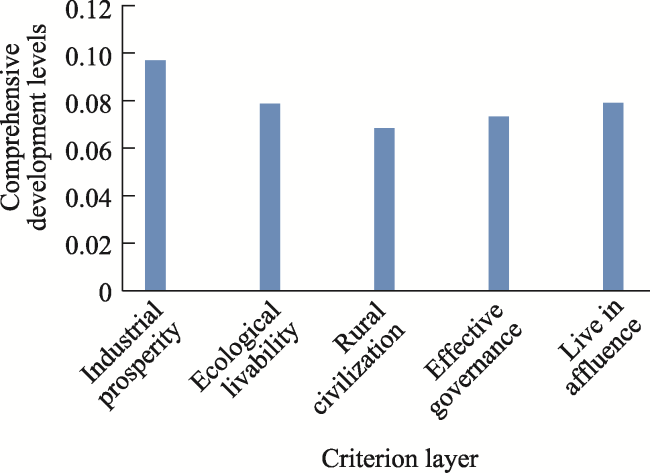
Based on the comprehensive development level measurement evaluation model, we calculate the level of rural tourism and revitalization in the Xi’an metropolitan area in 2021 and analyze its characteristics from the perspective of the degree of achievement of various goals of rural revitalization. From Fig. 2, the development of rural tourism in urban areas has the highest degree of achievement for the goal of “industrial prosperity.” This is mainly manifested in the increasing number of rural tourism visits each year, the increase in direct benefits brought by the development of rural tourism to rural residents, the transformation of rural industries, and the extension of industrial chains, all of which have been effectively improved. Second, “living well”, “effective governance”, and “ecological livability” are presented as goals. Owing to its favorable location and resource environment conditions, the development of rural tourism in urban areas has strong advantages compared to other rural areas. As a result, it attracts various investment entities such as governments and enterprises, which greatly promotes the governance level and living environment construction of rural areas. The achievement of the goal of “rural civilization” is relatively low, mainly owing to the difference between rural tourism in urban areas and traditional rural tourism. A large part of this is directly settled by tourism development companies, which lack support for the traditional culture, customs, and social security of rural residents.
Fig. 2 Comprehensive development levels of various systems
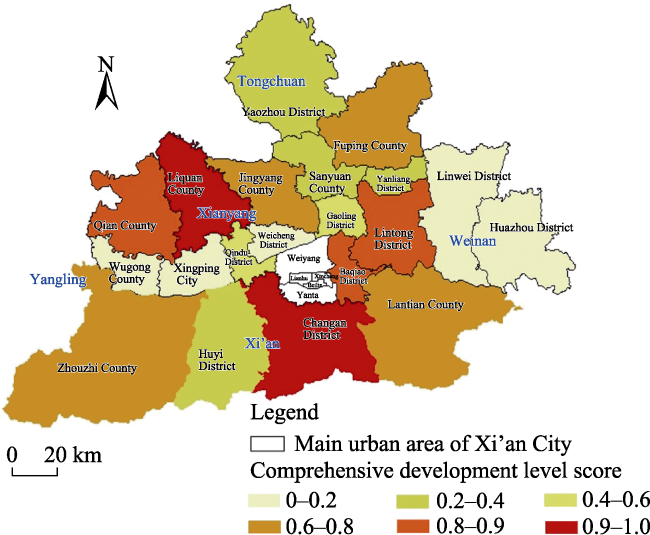
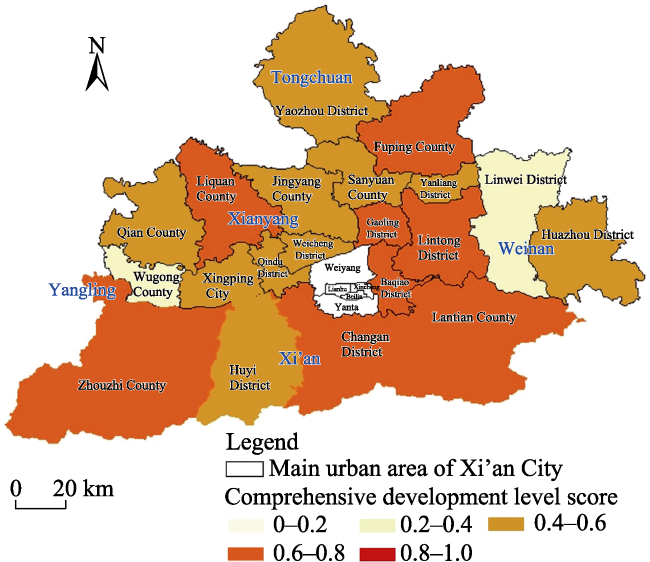
From a spatial perspective, the coordinated development level of rural tourism and revitalization differs significantly among various districts and counties in the Xi’an metropolitan area. Furthermore, the spatial differentiation exhibits a decreasing pattern from the core circle to the outer circle. From the spatial differentiation map of the comprehensive development level (Fig. 3), that of rural tourism in Liquan County, Chang’an District, Qianxian County, Lintong District, and Jingyang County is relatively high, which also drives the development level of regional rural revitalization. Relying on Yuanjia Village to develop rural tourism, Liquan County has become an area with a national rural characteristic industry of 100 million yuan, providing strong support for the rural revitalization and development of the whole county. In recent years, the rural areas of Chang’an District have relied on the development of characteristic ecological tourism and homestay industries in the Qinling Mountains to drive residents’ employment. Qianxian County and Lintong District rely on the Qianling Tomb and the Terracotta Warriors, respectively, to drive the transformation and development of rural industries in the region via heritage tourism. Jingyang County relies on the Fu tea industry to build characteristic towns and develop rural tourism. Therefore, the development of rural tourism in urban areas attaches great importance to the resource characteristics of the region. The development of rural characteristic tourism differs from the traditional rural tourism development model, which mainly focuses on rural entertainment to ensure sustainable development of the tourism industry and drive rural revitalization and development.
Fig. 3 Spatial differentiation of comprehensive development level

3.2 Coupling coordination degree

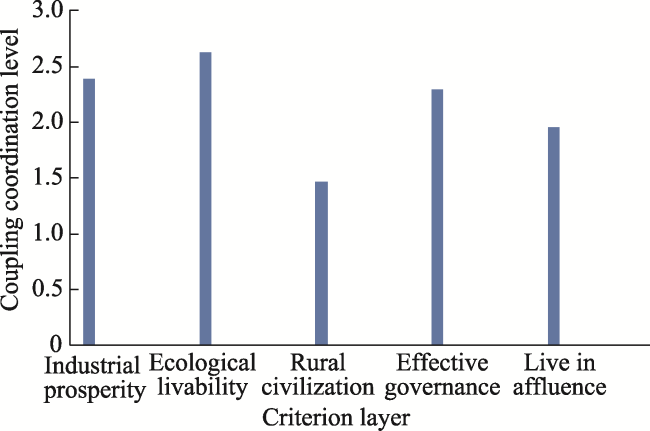
According to the coupling co-scheduling model, we calculate the coupling coordination index of rural tourism and revitalization in the Xi’an metropolitan area in 2021. The degree of coupling can measure the strength of the interaction between both parties (Li et al., 2021), regardless of the pros and cons, and coordination can measure the degree of coupling between the two. Our results revealed (Fig. 4) that the coupling coordination is at the highest level in terms of ecological livability, followed by industrial prosperity and effective governance. The level of rural civilization is the worst, indicating that the development of rural tourism drives ecological development, industrial transformation, and rural governance with greater intensity, while environmental construction, industrial development, and governance work also provide support for the further development of rural tourism.
Fig. 4 Coupling coordination levels among different systems
Based on existing research results (Liu et al., 2020) and experts’ opinions, the natural breakpoint method (Li and Ren, 2019) was used to obtain the grading results of the coupling coordination degree of rural tourism and revitalization in each district and county. From its spatial differentiation, the coupling coordination level is at the intermediate level (Fig. 5), including Lantian County, Chang’an District, Zhouzhi County, Fuping County, and so on. Meanwhile, Huazhou District, Xingping, and Weicheng District are in the primary stage of coupling and coordination, while Linwei District and Wugong County are in the transition stage from uncoordinated to coordinated. In addition, the overall level of coupling coordination in the core circle is higher than that in the peripheral circle. Owing to their favorable geographical advantages, the rural areas in the core circle have a higher level of construction than those in the peripheral circle during the continuous development of urbanization, which makes it easier to attract investment and customer markets. When rural industrial policies are more open, both the rural tourism development and revitalization levels are higher. For example, the Bailuyuan area in the core circle of the Xi’an metropolitan area has developed the Bailuyuan Film and Television City and Bailucang Scenic Area, which rely on Guanzhong culture. Furthermore, the development of the Whale Valley Scenic Area and RV Camps has relied on good ecological resources. Relying on high-quality agricultural resources, the construction of modern agricultural parks, such as cherry picking gardens, has effectively driven the development of surrounding villages. However, the rural areas in the outer ring are relatively less driven by the central city, and the Xi’an metropolitan area is still in the cultivation stage. Therefore, the radiation ability of the outer ring is limited, and the slow process of urbanization also makes the coupling coordination level of the outer ring mostly at a low level. Therefore, the coordinated development between the core and peripheral circles needs to be enhanced, and the balanced and coordinated development of rural tourism and revitalization needs to be promoted.
Fig. 5 Spatial differentiation of coupling coordination levels

4 Comparative analysis of influencing factors and driving mechanisms

4.1 Influencing factors

The coordination between rural tourism and revitalization in urban areas is the result of multiple factors working together. The development of the rural tourism industry in urban areas must rely on local characteristic resources, such as rural production and planting habits, historical and cultural traditions, transportation location conditions, and economic foundations, which are also endogenous factors. The development of rural tourism in urban areas is mainly based on the market demand of cities, that is, leisure and entertainment space for urban residents. This is closely related to themarket system of urban and rural areas and the supply and demand relationship between urban and rural industries, thereby promoting the transformation and development of rural industrial systems and the prosperity of rural industries. Therefore, these factors are external driving factors for development. At the same time, the coordinated development of rural tourism and revitalization in urban areas cannot be separated from the support of systems and policies, intervention of social capital, assistance of capable individuals and civil organizations, as well as the guarantee of social factors such as science and technology, media promotion, and so on.

4.2 Dynamic mechanism analysis

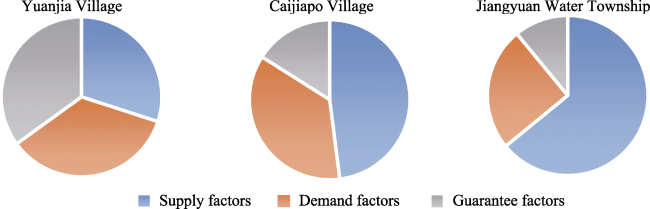
Based on analysis of the factors influencing the coordinated development of rural tourism and revitalization in urban areas, the theory of “supply-demand”, and the addition of a “guarantee system of ecological livability”, we explore the driving mechanism of such development from the perspective of “supply-demand-guarantee”. Furthermore, this study selects villages with different levels of coupling coordination for comparative analysis (Table 2, Fig. 6).
Table 2 Factors influencing the coupling and coordination of rural tourism and rural revitalization
Rural revitalization dimension Rural tourism dimension Influence factor
Industrial prosperity, ecological livability, and rural civilization Supply factors Rural self-cultivation tradition, historical culture, transportation location, economic foundation, and rural folk customs
Industrial prosperity, common prosperity, and ecological livability Demand factors Market demand, resident demand, ecological demand, cultural demand
Effective governance Guarantee factors Interest linkage, management methods, and collaborative development
Fig. 6 Factors influencing the coupling and coordination of rural tourism and rural revitalization

4.2.1 High coupling coordination level: Yuanjia Village model driven by comprehensive effects

Yuanjia Village is located in the outer circle of the Xi’an metropolitan area, and its coordinated development model is divided into two complementary levels: the commercial model of rural tourism and the organizational model of rural areas. The business model of Yuanjia Village is a complex of rural life, which regards rural life as a tourist attraction to meet the diverse needs of urban residents for sightseeing and experiences in the beautiful countryside. The model then develops rural industries and vacations and constructs a countryside that is de-scenic, de-urbanized, and de-commercialized. By introducing local villagers and building a family-based business entity, villagers can become entrepreneurs and business entities, restoring and reproducing traditional rural life. In terms of rural organization mode, Yuanjia Village has solved the problem of turning rural tourism into an industry through the integration of three rural industries, in which farmers are allowed to participate and can continue to increase their income. This approach has also solved the distribution of villagers’ interests through shared cooperation and the problem of villagers’ common prosperity through secondary distribution. As a result, the villages far from cities on the periphery of the metropolitan area have overcome the “hollowing out” dilemma, and the comprehensive revitalization of rural areas has been achieved.
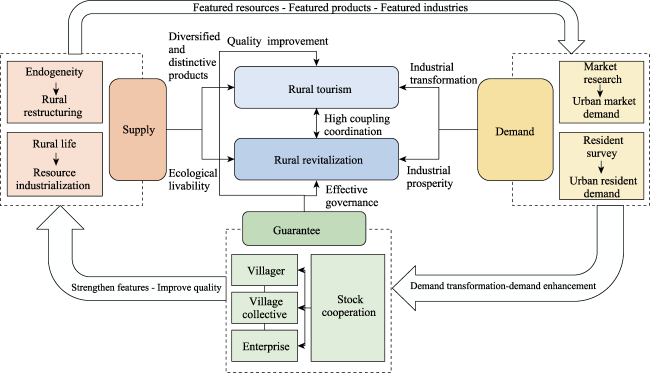
The driving mechanism for the coordinated development of rural tourism and revitalization in Yuanjia Village is the “supply” ability of its resource elements. In the rapid urbanization process, Yuanjia Village actively carries out rural reconstruction, with traditional rural production and lifestyle as the core “selling point” to develop rural tourism. This approach emphasizes the transformation of characteristic resources into characteristic industries and preserves rural nature while promoting the prosperity of rural industries and ecological livability. Conversely, the development of rural tourism fully caters to the needs of the urban market, sufficient market research was conducted in the early stages, and the traditional “farmhouse entertainment” rural tourism model was abandoned. Instead, “rural life” is the core of tourism development, which enhances the experience and authenticity of rural tourism, coordinates the relationship between tourists and villagers, and fully mobilizes farmers’ enthusiasm. Moreover, the role of endogeneity drives the effectiveness of rural culture and governance. In addition, the development of rural tourism has established a mechanism for coordinating interests between “villagers, village collectives, and enterprises” and has ensured that the benefits of such development can truly benefit farmers and promote their prosperity (Fig. 7).
Fig. 7 Coupling and coordination mechanism of rural tourism and rural revitalization in Yuanjia Village

4.2.2 Coupling coordination level: Caijiapo Village model driven by composite action

Caijiapo Village is located at the northern foot of the Qinling Mountains, with convenient transportation and a beautiful ecological environment. In the early days, the village mainly planted cash crops such as grapes and kiwifruit. In the process of promoting rural revitalization, the village, inspired by the customs of the village community after the wheat harvest in Guanzhong and together with art colleges and universities such as Xi’an Academy of Fine Arts and Xi’an Conservatory of Music, activated the tradition of “Leisure after busy farming” Festival, established Guanzhong art cooperatives, and held the festival in Guanzhong. Additionally, the surrounding infrastructure and living environment of the village have been improved. The full industry integration of art projects with rural art tourism, such as “homestays+catering+ organic agricultural products+art festival derivative products”, has driven the integrated development of multiple industries such as cultural tourism, rural leisure, homestay catering, and so on, which has formed new consumption scenarios and promoted people’s income growth.
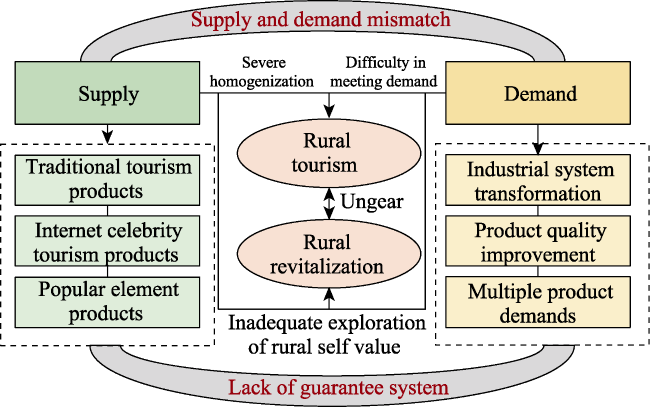
The coupling and coordinated development mechanism of rural tourism and revitalization in Caijiapo Village, on the one hand, exploits the good ecological environment of rural areas as characteristic resources, combined with the traditional customs of Guanzhong, and transforms these into characteristic products. This provides urban residents with rural ecological and cultural products and also promotes the industrial transformation of rural areas. On the other hand, rural tourism in Caijiapo Village actively caters to the changing market demand. With the rapid development of urbanization in urban areas, cities have gradually become a “cold gray tone”, and urban residents’ desire for a diverse and colorful ecological and living environment in rural areas is increasing. By leveraging its ecological and cultural advantages, Caijiapo Village has actively transformed the development mode of rural tourism, met the needs of urban residents, and promoted the revitalization of the countryside itself. However, field research established that although the economic benefits obtained during the rural tourism process have increased, the overall improvement in villagers’ living standards has not significantly increased. Several similar villages in the surrounding area have not been able to unite while developing rural tourism, which has led to the problem of homogeneous competition in products, and this restricts the development of rural tourism and transformation (Fig. 8).
Fig. 8 Coupling and coordination mechanism of rural tourism and rural revitalization in Caijiapo Village

4.2.3 Low coupling coordination level: Jiangyuan Water Township model with a single external force

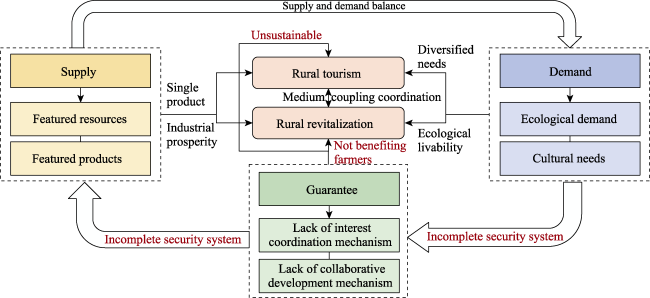
The old town of Wugong County is known as the birthplace of farming civilization because of its Houji Jiaojiatai (Houji Jiaojiatai is a famous historical site in China, where the ancestors of the Zhou Dynasty taught the people to cultivate crops and grains). With the natural advantages of the Qishui River, “Jiangyuan Water Town” has been built to develop rural tourism. However, serious homogenization issues exist in its current development, such as mixed tourism products, lack of distinctive features, low-quality tourism services, and poorly crafted tourist attractions, which have led to unsustainable development and significant population outflow in rural areas. Although rural areas in urban areas in other regions are influenced by various factors such as funding, technology, and talent from cities, these areas are also at risk of being engulfed by the rapid evolution of urbanization. If they cannot be industrialized with characteristic resources, unsustainable rural development will occur.
On-site research established that the disharmony between rural tourism and rural areas in Jiangyuan Water Township is due to the excessive reliance on existing rural tourism products in the development of tourism and the neglect of its characteristics and lack of innovation, which results in serious homogenization of product supply. Conversely, the development of rural tourism excessively caters to market demand, and the stacking of various “internet celebrity” projects further weakens the original characteristics of rural areas. However, this rapidly developing popular element is unsustainable, which has led to the failure of rural tourism. In addition, farmers and rural areas have not benefited from the development of rural tourism, and direct entry of tourism development enterprises has not formed a good interactive relationship with the countryside, which has resulted in a serious disconnect between rural tourism and rural areas (Fig. 9).
Fig. 9 Coupling and coordination mechanism of rural tourism and rural revitalization in Jiangyuan Water Township
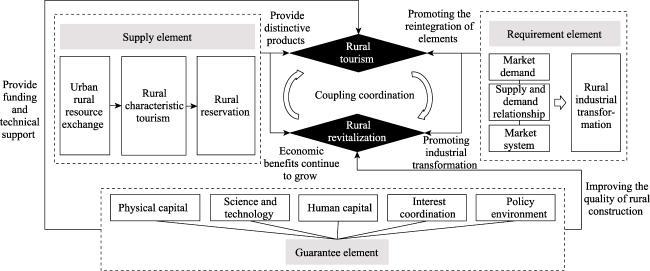
Based on an appropriate evaluation index system, we measured and analyzed the comprehensive development level and coupling coordination degree of typical rural areas in the Xi’an metropolitan area. A total of three typical cases are further explored. When rural revitalization and tourism development are at a high coupling coordination level, the driving factors derive from multiple aspects. When the aforementioned are at a level of moderate coupling and coordination, their driving factors often come from the two aspects of “supply” and “demand”, which play a role in balancing the two. However, at a low level of coupling and coordination, it is difficult for a single factor to play a role in promoting rural tourism to promote rural revitalization. From the interpretation of these three typical cases, “supply” is the fundamental factor for the coordinated development of rural tourism and rural revitalization in urban areas, while “demand” is the core factor for improving its coupling and coordination level. “Protection” is a supporting factor for its sustainable development. The “supply” factor utilizes the geographical advantages of urban and rural areas, transforms and exchanges rural resources in the process of urban-rural interaction, highlights local characteristics of rural areas, enhances the rural nature of urban areas, and thus preserves rural areas in the rapid urbanization process of urban areas. The “demand” factor activates industrial development factors and stimulates rural economic growth. Furthermore, this transforms into rural governance, landscape improvement, and human settlement environment construction as it enhances the demand and quality of urban markets and utilizes the advantages of rural resources and the unique quality and functions of products. The “guarantee” element promotes the flow of talents, technology, funds, and other factors between urban and rural areas by leveraging the radiation and driving role of the central city in the metropolitan area. This provides guarantees for the sustainable development of rural tourism and further promotes the comprehensive revitalization of rural areas. The coordinated development of rural tourism and revitalization can only be driven by the combined action of “supply”, “demand”, and “guarantee” factors (Fig. 10).
Fig. 10 Theoretical model of coupling and coordination mechanism between rural tourism and rural revitalization in urban areas

5 Discussion

With the continuous acceleration of regional urbanization in China, the urban agglomeration formed by surrounding counties and cities driven by the radiation of central cities has become the main spatial carrier for urbanization development. However, in the process of rapid urbanization, rural areas within the metropolitan area face risks such as land encroachment, “hollowing out of rural areas”, and residents’ “migratory bird migration”. How to preserve a certain degree of rural areas and the rural nature within the metropolitan area and achieve rural revitalization has become a hot topic of research. For rural areas within the metropolitan area, the development of rural tourism has various advantages, such as natural location, market, and human resources. Implementing rural revitalization through characteristic rural tourism is important for the sustainable development of such areas. Previous research on rural tourism is relatively extensive, and practical research on rural revitalization has been relatively rich. However, research on rural tourism and revitalization in urban areas is lacking. The metropolitan area is the spatial carrier of urban-rural integration, and rural areas within this are at the forefront of urbanization development. Such areas are more likely to receive the dividends and are also more susceptible to the erosion of urbanization. Based on the goal orientation of rural revitalization in the metropolitan area, this study analyzed the coupling and coordination relationship between rural tourism and revitalization and established an evaluation model. This study adopted the Xi’an metropolitan area as an actual case to measure and analyze its shortcomings and issues. At the same time, influencing factors were explored through on-site investigations of rural areas in different stages of development using coordinated development models of rural tourism and revitalization. In the process of developing rural tourism in urban areas, the role of the “supply-demand guarantee” can be played to promote the improvement of the development quality of the rural tourism industry, comprehensive revitalization of rural areas, and coordination between the two. Our results provide a reference for the rural revitalization work and rural tourism development in urban areas.

6 Conclusions

This study constructed a comprehensive development level measurement model for driving rural revitalization through rural tourism in urban areas, as well as a coupling and coordination model between rural tourism and revitalization. Empirical analysis was conducted using the Xi’an metropolitan area as an example. Our results revealed the following: The development of rural tourism in the Xi’an metropolitan area has the highest degree of achievement for the goal of “industrial prosperity”, followed by the goals of “living well”, “effective governance”, and “ecological livability”. From a spatial perspective, significant differences were observed in the comprehensive development level of rural tourism and revitalization among the districts and counties in the Xi’an metropolitan area, and their spatial differentiation exhibits a decreasing pattern from the core circle to the outer circle. The coupling and coordination is at the highest level in terms of ecological livability, followed by industrial prosperity and effective governance. Conversely, the level of rural civilization is the worst, which indicates that the development of rural tourism drives the ecological development, industrial transformation, and rural governance of rural areas with greater intensity, while the environmental construction, industrial development, and governance work also provide support for the further development of rural tourism. The coupling and coordination level is at the intermediate and primary levels, respectively, accounting for 90% of rural areas, which are generally in a good state. The coupling and coordination level in the core circle is generally higher than that in the peripheral circle. The “supply” element is composed of factors such as rural production and planting habits, historical and cultural traditions, transportation location conditions, and the economic foundation for the coordinated development of rural tourism and revitalization in urban areas. The “demand” element, composed of factors such as market demand and urban-rural industrial system, is the core of improving its coupling and coordination level. The “guarantee” elements, composed of institutional and policy support, social capital intervention, assistance from capable individuals and non-governmental organizations, as well as science and technology, media promotion, and other factors, are the supporting factors for sustainable development. The “supply”, “demand”, and “guarantee” elements jointly drive the coordinated development of rural tourism and rural revitalization.
[1]
Chen G S, Liu X F, Jiang S L, et al. 2019. Measurement and path selection of coupling and coordinated development of rural revitalization in Hunan Province. Economic Geography, 39(5): 191-197, 206. (in Chinese)

[2]
Dragan D. 2023. Afterlives of depopulated places. Focaal, (96): 57-70.

[3]
Gao N, Zhang X C, Wang L Y. 2021. The spatial-temporal patterns and formation mechanism of rural tourism public service in China. Scientia Geographica Sinica, 41(2): 252-260. (in Chinese)

DOI

[4]
Guo W, Zhang P F, Zhao L R, et al. 2023. Differences in the development environment of rural tourism in the Beijing-Tianjin-Hebei Region and the balancing synergistic relationship. Chinese Journal of Agricultural Resources and Regional Planning, 44(1): 184-197. (in Chinese)

[5]
Hao M M. 2022. Research on the development of rural ecotourism landscape architecture in Shanxi Province under the background of global tourism. Building Science, 38(9): 199-200. (in Chinese)

[6]
Huang S H, Wang W Y. 2020. Analysis of Qiang Ethnic dwelling architecture in western Sichuan from the perspective of rural tourism. Construction Economy, 41(9): 159-160. (in Chinese)

[7]
Jiang P, Yang Y D, Hao L. 2023. Evaluation and influencing factors of rural tourism efficiency in the outskirts of Beijing. Chinese Journal of Agricultural Resources and Regional Planning, 44(1): 198-205. (in Chinese)

[8]
Li J, Xie X Y, Shen Y Q, et al. 2021. Empirical study on the integration effect of regional agriculture and tourism: From the perspective of coordinated economic, social, and ecological development. Journal of Yunnan Agricultural University (Social Science), 15(4): 76-83. (in Chinese)

[9]
Li T. 2022. A study on the relationship between rural tourism investment and destination space from the perspective of “Human Land Industry” synergy. Geographical Research, 41(12): 3259-3272. (in Chinese)

[10]
Li T, Wang L, Wang Z, et al. 2022. Rural tourism: Differences and mechanisms in the development paths of communitization and scenic spotization: Taking two typical villages in Zhejiang and Shanxi as examples. Tourism Tribune, 37(3): 96-107. (in Chinese)

[11]
Li X K, Ren Q S. 2019. Research on coupling coordination between rurality’s change and rural transformation of the poor villages in southwest China. Chinese Journal of Agricultural Resources and Regional Planning, 40(7): 37-45. (in Chinese)

[12]
Li Y G, Wu S. 2022. Explanation of the mechanism and comparison of typical models of rural tourism guiding rural revitalization. Journal of Northwest A&F University (Social Science Edition), 22(5): 82-90. (in Chinese)

[13]
Li Z Y, Yang M Y, Zhou X L, et al. 2023. Research on the spatial correlation and formation mechanism between traditional villages and rural tourism. Scientific Reports, 13(1): 8210. DOI: 10.1038/S41598-023-35486-W.

PMID

[14]
Liu A L, Yang C Y, Ming Q Z, et al. 2020. Spatial-temporal coordination and driving forces of provincial culture industry and tourism industry in China. Economic Geography, 40(6): 203-213. (in Chinese)

[15]
Luo Q, Lu J. 2017. The way of spatial transformation of rural revival in urban suburbs under the new urban rural relationship: A case study of rural suburbs in Nanchang City. Urban Development Studies, 24(7): 7-10. (in Chinese)

[16]
Ma Y, Wu B, Jia R R. 2021. Research on performance evaluation of rural revitalization led by rural tourism: Take Wangwu Village of Taiyuan as an example. Chinese Journal of Agricultural Resources and Regional Planning, 42(12): 124-131. (in Chinese)

[17]
Robina-Ramírez R, Ravina-Ripoll R, Castellano-Álvarez F J. 2023. The trinomial health, safety, and happiness promote rural tourism. BMC Public Health, 23(1): 1-16.

[18]
Rong H F, Tao Z M, Li T, et al. 2020. Analysis of spatiotemporal characteristics and influencing factors of the rural tourism market in southern Jiangsu based on network data. Geography and Geo-Information Science, 36(6): 71-77. (in Chinese)

[19]
Shen S Z, Wang P F. 2022. The logical mechanism, realistic dilemma, and breakthrough path of rural tourism assisting rural revitalization. Journal of Northwest A&F University (Social Science Edition), 22(5): 72-81. (in Chinese)

[20]
Sheng Y C, Liu Q. 2021. The evolution of human land relationship in the evolution of traditional rural tourism in urban suburbs: A case study of Xunlonghe Village. Tourism Tribune, 36(3): 95-108. (in Chinese)

[21]
Shi H J, Li Z X, Liu C X, et al. 2019. Discussion on the idea of industrial rejuvenation in suburban integration village: Take Sanzhao Village, Yanta District, Xi’an City, as an example. Urban Development Studies, 26(S1): 103-108. (in Chinese)

[22]
Sun J X, Wang X J. 2021. Urban-rural recycling restoration: Framework and issues for constructing a new urban-rural relationship in rural tourism. Journal of Southwest Minzu University (Humanities and Social Sciences Edition), 42(1): 25-32. (in Chinese)

[23]
Wei C, Ge D Z, Long H L, et al. 2018. The rural transformation development model guided by tourism development in big rural-urban fringe: A case study of Wuhan City. Economic Geography, 38(10): 211-217. (in Chinese)

[24]
Wei P, Lin B G, Zhang X R. 2021. Research on the production of tourism-oriented rural public space around the city based on the three-dimensional dialectic of space: A case study of Qingshuitou Village in Xi’an. Geographical Research, 36(5): 177-183. (in Chinese)

[25]
Wu S Y. 2022. The driving effect of landscape architecture on rural tourism. Building Structure, 52(20): 169-170. (in Chinese)

[26]
Xue R, Yang J J. 2022. A framework for incorporating landscape management into the human-environment relationship research of rural tourism. Progress in Geography, 41(3): 510-520. (in Chinese)

DOI

[27]
Yin Z X, Xia Z C, Tang Y L, et al. 2021. Spatial pattern evolution and optimal regulation of rural tourism spots in urban agglomeration areas: A case study of Changsha-Zhuzhou-Xiangtan. Economic Geography, 41(9): 214-224.

[28]
Zhang J, Zhao Z B, Liu Y, et al. 2022a. The spatial characteristics and formation mechanism of conflicts in tourism community under the background of landscape-village integration: A case study of Dong Village in Zhaoxing. Economic Geography, 42(11): 216-224. (in Chinese)

[29]
Zhang Y G, Hao Y M, Guo Y Z, et al. 2022b. Rural tourism spatial justice under the perspective of common prosperity: Connotation and research framework. Economic Geography, 42(11): 195-203. (in Chinese)

[30]
Zhang Y G, Huang Y J, Cheng J J, et al. 2019. A study on the impact of urban residents’ stress sources on their happiness: Based on the perspective of rural tourism and leisure participation. Geographical Research, 38(4): 971-987. (in Chinese)

[31]
Zhao X Y, Zhang L, Wu H Y, et al. 2019. Research on the evaluation and development potential of rural tourism resources in the Harbin area. Chinese Journal of Agricultural Resources and Regional Planning, 40(5): 180-187. (in Chinese)

[32]
Zhu X X, Qiao J J. 2020. A study on the sustainable development of rural tourism community: Based on the three-dimensional dialectic perspectives of spatial production theory. Economic Geography, 40(8): 153-164. (in Chinese)

Outlines

/